Portrait of Georges Clemenceau
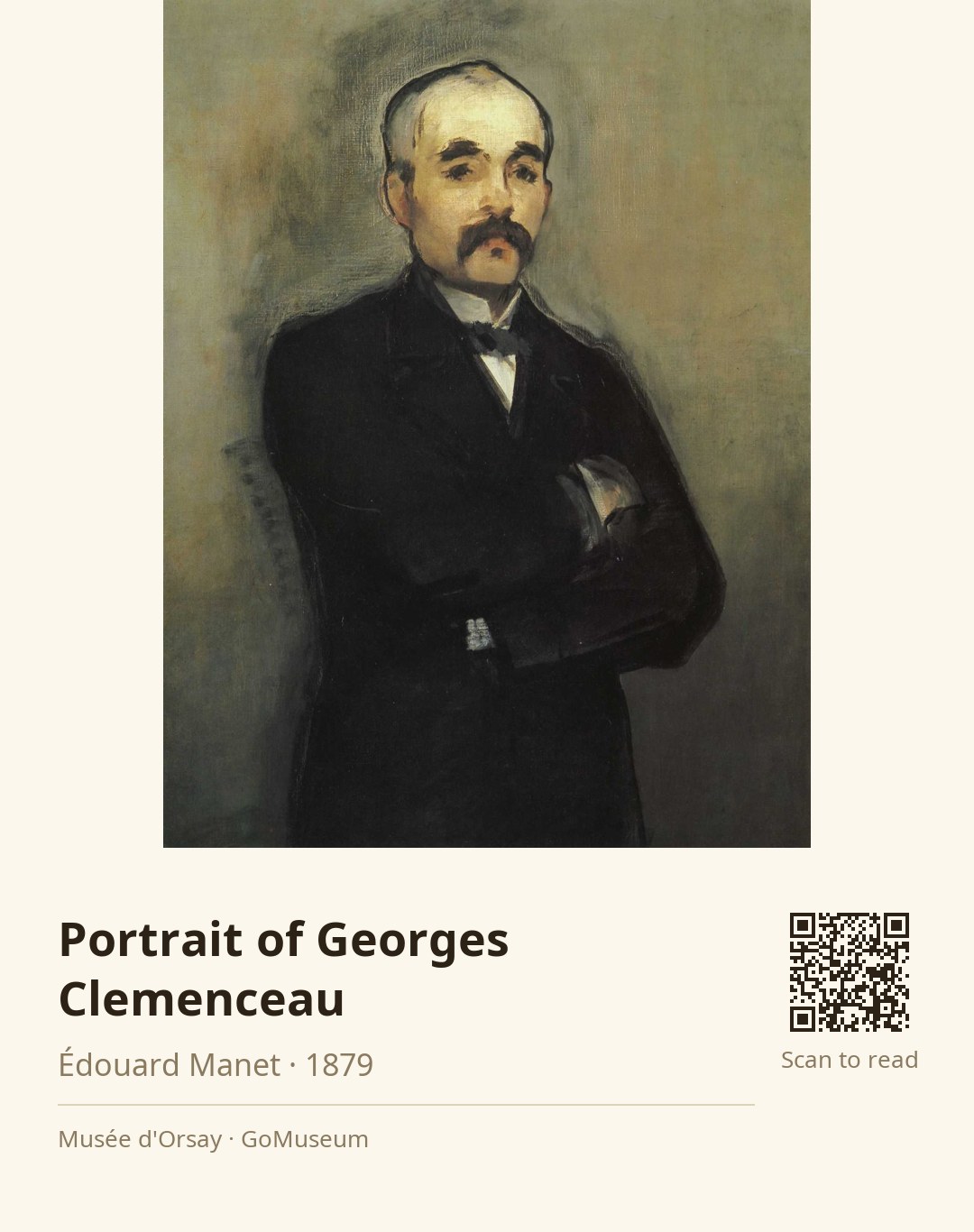
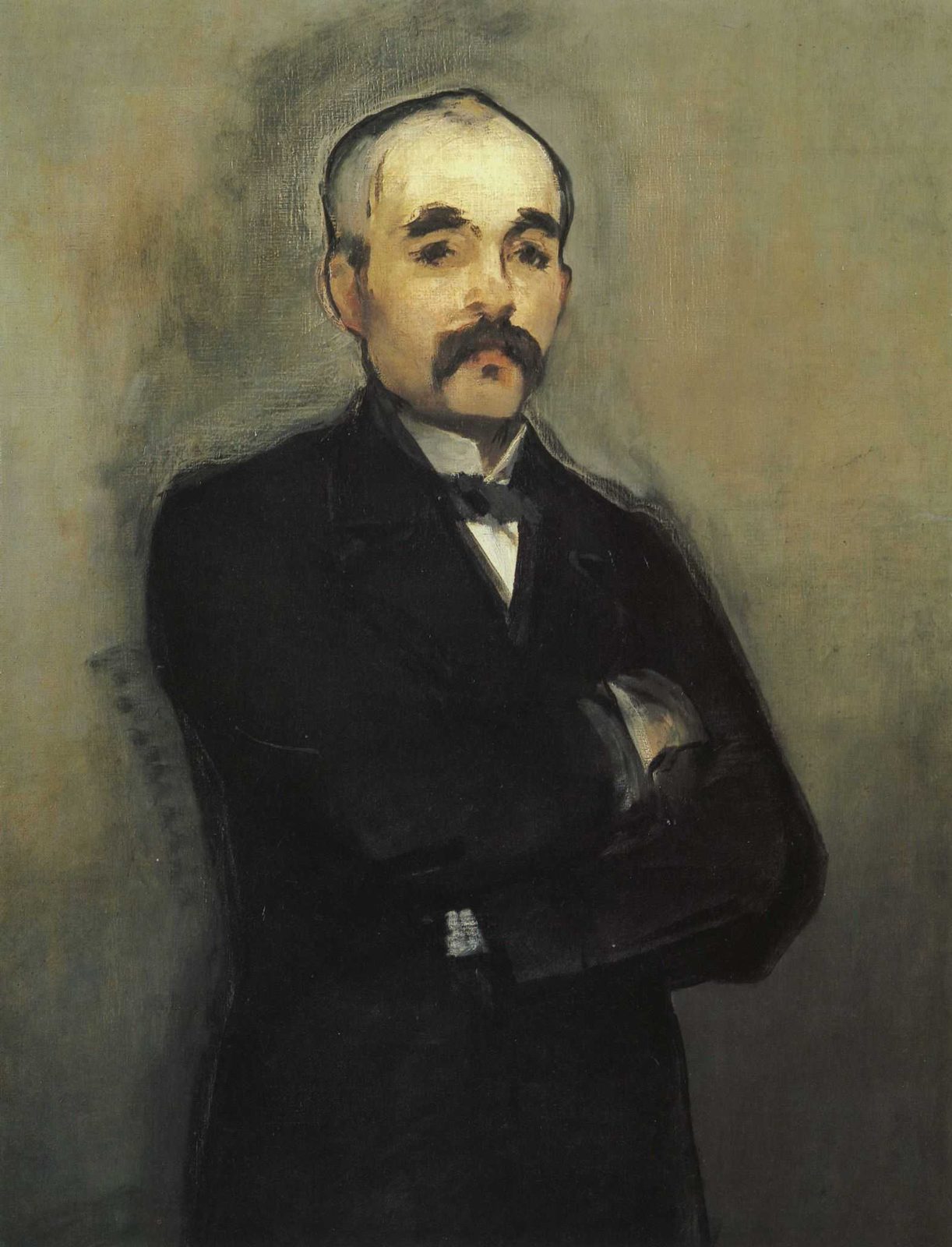
🎧 This work has audio narration — listen in the appAs you stand before Édouard Manet's striking portrait of Georges Clemenceau, take a moment to really look at the expression on Clemenceau's face. Notice how his arms are crossed, projecting a sense of determination and strength. The way Manet captures his gaze—intense and almost challenging—gives you a glimpse into the formidable personality of the man who would later lead France during World War I.
This detail matters because it reveals not just Clemenceau's character but also Manet's ability to convey emotion through simplicity. With just a few brushstrokes, he encapsulates the essence of a complex figure, blending humor and gravitas in a way that feels almost modern. Manet was known for his bold approach to portraiture, and here, he manages to balance realism with an almost impressionistic flair, making Clemenceau both relatable and larger than life.
Created between 1879 and 1880, this painting was one of two portraits Manet made of Clemenceau, who famously dismissed it as "very bad." Yet, during their sittings, the two men shared lively conversations, revealing a mutual respect that transcended the canvas.
As you take in this artwork, think about how a single portrait can reflect the spirit of an era and the complexities of its subjects. What do you think Manet was trying to say about Clemenceau, and how does that resonate with our understanding of leadership today?
Édouard Manet, born on January 23, 1832, in Paris, emerged as a pivotal figure in 19th-century art, bridging Realism and Impressionism. From an affluent family, he initially faced pressure to pursue a naval career but instead dedicated himself to painting, influenced by his uncle and the Old Masters. His early works, including "The Luncheon on the Grass" and "Olympia," sparked controversy and challenged traditional artistic norms, marking him as a revolutionary force.
Manet's style, characterized by loose brushwork and a focus on contemporary life, diverged from the meticulous techniques of his predecessors. He often depicted modern Parisian scenes, capturing the essence of leisure and social dynamics. Despite initial rejection from the art establishment, he gained recognition among progressive artists and became a mentor to the Impressionists.
Throughout his life, Manet formed connections with influential figures like Baudelaire and Zola, who defended him against critics. His later works, such as "A Bar at the Folies-Bergère," showcased his evolving style and mastery of color. Manet's contributions to art history are profound; he is celebrated not only for his innovative techniques but also for elevating still life and modern subjects to the forefront of artistic expression. He passed away on April 30, 1883, leaving behind a legacy that continues to inspire artists today.
Édouard Manet's 'Portrait of Georges Clemenceau' was created between 1879 and 1880, during a time when Manet was already a prominent figure in the art world. The painting was commissioned after Clemenceau, a leading French politician, met Manet through mutual acquaintances, possibly his brother Gustave or at social gatherings with literary figures like Émile Zola. Despite Clemenceau's dismissive remark about the portrait being 'very bad,' he enjoyed the sittings, finding Manet's company stimulating. The portrait was eventually passed down to Clemenceau by Manet's daughter, Suzanne, after the artist's death.
As you gaze at this portrait, notice Manet's masterful brushwork. The way he applies paint creates a sense of immediacy and life. His use of bold, sweeping strokes captures the essence of Clemenceau's character—determined yet approachable. The composition is striking, with Clemenceau's crossed arms suggesting both strength and introspection. Manet's choice of color is equally compelling; the deep tones contrast with lighter highlights, giving depth to Clemenceau's face. This interplay of light and shadow not only enhances the three-dimensionality of the figure but also evokes a psychological complexity that invites you to ponder the man's inner world. The scale of the painting, relatively large, draws you in, making Clemenceau feel larger than life while still retaining an intimate quality.
This painting not only reflects Manet's innovative style but also captures the essence of Clemenceau, a formidable political figure. Manet's ability to convey personality through brushwork and composition influenced countless artists who followed, pushing them towards a more expressive and less formal representation of subjects. The portrait stands as a testament to the evolving nature of art in the late 19th century, marking a shift towards Impressionism and the celebration of modern life. Remember, this isn't just a portrait; it's a bridge to the future of art.
Interestingly, Clemenceau was known for his critical nature regarding portraits, often expressing dissatisfaction with how he was depicted. Despite his harsh words about Manet's work, he found the sittings enjoyable, revealing a complex relationship between the artist and his subject. This dynamic adds a layer of intrigue to the portrait, as it captures not just Clemenceau's likeness but also the spirit of their interactions.