Valley of the Shadow of Death
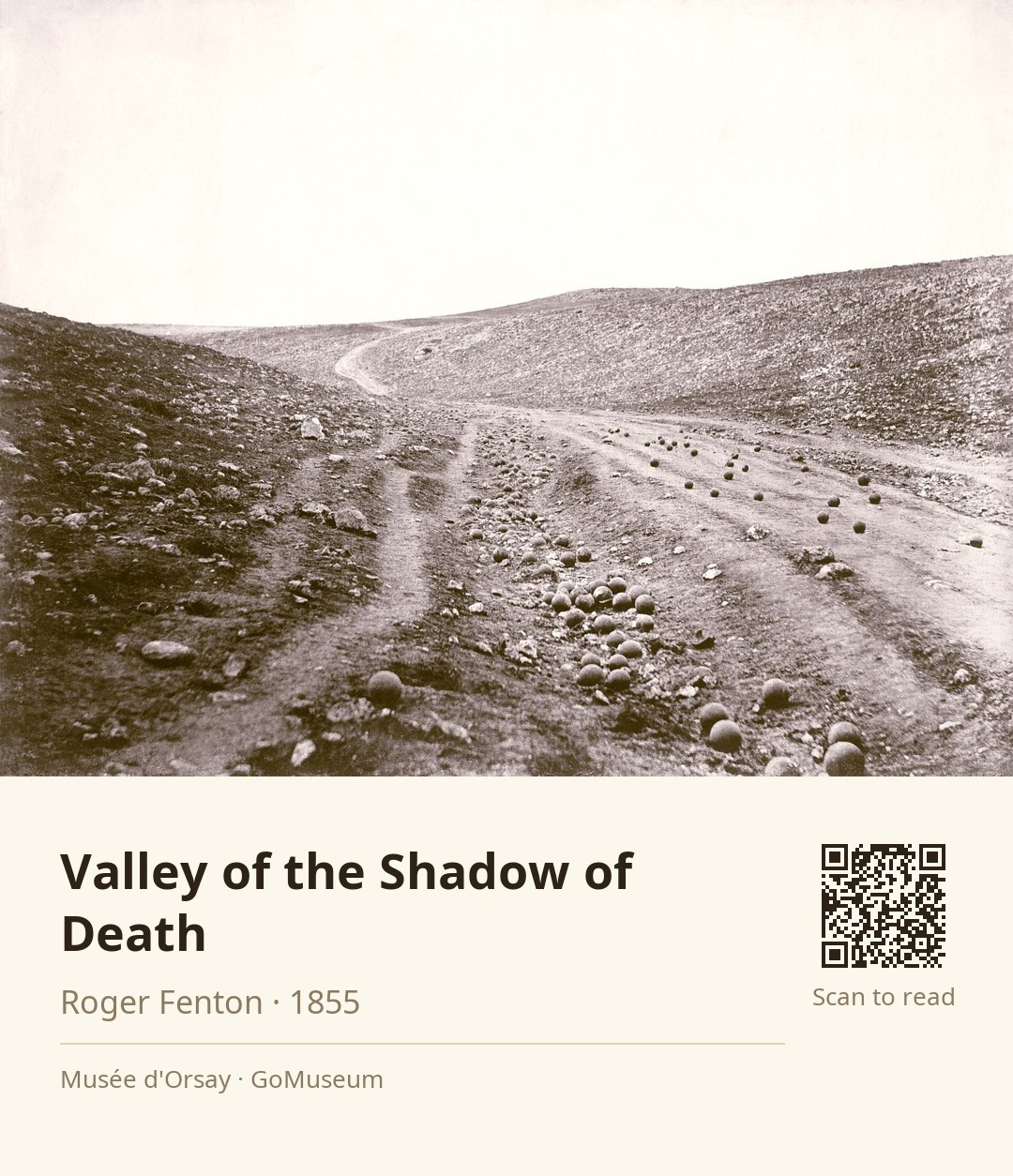
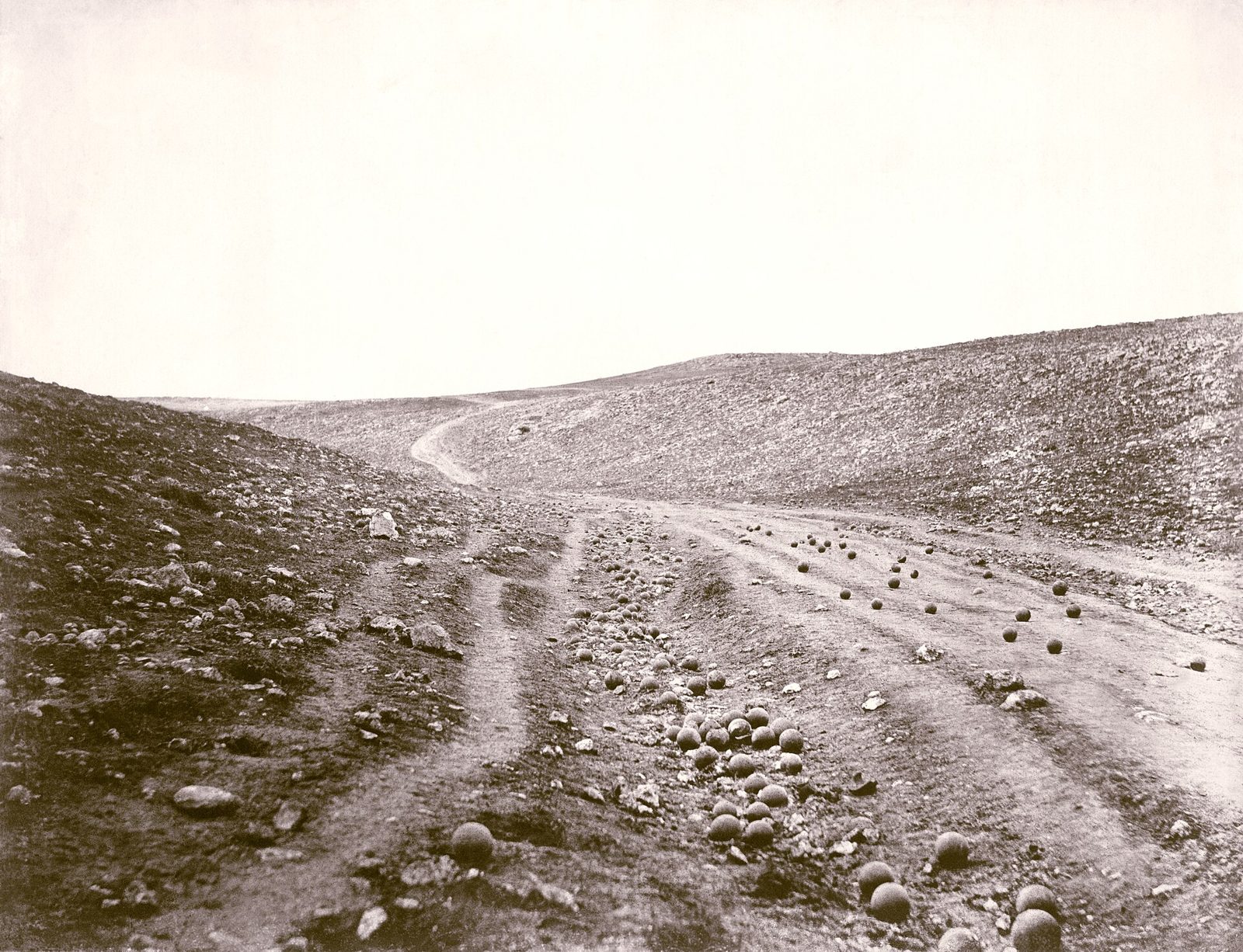
🎧 This work has audio narration — listen in the appTake a moment to really look at Roger Fenton's "Valley of the Shadow of Death." Notice the eerie stillness of the scene, punctuated by the scattered cannonballs lining the road. This stark detail isn’t just a dramatic touch; it tells a haunting story of war, where the remnants of battle linger like ghosts in the landscape. Fenton captured this image during the Crimean War in 1855, a time when the realities of conflict were often hidden from the public eye. By placing those cannonballs front and center, he forces us to confront the violence that had unfolded here, even if he chose not to show the bloodshed directly. It’s a deliberate choice that reflects the Victorian sensibilities of his time—an attempt to document war while maintaining a certain moral decorum. Fenton was one of the first photographers to document war, commissioned to provide a visual record of the Crimean conflict. His work was meant to inform the British public, who were largely removed from the realities of battle. This photograph, along with others, was displayed to evoke empathy and understanding, rather than horror. As you stand here, think about what this image means to you. How does it change your perception of war? What emotions does it stir? Fenton’s work invites us to reflect on the distance between the battlefield and our own lives, a distance that can feel both vast and hauntingly close.
Roger Fenton, born on March 28, 1819, in Lancashire, England, was a pioneering British photographer recognized as one of the first official war photographers. Coming from a merchant family, he initially pursued painting and law, studying under notable artists in Paris. His fascination with photography ignited after witnessing its potential at the Great Exhibition in 1851, leading him to become a prominent figure in the field.
Fenton's career flourished as he founded the Royal Photographic Society and captured royal portraits for Queen Victoria. His most significant contribution came during the Crimean War, where he documented the conflict from March to June 1855. Traveling with a cumbersome photographic caravan, he produced around 360 images, focusing on the war's more palatable aspects while avoiding gruesome scenes. His work aimed to inform the British public about the realities of war, albeit through a sanitized lens.
Despite the challenges of the battlefield, Fenton's photographs gained acclaim upon his return, and he was celebrated by Queen Victoria. His images were widely published, influencing public perception of the war. Fenton's legacy endures as a crucial figure in the history of photography, bridging art and journalism, before he ultimately shifted his focus back to law in 1862. He passed away on August 8, 1869, leaving behind a transformative impact on the art of photography.
Commissioned by Thomas Agnew, he faced immense challenges, from the cumbersome equipment to the dangers of artillery fire. The 'Valley of the Shadow of Death' was not just a picturesque landscape; it was a site of constant shelling, aptly named by soldiers. This moment captured the tension between the romanticized view of war and its grim reality, inviting viewers to confront the aftermath of conflict.
Captured during the Crimean War, it stands as one of the first iconic images of conflict, influencing generations of photographers and artists alike. Fenton's careful composition, featuring cannonballs strewn across the road, evokes a haunting stillness that contrasts sharply with the chaos of war. This photograph not only documented the realities of battle but also sparked discussions about the ethics of representation in wartime. By choosing to depict a scene devoid of bloodshed, Fenton navigated the delicate balance between truth and the Victorian sensibilities of his audience. His work paved the way for future photojournalists, establishing a visual language that continues to resonate in contemporary war reporting. Remember, this image is not just a snapshot of a moment; it's a pivotal point in the evolution of how we perceive and understand the horrors of war.
One intriguing detail about Fenton's 'Valley of the Shadow of Death' is the mystery surrounding the cannonballs. While some speculate he may have staged the scene by placing them there, others suggest they were moved by soldiers collecting them for reuse. This ambiguity adds a layer of complexity to the photograph, prompting questions about authenticity and the nature of war documentation.
Fenton used a cumbersome large-format camera and glass plates, which required long exposure times and made it difficult to capture spontaneous moments, thus limiting his ability to document the chaos of battle.
Fenton's training in painting likely informed his compositional choices and attention to light and shadow in his photographs, aiming for a more artistic representation of war rather than a purely documentary approach.
When Fenton's photographs were displayed, they were met with a mix of fascination and discomfort, as they provided a glimpse into the realities of war while still adhering to Victorian sensibilities that avoided graphic depictions of violence.