 Image: Nan Palmero from San Antonio, TX, USA · Team at Carnaval.com Studios · Langladure · Langladure · Luistxo
Heracles Slaying the Stymphalian Birds
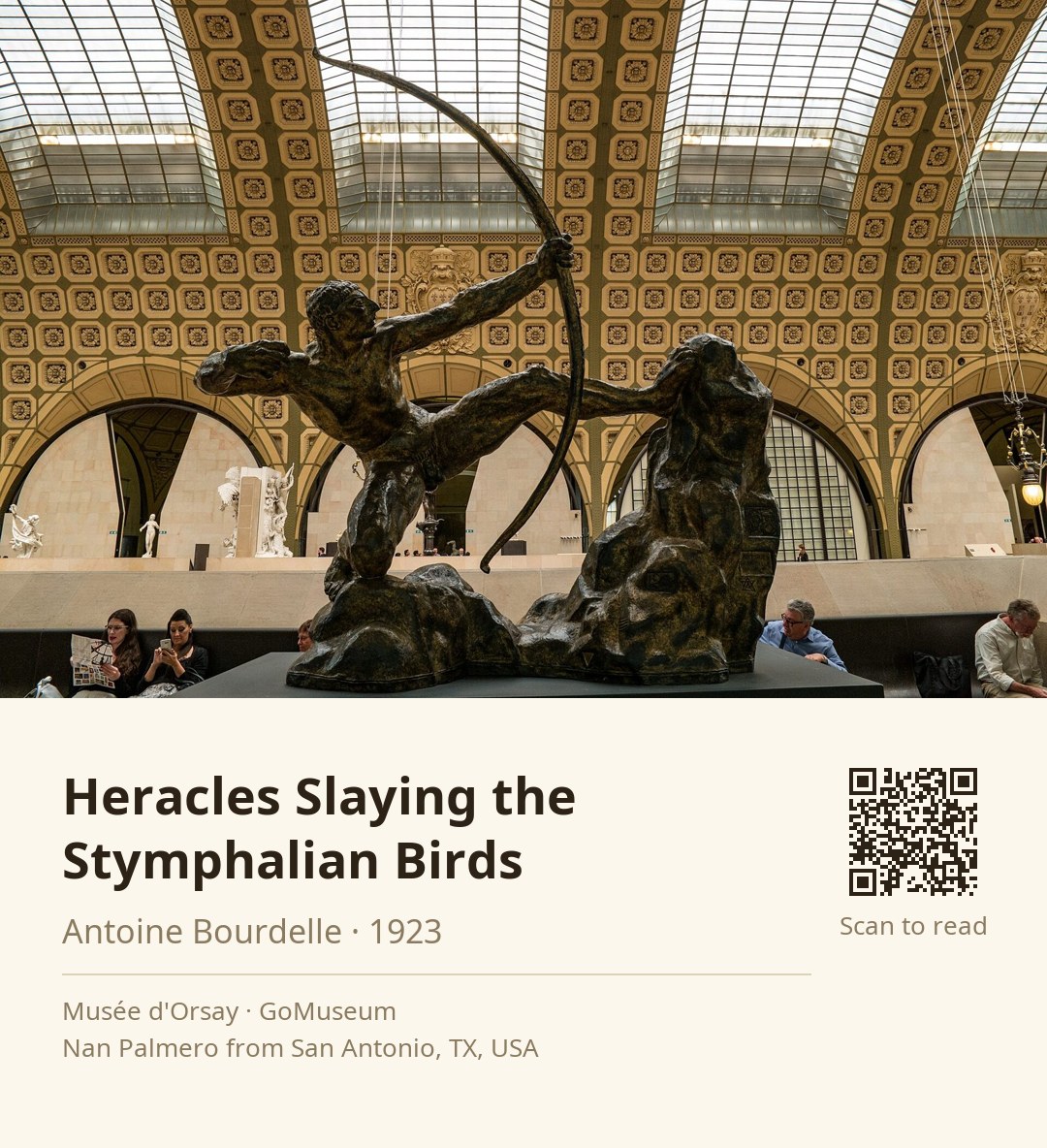
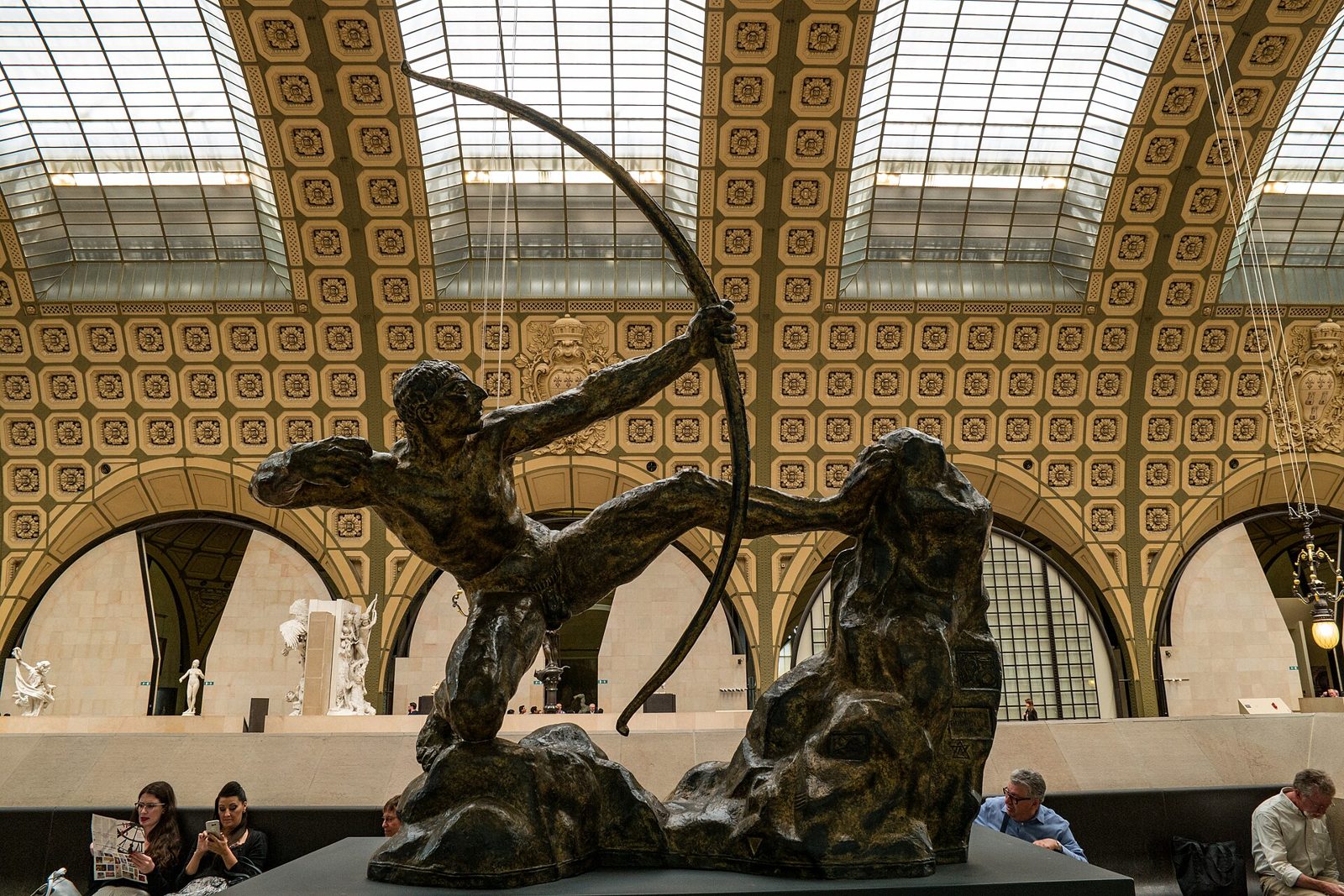
🎧 This work has audio narration — listen in the appTake a moment to really absorb the power of this sculpture, "Heracles Slaying the Stymphalian Birds." Notice how Heracles, with his muscular form and taut bow, seems almost ready to leap off the pedestal. The way the bronze catches the light gives him a lifelike quality, doesn’t it? Now, look closely at the intricate details of his expression. You can see the determination etched into his face, a fierce focus that speaks to the mythological weight of his task. This isn’t just a moment of action; it’s a snapshot of a hero’s struggle against overwhelming odds. Well, this piece captures the essence of heroism in ancient mythology, reflecting the human condition—our battles, our triumphs, and our relentless pursuit of victory against the challenges we face. Created in 1923, it resonates with the spirit of the early 20th century, a time when artists were exploring deeper themes of strength and resilience. As you stand here, think about the stories that have shaped our understanding of heroism. What challenges do you face in your own life that echo the struggles of Heracles? Let this sculpture inspire you to confront your own Stymphalian birds.
Antoine Bourdelle, born Émile Antoine Bordelles on October 30, 1861, in Montauban, France, was a pivotal French sculptor and educator whose work bridged the Beaux-Arts tradition and modernism. A student of Auguste Rodin, Bourdelle's artistic journey began in his father's woodworking shop, where he first carved sculptures from wood. His talent led him to the École des Beaux-Arts in Paris, where he developed a distinctive style that emphasized bold forms and emotional depth.
Bourdelle's career flourished after he left Rodin's studio in 1908, marking his independence with works like "Hercules the Archer." He became a significant figure in the Art Deco movement, contributing to the Théâtre des Champs-Élysées and participating in the influential 1913 Armory Show in New York. His teaching influenced notable artists, including Giacometti and Matisse.
Bourdelle's legacy is preserved in the Musée Bourdelle in Paris, established posthumously by his widow, showcasing his house, studio, and garden. He passed away on October 1, 1929, leaving behind a rich body of work that continues to resonate in the world of sculpture.
Take a closer look at the materials used in this sculpture. Made from bronze, it showcases the traditional lost-wax casting technique, allowing for intricate details and a dynamic surface. The dorure, or gilding, adds a shimmering quality that enhances the lifelike appearance of Heracles. Notice how the texture of the bronze contrasts with the smoothness of the gilded areas, creating a visual dialogue that draws your eye across the piece.
This striking sculpture, 'Heracles Slaying the Stymphalian Birds,' created in 1923, marks a pivotal moment in the evolution of modern sculpture. Bourdelle's work embodies a bold departure from traditional representations of mythological figures, infusing them with a dynamic energy that resonates with the tumultuous spirit of the early 20th century. The way he captures Heracles in mid-action, poised with his bow, invites viewers to experience the tension of the moment. This piece influenced a generation of artists who sought to convey movement and emotion in their work, paving the way for future explorations in form and expression. It stands as a testament to the power of myth in contemporary art, reminding us that ancient stories can still inspire and provoke thought in our modern world.
Did you know that this sculpture, 'Heracles Slaying the Stymphalian Birds,' is not just a stunning piece of art but also a collaboration between two remarkable artists? Antoine Bourdelle, the sculptor, was known for his dynamic forms and dramatic expressions, while Eugène Rudier, the founder, specialized in the intricate process of bronze casting. Their partnership in 1923 brought this mythological hero to life, capturing the moment when Heracles, with his bow drawn, confronts the fearsome Stymphalian Birds. It's fascinating to think about the teamwork involved in creating such a powerful piece, blending Bourdelle's artistic vision with Rudier's technical expertise.