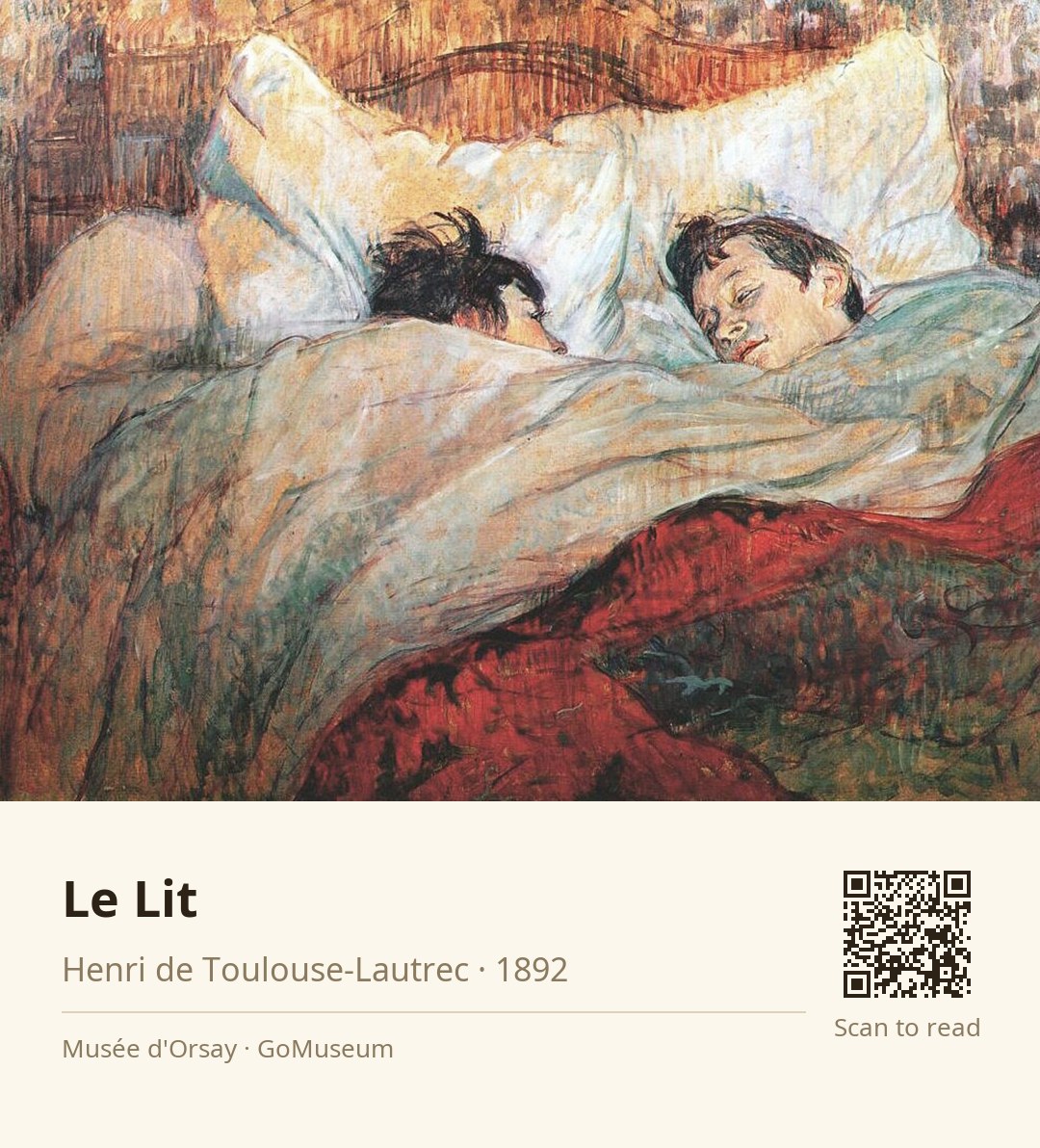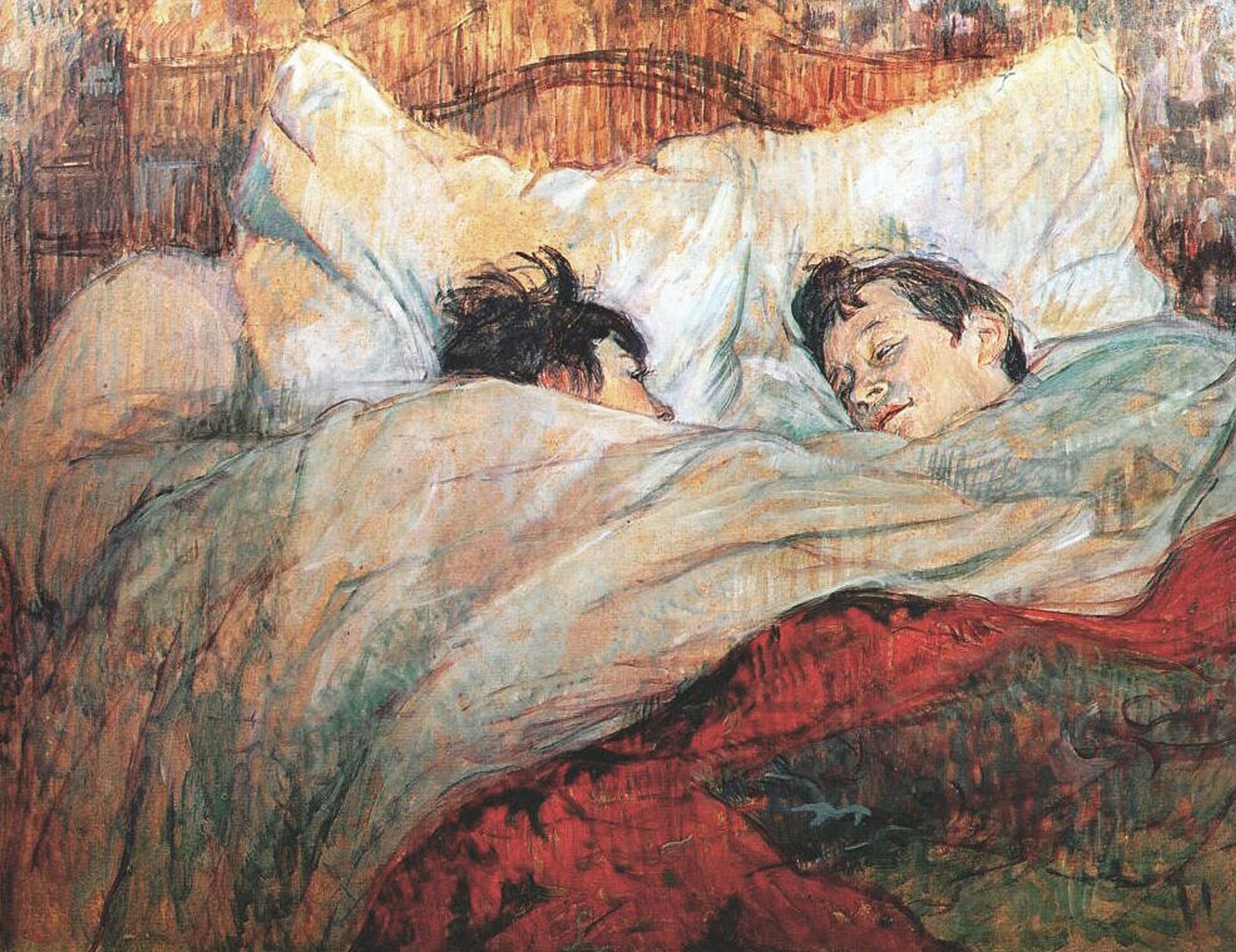
Take a moment to really soak in the intimacy of this painting, "Le Lit" by Henri de Toulouse-Lautrec. Notice how the two women are nestled under a cascade of bedclothes, their heads the only visible parts, gazing into each other's eyes. The way the white sheets contrast with the deep red bedspread creates a warmth that almost envelops you, doesn’t it?
This isn’t just a depiction of two women in bed; it’s a glimpse into a private moment, a shared connection that feels both tender and profound. Toulouse-Lautrec had a unique ability to capture the essence of his subjects, often portraying the lives of those on the fringes of society with empathy rather than sensationalism. Here, he invites us into a world of intimacy and vulnerability, challenging the norms of his time.
Created in 1892, during a period when he was deeply immersed in the vibrant nightlife of Paris, this piece reflects his fascination with the lives of women in brothels, where he spent considerable time observing and painting. It’s a bold statement for an artist of his era, showcasing a relationship that was often hidden from public view.
As you stand here, think about the stories these women could tell. What do you imagine their lives were like beyond this moment?
Henri de Toulouse-Lautrec, born on November 24, 1864, in Albi, France, was a pivotal figure in the Post-Impressionist movement. Despite his aristocratic background, his life was marked by physical challenges, including a genetic disorder that stunted his growth. This condition shaped his unique perspective and deep empathy for the marginalized, particularly the vibrant characters of Paris's Belle Époque, including prostitutes and performers.
Toulouse-Lautrec's artistic journey began in earnest when he moved to Paris, where he immersed himself in the bohemian lifestyle of Montmartre. His work, characterized by bold colors and dynamic compositions, captured the essence of nightlife, cabarets, and the human condition. He became known for his posters and illustrations, which brought the world of the Moulin Rouge to life. His relationships with fellow artists, such as Vincent van Gogh, and his romantic entanglements, notably with Suzanne Valadon, influenced his creative output.
His legacy endures as he is celebrated for his innovative approach to art and his ability to convey the spirit of an era. Toulouse-Lautrec's works continue to resonate, offering a glimpse into the exuberance and struggles of a society on the brink of modernity, solidifying his place in art history as a masterful chronicler of the human experience. He passed away on September 9, 1901, leaving behind a rich body of work that remains influential to this day.
Henri de Toulouse-Lautrec's 'Le Lit' was painted in 1892, during a time when he was deeply engaged with the vibrant nightlife of Paris. This piece was part of a series commissioned for a brothel on rue d'Ambroise, where he spent significant time observing the lives of its residents. The painting was first exhibited at the Le Barc de Boutteville gallery during the third exhibition of Impressionists and Symbolists, running from November 1892 to early 1893. After its initial showing, it entered the collection of art collector Roger Marx. Following Marx's death in 1913, the painting changed hands to Antonin Personnaz, and after Personnaz's passing in 1936, it was donated to the French state. It was held at the Musée du Louvre before finding its permanent home at the Musée d'Orsay in 1986, where it remains a celebrated piece of art history.
In 'Le Lit', Toulouse-Lautrec employs oil paints on cardboard, mounted on wood, creating a striking contrast between the soft white sheets and the bold red bedspread. The composition is intimate, with the women's heads emerging from a sea of bedclothes, drawing the viewer's eye to their gazes locked in connection. The brushwork is fluid yet deliberate, capturing the warmth of the scene, possibly illuminated by rosy morning light or gas lamps. This choice of light enhances the emotional depth, creating an inviting atmosphere that feels both private and vulnerable. The scale of the painting, measuring 54 by 70.5 centimeters, allows for a close inspection of the details, inviting you to linger over the textures and colors that evoke a sense of warmth and intimacy.
The brothel on rue d'Ambroise was crucial for Toulouse-Lautrec as it served as a primary source of inspiration, allowing him to observe and portray the lives of its residents with empathy. His time there led to a series of intimate portraits, including 'Le Lit', showcasing his deep engagement with the realities of their lives.
Toulouse-Lautrec's stunted growth due to his health issues gave him a unique perspective on the world, often leading him to focus on marginalized individuals, such as prostitutes and performers. This connection to the fringes of society allowed him to capture their experiences with a sense of authenticity and compassion.
After its initial exhibition in 1892, 'Le Lit' was acquired by art collector Roger Marx and remained in private collections until it was donated to the French state in 1937. It was then held at the Musée du Louvre before being transferred to the Musée d'Orsay in 1986, where it continues to be celebrated.