The Suns, Garden of Petit Gennevilliers
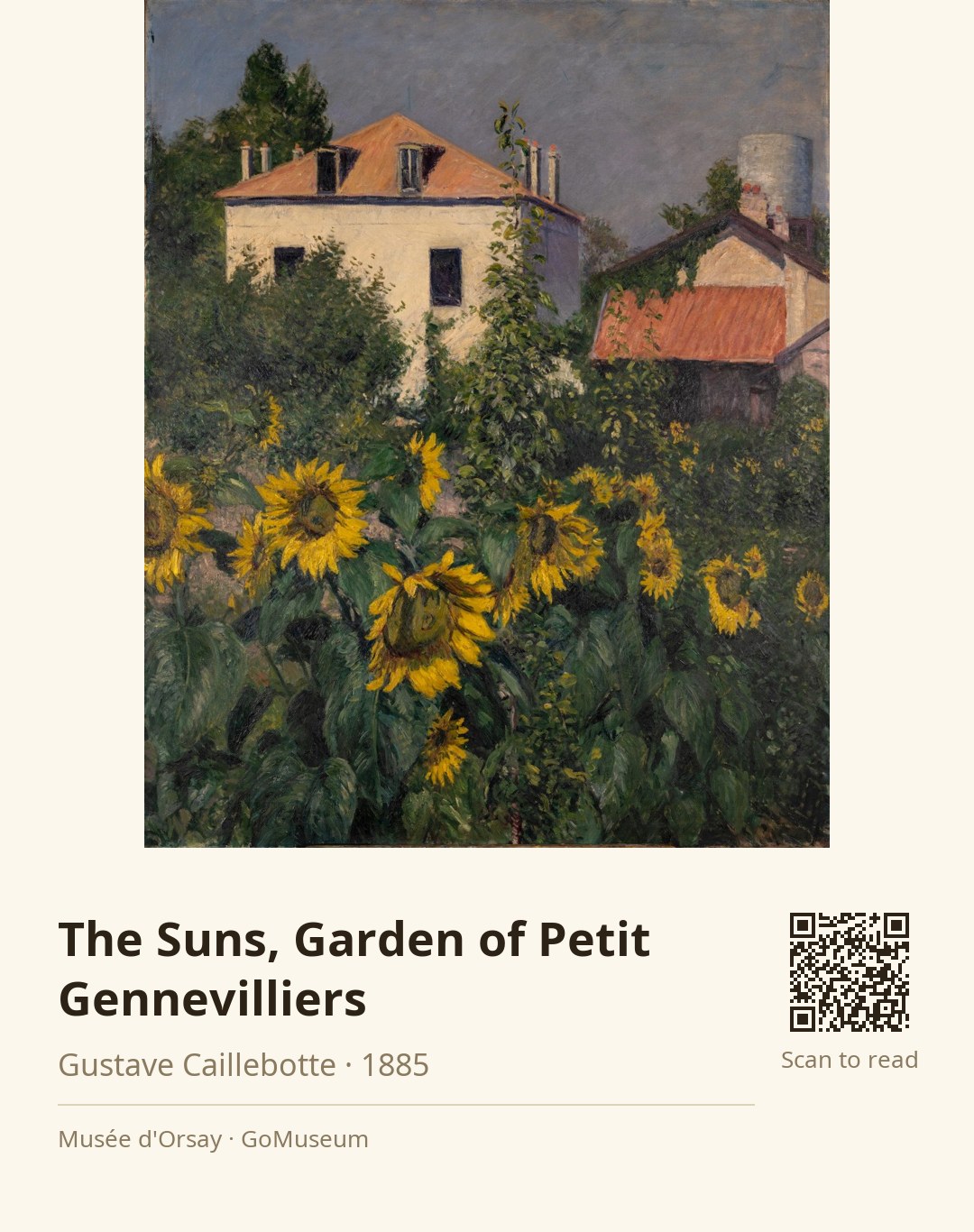
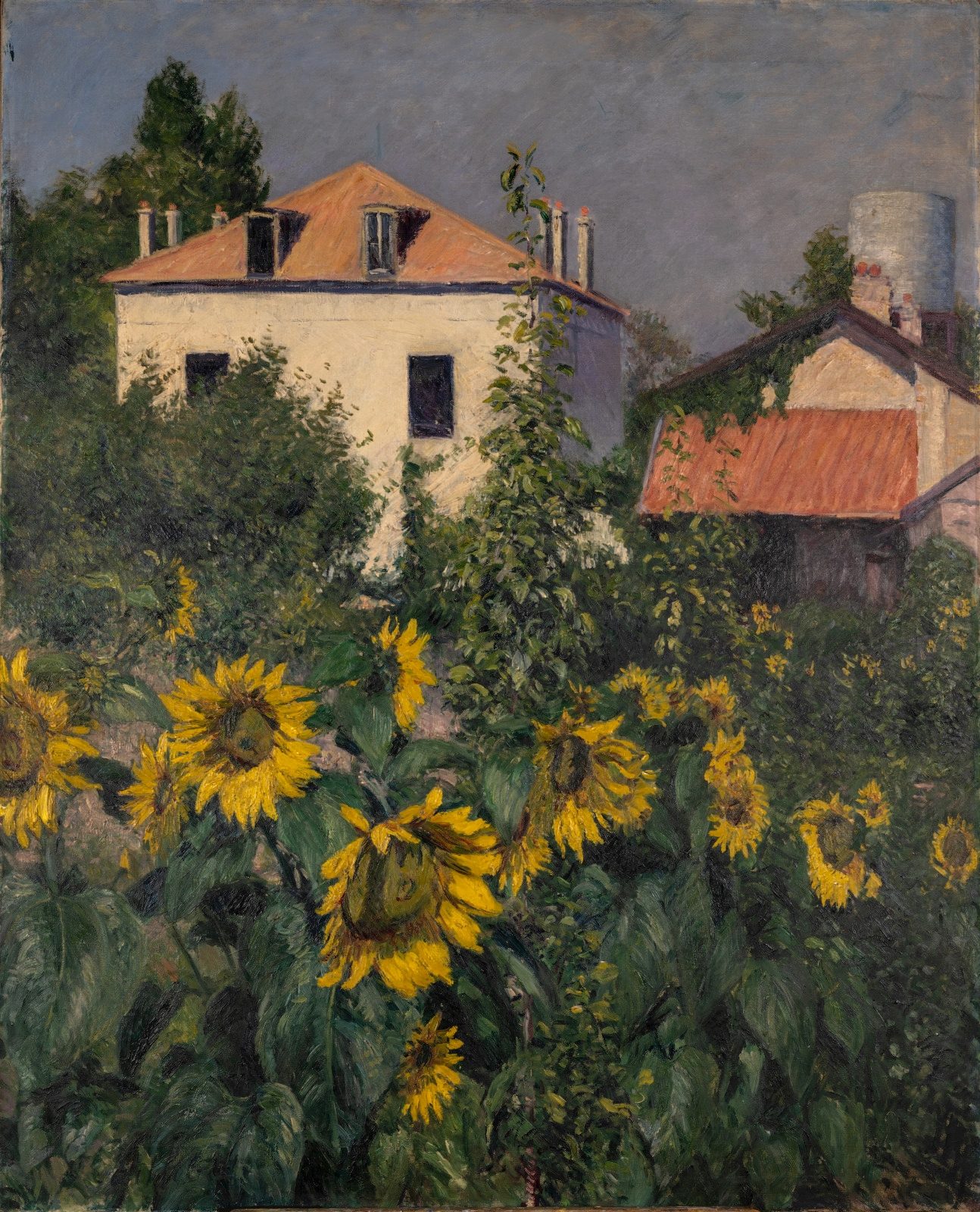
🎧 This work has audio narration — listen in the appSunflowers dominate the foreground of "The Suns, Garden of Petit Gennevilliers," their bright yellow petals and dark centers radiating warmth and vitality. Behind this vibrant display, a white house with a red roof peeks through lush greenery, its windows and chimneys adding a touch of architectural charm to the scene.
These elements create a vivid contrast between the lively garden and the serene structures, inviting viewers to immerse themselves in the tranquility of the setting. Caillebotte's detailed brushwork captures the texture of the foliage and the interplay of light, enhancing the sense of depth and inviting a closer look at the natural beauty surrounding the buildings. This painting reflects Caillebotte's own property in Gennevilliers, a place where he spent time cultivating his artistic vision amidst nature's splendor.
Created in 1885, this work exemplifies Caillebotte's unique blend of realism and impressionism, showcasing his ability to depict everyday scenes with both precision and a soft, atmospheric quality.
Gustave Caillebotte was a French painter born on August 19, 1848, into an affluent Parisian family. His upbringing afforded him the luxury of pursuing art, which he began seriously after serving in the Franco-Prussian War. Caillebotte's early works reflected a realistic style, often capturing contemporary life with a focus on urban scenes and laborers, as seen in his notable painting "The Floor Scrapers." His artistic journey was intertwined with the Impressionist movement, where he played a dual role as both a creator and a patron, supporting fellow artists like Monet and Degas.
Despite his contributions, Caillebotte's work was often overshadowed by his more famous contemporaries, and he did not receive significant recognition until long after his death on February 21, 1894. His collection of Impressionist works, bequeathed to the French state, became a cornerstone of the movement's legacy. Caillebotte's unique perspective, blending realism with the emerging Impressionist style, positioned him as a pivotal figure in art history, though it took a century for his contributions to be fully acknowledged through retrospectives and exhibitions. His legacy continues to resonate, illustrating the complexities of artistic recognition and the evolution of modern art.
Gustave Caillebotte's "The Suns, Garden of Petit Gennevilliers" was painted in 1885, a time when the Impressionist movement was gaining traction in France. This particular piece, showcasing Caillebotte's own property in Gennevilliers, reflects his personal connection to the landscape. The painting was later acquired by the Musée d'Orsay in Paris in 2022, where it continues to be celebrated. Caillebotte, who was not just a painter but also a significant patron of the Impressionists, played a vital role in promoting his contemporaries. His collection, bequeathed to the French state, became a cornerstone of Impressionist art, despite some controversy surrounding its acceptance. The reception of his works was mixed during his lifetime, often overshadowed by his more famous peers, yet he remained a key figure in the movement's development.
Interestingly, Caillebotte was not only a painter but also an avid sailor and had a keen interest in photography. His wealth allowed him to explore these passions freely, and he often integrated his love for the outdoors into his art. This multifaceted approach to life and art set him apart from many of his contemporaries, who were more singularly focused on painting.
Caillebotte was passionate about sailing and photography, which he often integrated into his artistic life.
After his death, Caillebotte's collection was given to the French state and became a foundational part of Impressionist art, though its acceptance was met with some controversy.