The siesta (after Millet)
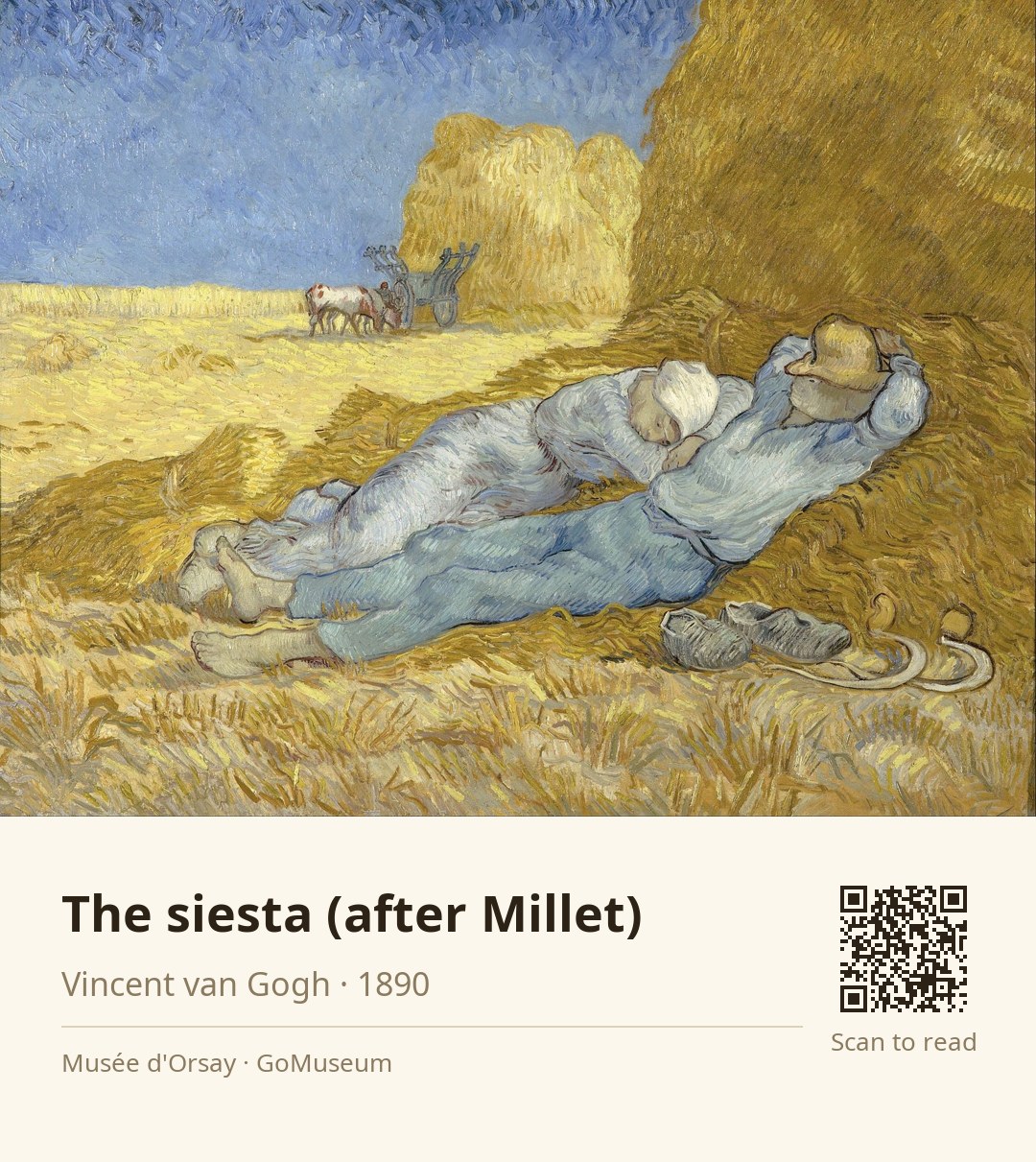
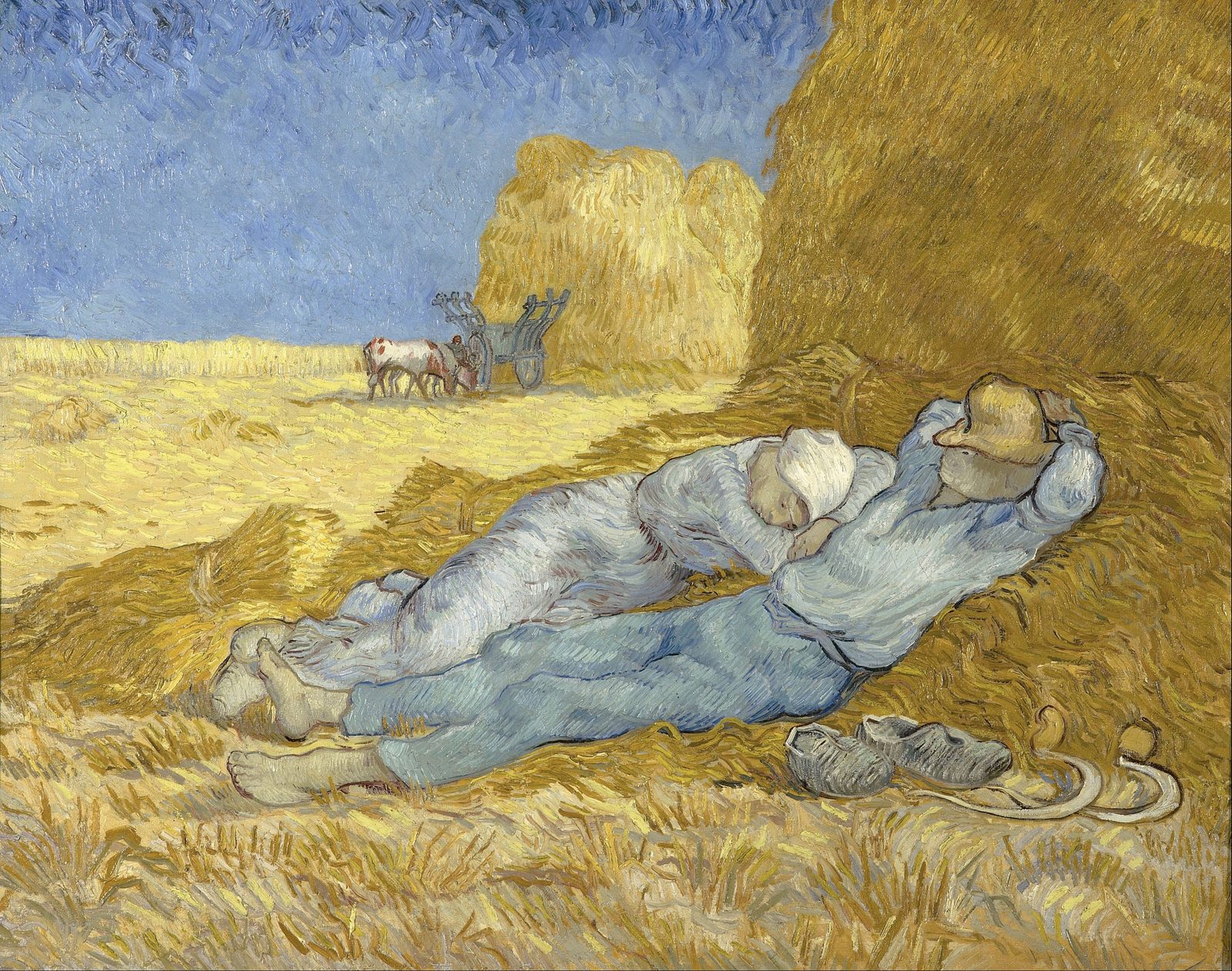
🎧 This work has audio narration — listen in the appTake a moment to really soak in the scene before you. Vincent van Gogh’s "The Siesta" captures a tranquil moment of rural life, but look closely at the colors and brushwork. Notice how the vibrant yellows of the wheat fields contrast with the deep blues and purples of the shadows cast by the haystacks. These details aren’t just pretty; they reflect Van Gogh’s emotional intensity and his unique way of seeing the world. The couple resting in the shade isn’t just a depiction of a break from work; it’s a celebration of life’s simple pleasures, infused with the warmth of the midday sun and the coolness of the shade. Created during a challenging period in Van Gogh's life, while he was in a mental asylum, this painting draws inspiration from Jean-François Millet’s earlier work on the same theme. Van Gogh took Millet’s idea and transformed it with his own vibrant palette and dynamic brushstrokes, breathing new life into a familiar subject. As you stand here, think about how this painting not only reflects the beauty of a moment but also the artist's struggle and resilience. What feelings does this scene evoke in you? How does it change the way you think about rest and labor?
Vincent van Gogh was a Dutch Post-Impressionist painter born on March 30, 1853, in Zundert. He is renowned for his vibrant use of color and expressive brushwork, which laid the groundwork for modern art. Despite creating around 2,100 artworks in just over a decade, including 860 oil paintings, he struggled with mental illness and poverty throughout his life. His early career as an art dealer was marked by disillusionment, leading him to pursue painting in 1881.
Van Gogh's intense passion for art was evident in his correspondence with his brother Theo, who provided emotional and financial support. His works evolved significantly after moving to Paris in 1886, where he mingled with avant-garde artists. His time in Arles in 1888 marked a peak in his creativity, producing iconic series like sunflowers and wheat fields.
Tragically, van Gogh's life ended in suicide at 37, after years of battling his demons. Initially unrecognized, he gained fame posthumously, becoming a symbol of the tortured artist. His legacy influenced movements like Fauvism and Expressionism, securing his place as one of the most significant figures in art history.
Vincent van Gogh painted 'The Siesta' between December 1889 and January 1890, during a challenging period of his life while he was interned in a mental asylum in Saint-Rémy-de-Provence, France. This painting is a homage to Jean-François Millet's earlier work of the same name, reflecting Van Gogh's deep admiration for Millet's portrayal of rural life. Van Gogh-Bonger, and was later exhibited in Paris in 1925 and 1927.
As you gaze at 'The Siesta', take a moment to appreciate Van Gogh's masterful brushwork. The painting's vibrant yellows and deep blues are not just colors; they are emotions captured on canvas. Notice how the thick, expressive strokes create a sense of movement, almost as if the wheat fields are swaying in the gentle breeze. The contrast between the warm sunlight and the cool shadows adds depth, inviting you into the scene. Van Gogh's choice of composition, with the couple resting under the haystack, draws your eye naturally to the focal point, creating a serene yet dynamic balance. The scale of the painting, at 73 by 91 centimeters, allows for an immersive experience, making you feel as if you could step right into that peaceful moment of rural life.
Painted during a tumultuous period in Van Gogh's life, this artwork reflects his deep connection to rural life and the beauty of the natural world. Its vibrant colors and dynamic brushwork capture the essence of a peaceful moment, yet they also hint at the artist's inner turmoil. This painting has influenced countless artists who followed, as it embodies the emotional intensity and expressive power that would shape modern art. Remember this: Van Gogh's ability to transform a simple scene of rest into a profound statement about life and struggle is what makes his work timeless and impactful.
One intriguing aspect of 'The Siesta' is that it was painted during a period when Van Gogh was grappling with his mental health. Despite the serene scene depicted, the artist's own struggles with mental illness infused the work with a sense of intensity and urgency. This contrast between the tranquil subject matter and Van Gogh's turbulent emotions adds a layer of complexity, making the painting not just a representation of rural life, but also a reflection of the artist's inner world.
Van Gogh created 'The Siesta' while he was interned at the Saint-Paul-de-Mausole asylum in Saint-Rémy-de-Provence, a place that provided him with both a refuge and inspiration, allowing him to immerse himself in the beauty of the surrounding landscapes.
While the painting depicts a serene moment, the intense colors and dynamic brushwork subtly convey Van Gogh's emotional turmoil, hinting at the contrast between the peaceful scene and his own mental health challenges.