Le Déjeuner sur l'herbe
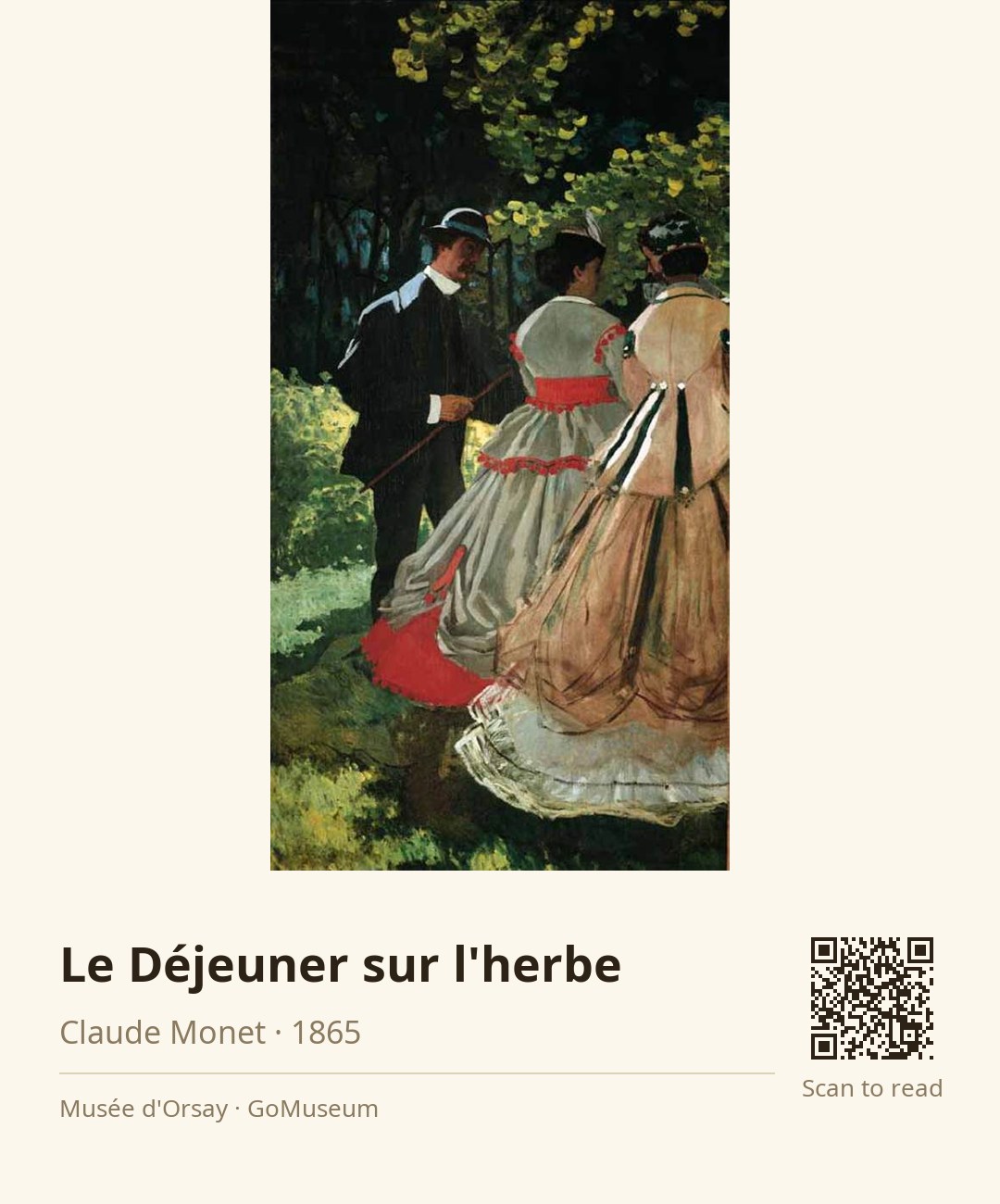
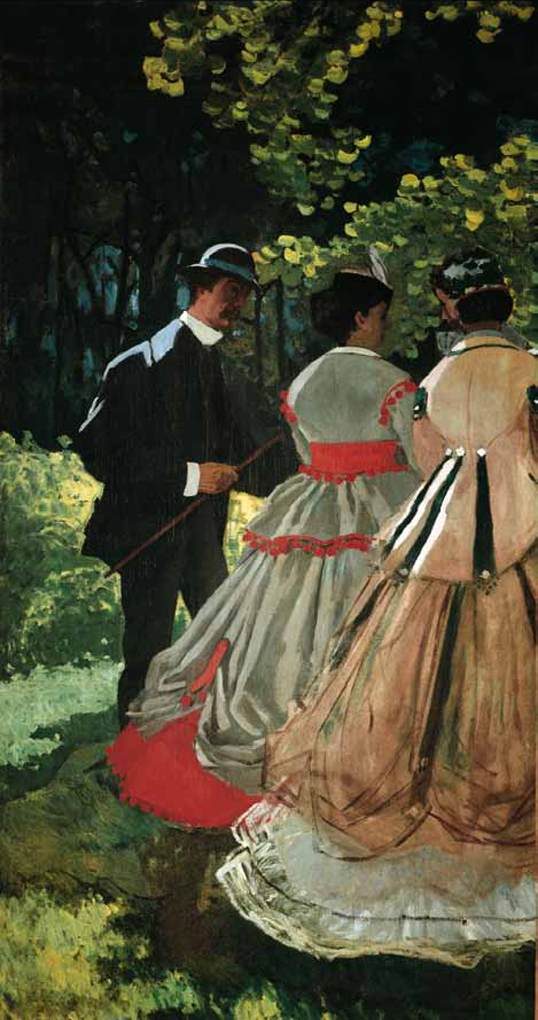
🎧 This work has audio narration — listen in the appTake a moment to really look at Monet's "Le Déjeuner sur l'herbe." Notice how the sunlight dances through the leaves, casting playful shadows on the picnic scene below. The way the light interacts with the figures, especially the vibrant dresses of the women, creates a sense of immediacy and life, doesn't it? This isn't just a gathering; it's a snapshot of a moment, filled with warmth and camaraderie.
Monet painted this in 1865, inspired by Manet's earlier work of the same name, but he aimed for something different. While Manet's figures seem posed under studio lights, Monet captures the natural light of a sunny day, giving his painting a fresh, spontaneous feel. He wanted to depict life as it is, without the artificiality that sometimes creeps into art.
Interestingly, this piece was left unfinished, a testament to Monet's struggle with time and circumstance. He initially planned to showcase it at the Salon of 1866 but couldn't complete it in time. Instead, it became a personal project that reflected his evolving style and ambition.
As you stand here, think about the stories these figures could tell. Who do you imagine they are? What conversations might they be having? Monet invites you into this moment, urging you to feel the joy of a simple picnic in nature.
Oscar-Claude Monet, born on November 14, 1840, in Paris, was a pioneering French painter and a founder of Impressionism, a movement that transformed the art world. Raised in Le Havre, he developed a passion for nature and painting early on, encouraged by his mother, while his father hoped he would pursue a business career. After his mother's death in 1857, Monet moved in with his aunt, who supported his artistic ambitions.
Monet's career began with caricatures, but he soon sought formal training, studying under Eugène Boudin, who introduced him to plein air painting. His breakthrough came in 1866 with "La Femme à la robe verte," which garnered attention at the Salon. The term "Impressionism" originated from his work "Impression, Sunrise," exhibited in 1874, marking a shift away from traditional art.
Throughout his life, Monet focused on capturing the essence of light and color in nature, creating series of paintings that depicted the same scenes under varying conditions, such as his famous haystacks and water lilies. He settled in Giverny in 1883, where he cultivated a beautiful garden that became his muse. Despite personal hardships, including the loss of loved ones and health issues, Monet's relentless dedication to his craft solidified his place in art history as a master of modernism, influencing countless artists and leaving a lasting legacy. He died on December 5, 1926, in Giverny, celebrated as one of the most significant figures in art.
Monet's "Le Déjeuner sur l'herbe" was conceived between 1865 and 1866, a time when the artist was deeply influenced by his contemporaries, particularly Édouard Manet. Initially, Monet aimed to present this ambitious work at the Salon of 1866, but he faced the daunting challenge of translating his sketches into a life-sized canvas. Unfortunately, he underestimated the time required, leaving the piece unfinished by the exhibition date. After struggling with the painting, Monet ultimately used it as collateral for rent, which led to its eventual deterioration in a damp environment. He later bought it back, but the damage forced him to cut the canvas into fragments to salvage the better parts. The central and left panels now reside in the Musée d'Orsay, while a smaller version is housed in the Pushkin Museum in Moscow. Over the years, the painting has changed hands several times, reflecting both its troubled history and its significance in Monet's evolving artistic journey.
As you gaze at this painting, take a moment to appreciate Monet's masterful brushwork. His technique is characterized by bold, energetic strokes that create a sense of movement and immediacy. Notice how he employs vibrant colors, particularly in the women's dresses, which stand out against the more muted tones of the men's clothing. This contrast draws your eye and enhances the lively atmosphere of the picnic scene. Monet's choice of light-tone priming allows for a luminous quality, making the sunlight appear to dance across the canvas. The play of light and shadow, filtered through the leaves above, adds depth and dimension, immersing you in this sun-drenched moment. The composition, with its informal arrangement of figures, invites you to feel as if you are part of the gathering, experiencing the joy and camaraderie of a day spent in nature.
While Manet's version sparked controversy, Monet aimed for a fresh take, capturing a moment in nature with a sense of immediacy and spontaneity. This painting reflects Monet's desire to break away from the artificiality of studio lighting, instead embracing the natural interplay of light and shadow. His approach influenced a generation of artists who sought to depict life as it is, rather than how it should be. Remember, this was more than just a picnic scene; it was a declaration of artistic freedom and a new way of seeing the world.
Here's a little nugget for you: Monet originally intended to submit 'Le Déjeuner sur l'herbe' to the Salon of 1866, but he misjudged the time it would take to transfer his sketches to a life-size canvas. As a result, the painting remained unfinished when the exhibition rolled around.
Monet included Gustave Courbet as a character in the picnic scene, depicting him seated near Camille Doncieux, Monet's first wife. This inclusion highlights the camaraderie and connections among contemporary artists during that time.
After Monet used the painting as collateral for rent, it was stored in a damp environment, leading to significant damage. This forced Monet to cut the canvas into fragments to preserve the less damaged areas.