La Balançoire
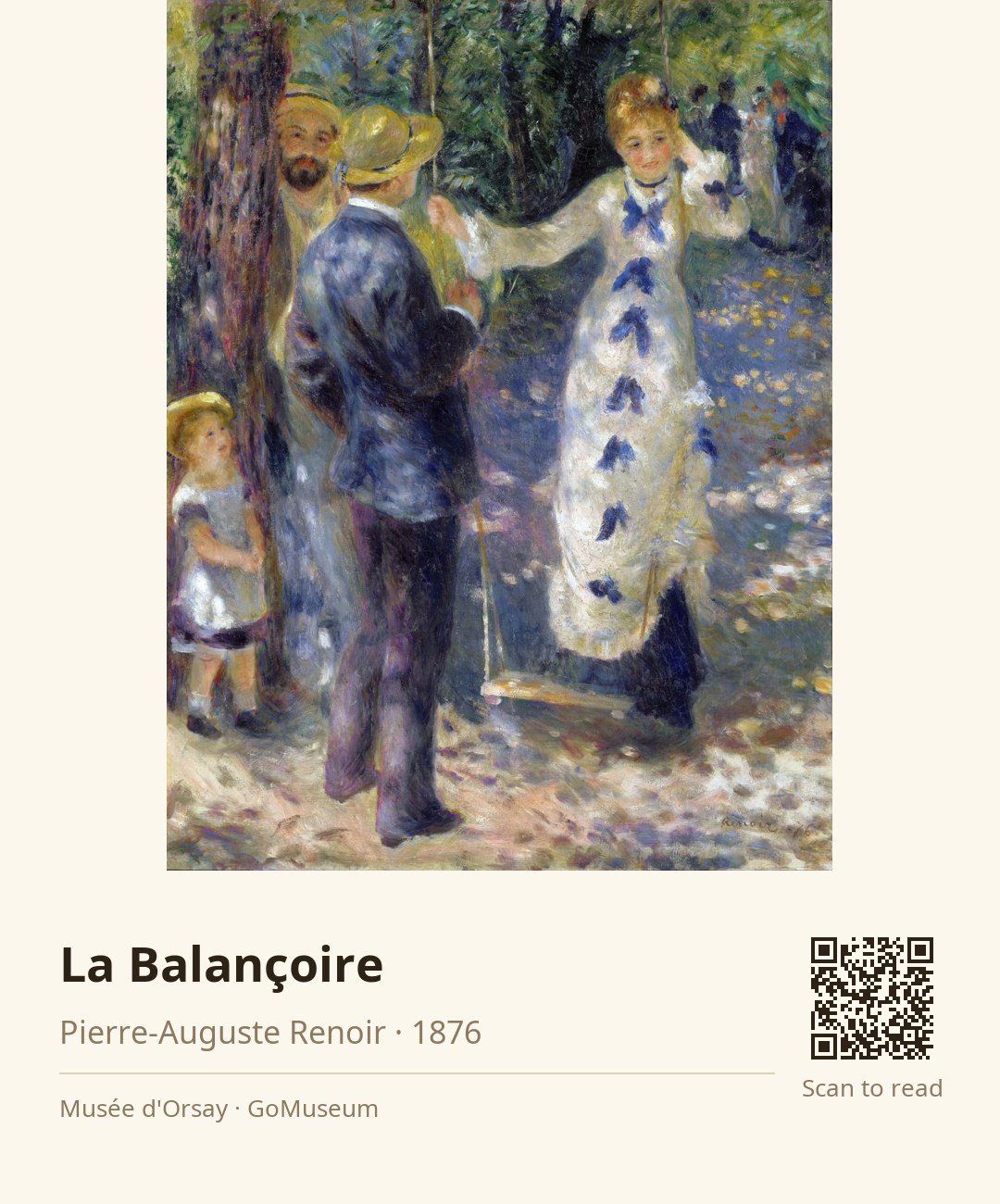
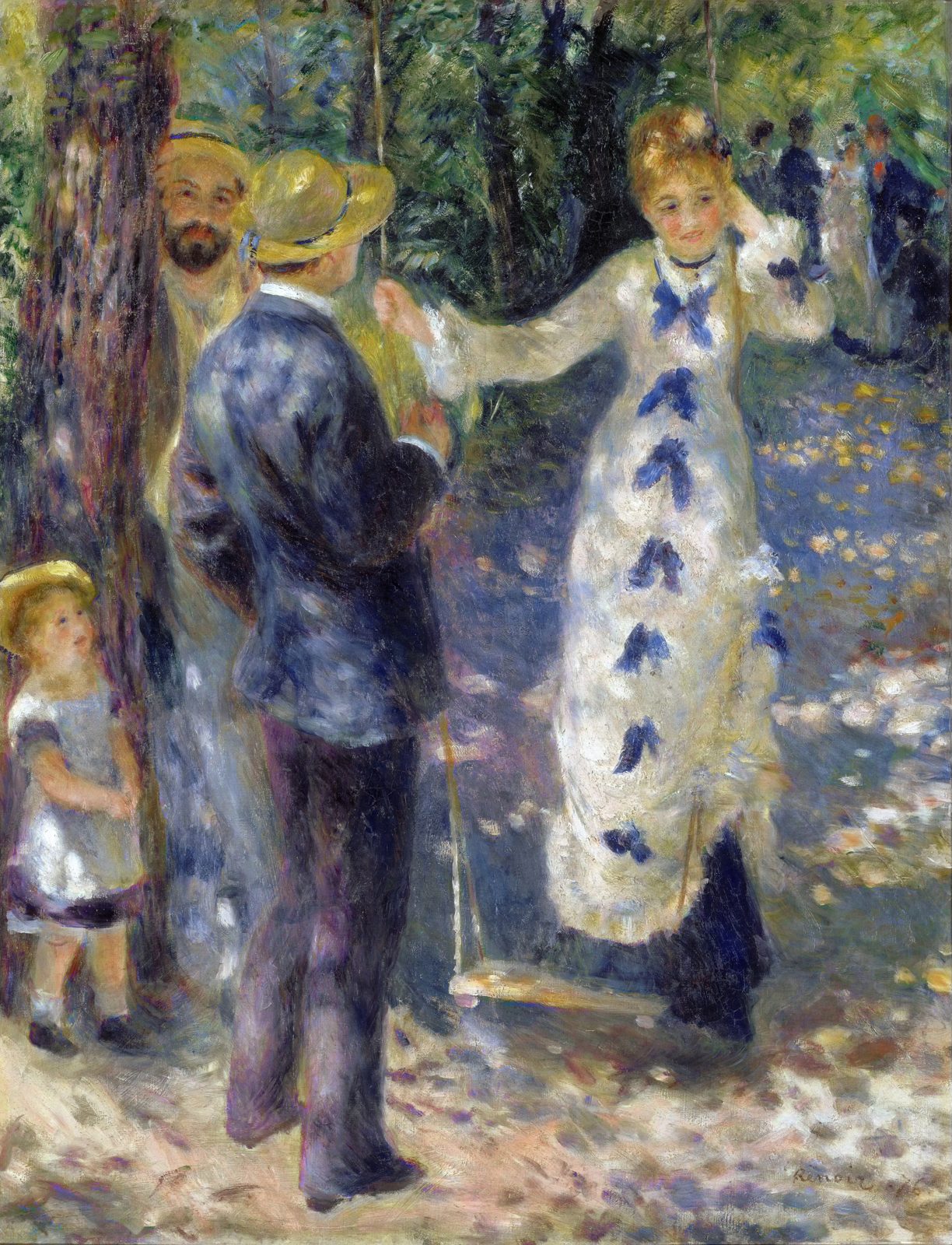
🎧 This work has audio narration — listen in the appTake a moment to look closely at "La Balançoire" by Pierre-Auguste Renoir. Notice how the sunlight dances across the scene, illuminating the vibrant colors of the characters and the blossoms beneath their feet. The young woman on the swing, dressed in a delicate white muslin adorned with blue bows, seems both playful and shy, while the two men, one leaning casually against a tree, are clearly captivated by her. These details matter because they encapsulate the essence of leisure and flirtation in 19th-century Paris. Renoir's loose brushstrokes create an atmosphere that feels alive, almost as if you could hear the laughter and chatter of the garden surrounding them. This painting is not just a snapshot; it’s a moment of intimacy and connection, inviting you to eavesdrop on a conversation that feels both timeless and fleeting. Painted in 1876, during the height of the Impressionist movement, Renoir was inspired by the carefree spirit of the Rococo era, reminiscent of artists like Watteau. As you stand here, think about the stories these characters might tell if they could speak. What do you imagine their conversation is about?
Pierre-Auguste Renoir, born on February 25, 1841, in Limoges, France, emerged as a pivotal figure in the Impressionist movement. His early life in a modest family led him to Paris, where he honed his artistic skills amidst the masterpieces of the Louvre. Initially apprenticed in a porcelain factory, Renoir's passion for painting flourished, particularly after studying under Charles Gleyre, where he befriended fellow artists like Monet and Sisley.
Renoir's work celebrated feminine beauty and vibrant social scenes, exemplified in iconic pieces like "Dance at Le Moulin de la Galette." Despite facing criticism early on, he gained recognition, especially after participating in the first Impressionist exhibition in 1874. His style evolved over the years, transitioning towards realism influenced by classical masters like Raphael.
Throughout his life, Renoir balanced personal struggles, including health issues, with a prolific output, reportedly creating around four thousand works. He became a beloved figure in art history, known for his warm palette and expressive brushwork. Renoir passed away on December 3, 1919, leaving a legacy that continues to inspire artists and art lovers alike.
La Balançoire, painted in the summer of 1876, was first shown at the third Impressionist exhibition in Paris in 1877, where it received a lukewarm reception. Critics were taken aback by Renoir's loose brushwork and the vibrant, almost chaotic splashes of color that seemed to defy traditional painting techniques. It was quickly acquired by Gustave Caillebotte, a fellow artist and collector, who recognized its potential. Over the years, the painting has traveled through various exhibitions, including a notable showing at the Musée d'Orsay, where it resides today. Its journey reflects the changing tastes in art, as what was once deemed too modern has now become a celebrated masterpiece of Impressionism.
Renoir's technique in La Balançoire is a dance of light and color. Notice how he employs short, rapid brushstrokes that create a shimmering effect, almost as if the sunlight itself is alive, filtering through the leaves above. This approach allows the colors to blend optically rather than physically, giving the scene a vibrant, almost dreamlike quality. The composition is structured with vertical lines formed by the figures and the swing's ropes, drawing your eye upward and creating a sense of movement. The placement of the characters, with the young woman at the center, invites you into a moment of intimacy, while the surrounding blossoms add a touch of nature's beauty, enhancing the painting's overall warmth and liveliness.
One intriguing aspect of La Balançoire is that the young girl gazing up at the swing was not initially intended to be part of the composition. Renoir noticed her watching him while he painted and decided to include her, capturing a spontaneous moment that adds to the painting's charm and authenticity.
The young girl gazing up at the swing was not originally part of the composition; Renoir noticed her watching him while he painted and decided to include her, adding a spontaneous charm to the scene.
His background in porcelain painting contributed to the delicacy and elegance seen in his work, as he adopted light and airy color palettes reminiscent of eighteenth-century art, which became a hallmark of his Impressionist style.
When La Balançoire was first shown at the third Impressionist exhibition in 1877, it received a lukewarm reception, with critics taken aback by Renoir's loose brushwork and vibrant colors that defied traditional painting techniques.