 Image: Pierre Auguste Renoir (1841 - 1919) – Painter (French) Born in Limoges. Died in Cagnes-sur-Mer. Details on Google Art Project
Dance in the Country
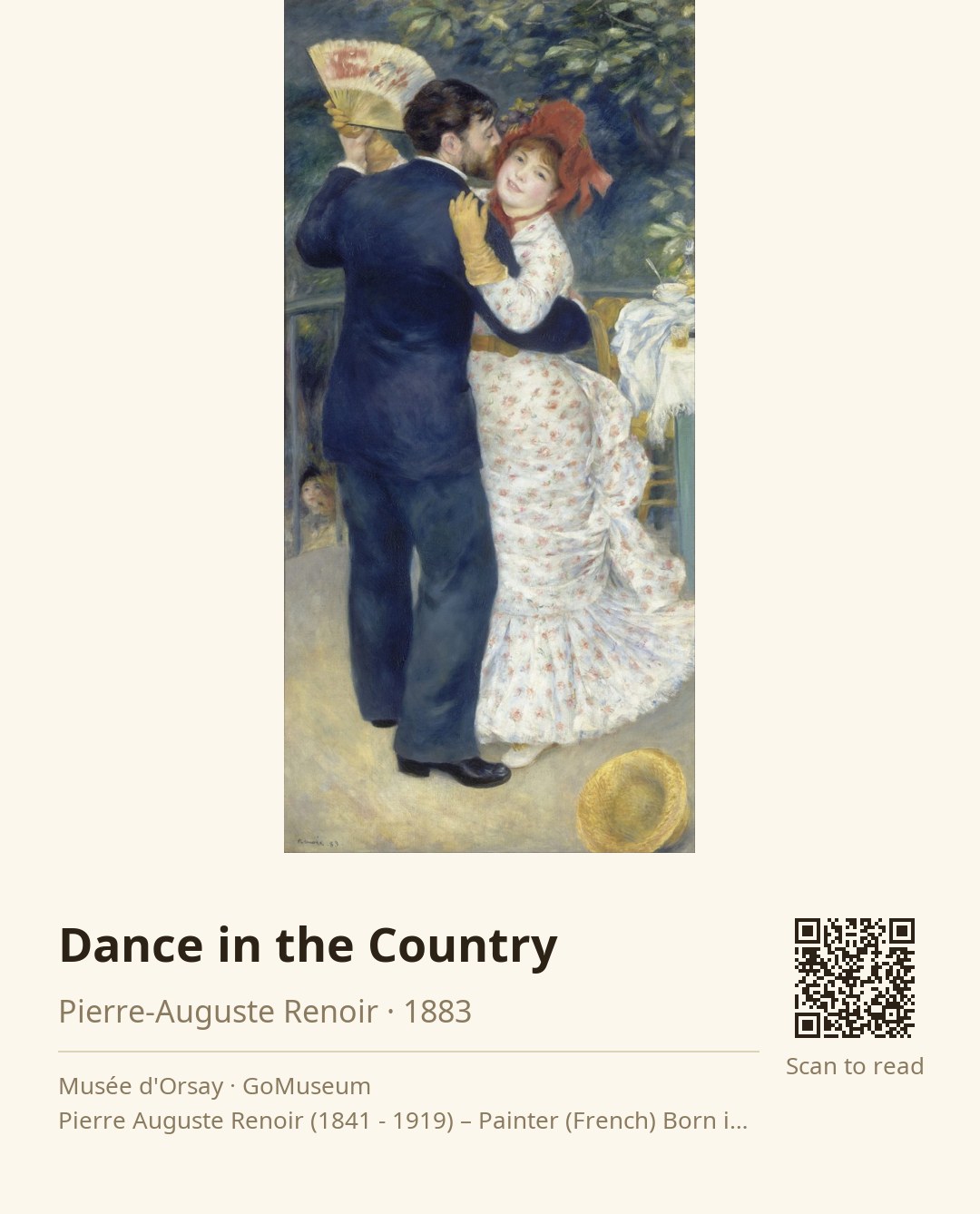
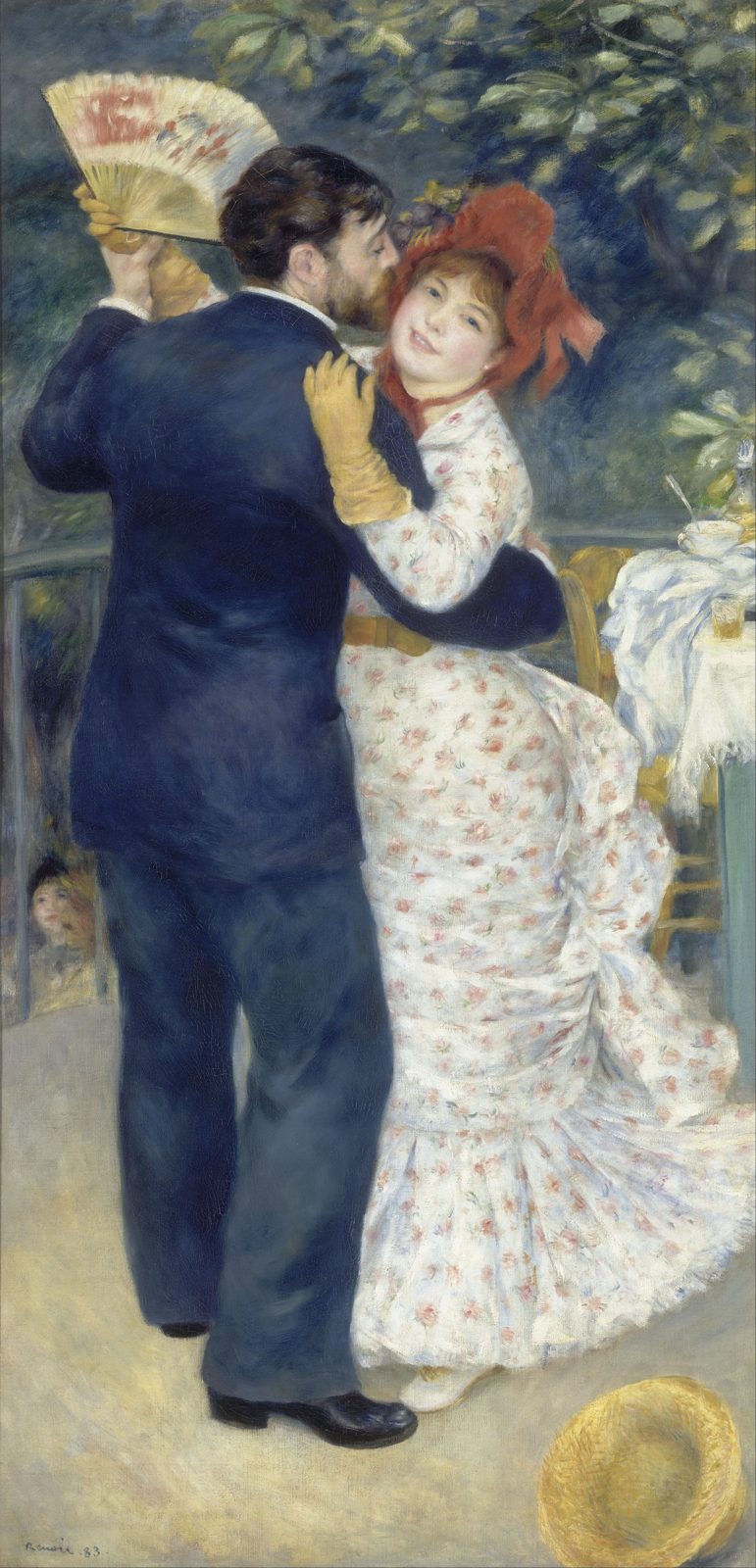
🎧 This work has audio narration — listen in the appTake a moment to really soak in the joy radiating from this painting, "Dance in the Country" by Pierre-Auguste Renoir. Look closely at the couple at the center—notice how the man’s hand gently cradles the woman’s waist while she holds a fan, her smile bright and inviting. The vibrant colors of her attire, especially that striking red hat and warm yellow gloves, pop against the lush green of the chestnut tree above them. These details matter because they encapsulate the essence of leisure and romance in 19th-century France. Renoir’s brushwork here is lively and fluid, capturing not just a moment in time but the very spirit of joy and connection. This painting was commissioned by a merchant who wanted to celebrate the social dances of the era, and Renoir delivered with a scene that feels both intimate and exuberant. Created in 1883, this work marks a pivotal moment in Renoir’s career, as he began to evolve beyond traditional Impressionism, influenced by his travels in Italy and the works of Raphael. The couple depicted here, Paul Lhôte and Aline Charigot—who would later become Renoir’s wife—are not just figures in a dance; they embody a personal story of love and companionship. As you stand here, think about the joy of dancing and the connections we share with others. What stories do you think this couple might tell if they could step out of the canvas?
Pierre-Auguste Renoir, born on February 25, 1841, in Limoges, France, emerged as a pivotal figure in the Impressionist movement. His early life in a modest family led him to Paris, where he honed his artistic skills amidst the masterpieces of the Louvre. Initially apprenticed in a porcelain factory, Renoir's passion for painting flourished, particularly after studying under Charles Gleyre, where he befriended fellow artists like Monet and Sisley.
Renoir's work celebrated feminine beauty and vibrant social scenes, exemplified in iconic pieces like "Dance at Le Moulin de la Galette." Despite facing criticism early on, he gained recognition, especially after participating in the first Impressionist exhibition in 1874. His style evolved over the years, transitioning towards realism influenced by classical masters like Raphael.
Throughout his life, Renoir balanced personal struggles, including health issues, with a prolific output, reportedly creating around four thousand works. He became a beloved figure in art history, known for his warm palette and expressive brushwork. Renoir passed away on December 3, 1919, leaving a legacy that continues to inspire artists and art lovers alike.
In 1882, the merchant Paul Durand-Ruel commissioned Renoir to create a painting that captured the essence of social dances. By April 1883, 'Dance in the Country' was unveiled for the first time, and Durand-Ruel kept it until Renoir's death in 1919. This painting was part of a trio, alongside 'Dance in the City' and 'Dance at Bougival,' all created in the same year. The reception was mixed initially, as Renoir was still navigating the art world, but this piece marked a significant moment in his evolution as he began to break away from traditional Impressionism, influenced by his travels in Italy and the works of Raphael.
Renoir's technique in 'Dance in the Country' is a vibrant dance of color and light. The brushwork is fluid and lively, almost as if the paint itself is moving with the couple. Notice how the warm hues of the woman's attire contrast beautifully with the lush greens of the chestnut tree, creating a sense of depth and vitality. The figures are painted life-size, almost enveloping you in their joyous moment. Renoir's choice to place the couple at the center, surrounded by a soft blur of background activity, draws your eye directly to their intimate connection. The way he captures light filtering through the leaves adds a shimmering quality, enhancing the scene's celebratory atmosphere. This is not just a depiction of a dance; it's an invitation to feel the joy and warmth of the moment.
Did you know that 'Dance in the Country' was commissioned by Paul Durand-Ruel, a prominent art dealer who played a crucial role in promoting Impressionist artists? He wanted Renoir to create works centered around the theme of dance, and this painting was part of that vision. Interestingly, the couple depicted here, Paul Lhôte and Aline Charigot, were not just models; Aline would later become Renoir's wife. This personal connection adds a layer of intimacy to the artwork, making it not just a depiction of a joyful moment, but also a glimpse into Renoir's own life.
In the background, there's a table and a hat on the ground, along with the faces of onlookers peeking from below the dance floor, adding layers of social interaction to the scene.
The couple depicted, Paul Lhôte and Aline Charigot, were not just models; Aline would later become Renoir's wife, making this painting a significant personal milestone in his life.