 Image: Chris93 · Siren-Com · Sailko · Sharon Mollerus · Sharon Mollerus
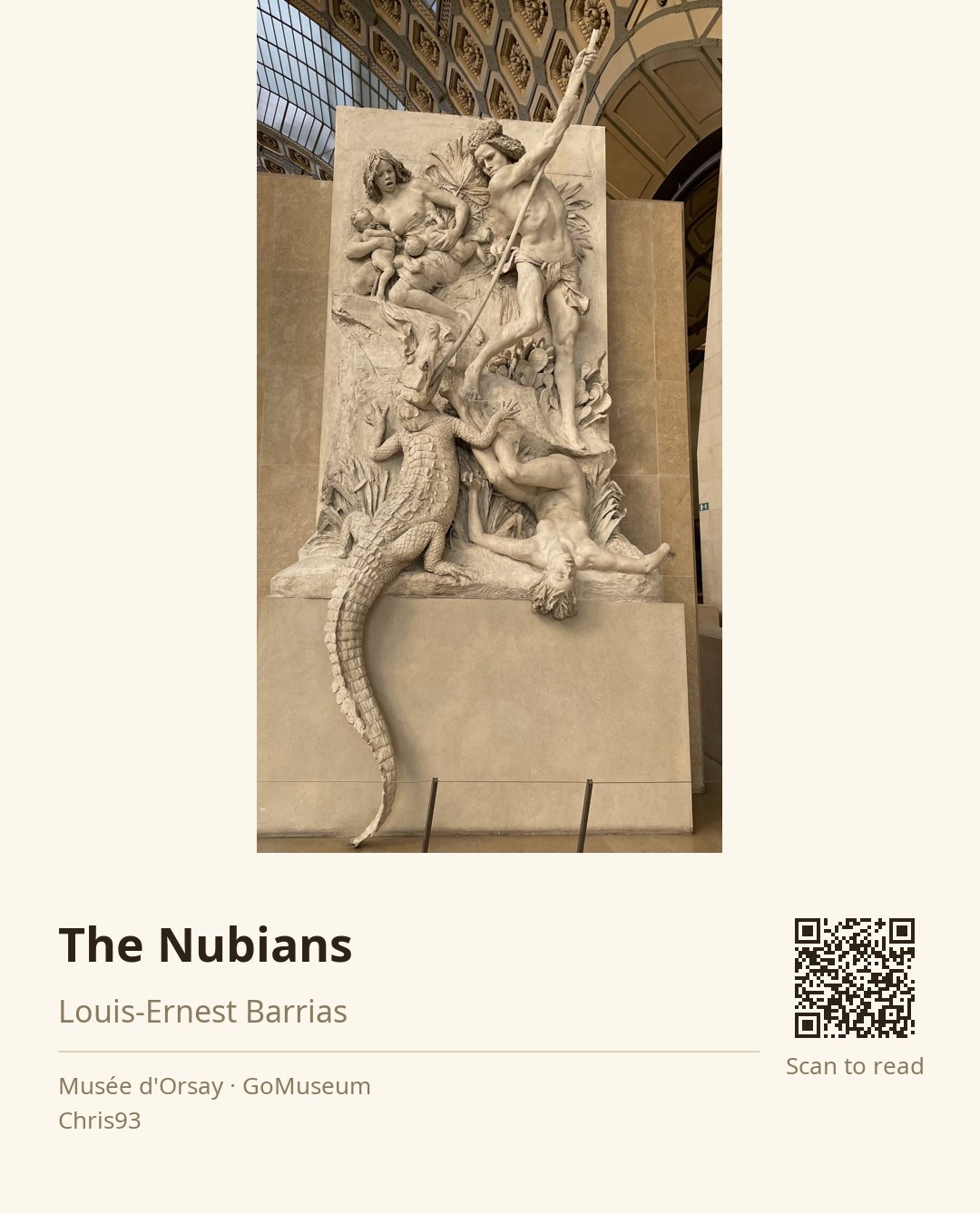
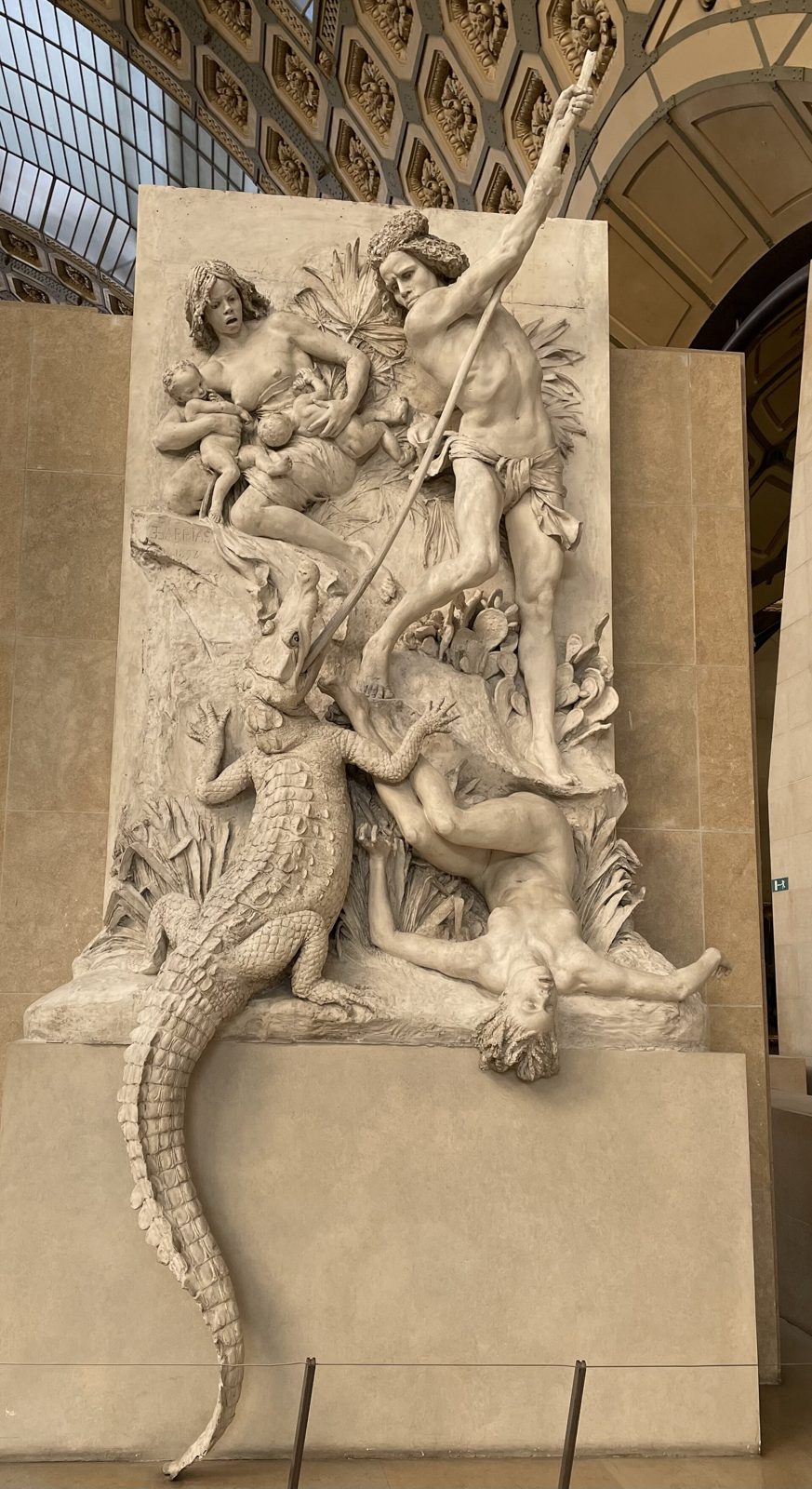
Take a moment to really look at "The Nubians" by Louis-Ernest Barrias. Notice how the figures seem to leap from the stone, their muscles taut and expressions intense. Focus on the man, poised with a spear, as he confronts the gaping jaws of the alligator. His determination is palpable, and the tension in this moment is almost cinematic. These details matter because they capture a dramatic struggle between man and nature, a theme that resonates deeply in the context of colonial attitudes of the time. Barrias was not just sculpting a scene; he was reflecting contemporary views on race and the exoticism of African cultures. The precision in the alligator's scales and the surrounding flora adds a layer of realism that draws you into this world, making it feel both immediate and visceral. Commissioned in 1893 for a façade that aimed to represent "human races," this sculpture is a product of its era, echoing the fascination and misconceptions surrounding African peoples. Barrias was influenced by earlier ethnographic sculptures, and his work here can be seen as both an homage and a critique of those representations. As you stand before this piece, consider what stories it tells beyond the surface. How does it challenge or reinforce your perceptions of history and culture? What emotions does it stir within you?
Louis-Ernest Barrias was a prominent French sculptor born on April 13, 1841, in Paris, into a family of artists. His father painted porcelain, and his brother was a recognized painter, which influenced his artistic journey. Initially a painter, Barrias shifted to sculpture under the guidance of Pierre-Jules Cavelier and later studied at the École nationale supérieure des Beaux-Arts. He gained significant recognition after winning the Prix de Rome in 1865, allowing him to study at the French Academy in Rome.
Barrias's work, characterized by a Romantic realist style, often drew inspiration from nature and literature, reflecting the Art Nouveau movement of his time. Notable pieces include "Nature Unveiling Herself Before Science" and "The Oath of Spartacus." His contributions to public art include decorations for the Paris Opéra and the Hôtel de la Païva. He was honored with the Legion of Honour and served as a professor at the École des Beaux-Arts, mentoring future artists.
Barrias's legacy endures in his dynamic sculptures that blend emotion and form, securing his place in the history of French sculpture. He passed away on February 4, 1905, leaving behind a rich body of work celebrated in various public collections.
As you gaze at 'The Nubians,' take a closer look at the intricate details of the high relief. Notice how Barrias skillfully carved the alligator's scales, each one meticulously defined, almost as if you could feel their rough texture. The figures, too, are crafted with a sense of movement; the way the muscles are sculpted suggests a dynamic tension, as if they might leap off the stone at any moment.
Commissioned in 1893 for the façade of the Musée d'Histoire Naturelle in Paris, 'The Nubians' was intended to represent 'human races' in a time when colonial attitudes were shaping perceptions of Africa. Barrias was inspired by earlier ethnographic sculptures, echoing the fascination with African cultures that was prevalent in the late 19th century. The piece was completed in 1894 and was part of a larger narrative that included representations of various races. It was acquired by the state shortly after its completion and has since been displayed in various locations, ultimately finding its home at the Musée d'Orsay.
Commissioned for the Museum of Natural History in Paris, it was intended to represent 'human races' through the lens of contemporary ethnographic interests. This sculpture not only echoes the work of earlier artists like Charles Cordier but also serves as a commentary on the stereotypes prevalent during its time. Barrias's choice to depict Nubians in a dramatic hunting scene, complete with an alligator, reveals how art was used to reinforce colonial narratives.
Did you know that 'The Nubians' was originally commissioned for the façade of the gallery of anthropology at the Muséum national d'histoire naturelle in Paris? This sculpture was meant to represent 'the human races' and was created during a time when human zoos were a controversial reality. Barrias depicted the Nubians in a dramatic scene, capturing a moment of tension as a man thrusts a spear into the mouth of an alligator, which is poised to attack a woman and her children. This striking imagery reflects the era's complex views on race and colonialism, making it a fascinating piece to contemplate in today's context.
The sculpture was commissioned for the façade of the Musée d'Histoire Naturelle in Paris, intended to represent 'human races' in a time when colonial attitudes were shaping perceptions of Africa.
Barrias drew inspiration from earlier ethnographic sculptures, particularly those by Charles Cordier, reflecting the fascination with African cultures that was prevalent in the late 19th century.