 Image: Rama · Rama · Scanned and uploaded by Lee M. · Rama
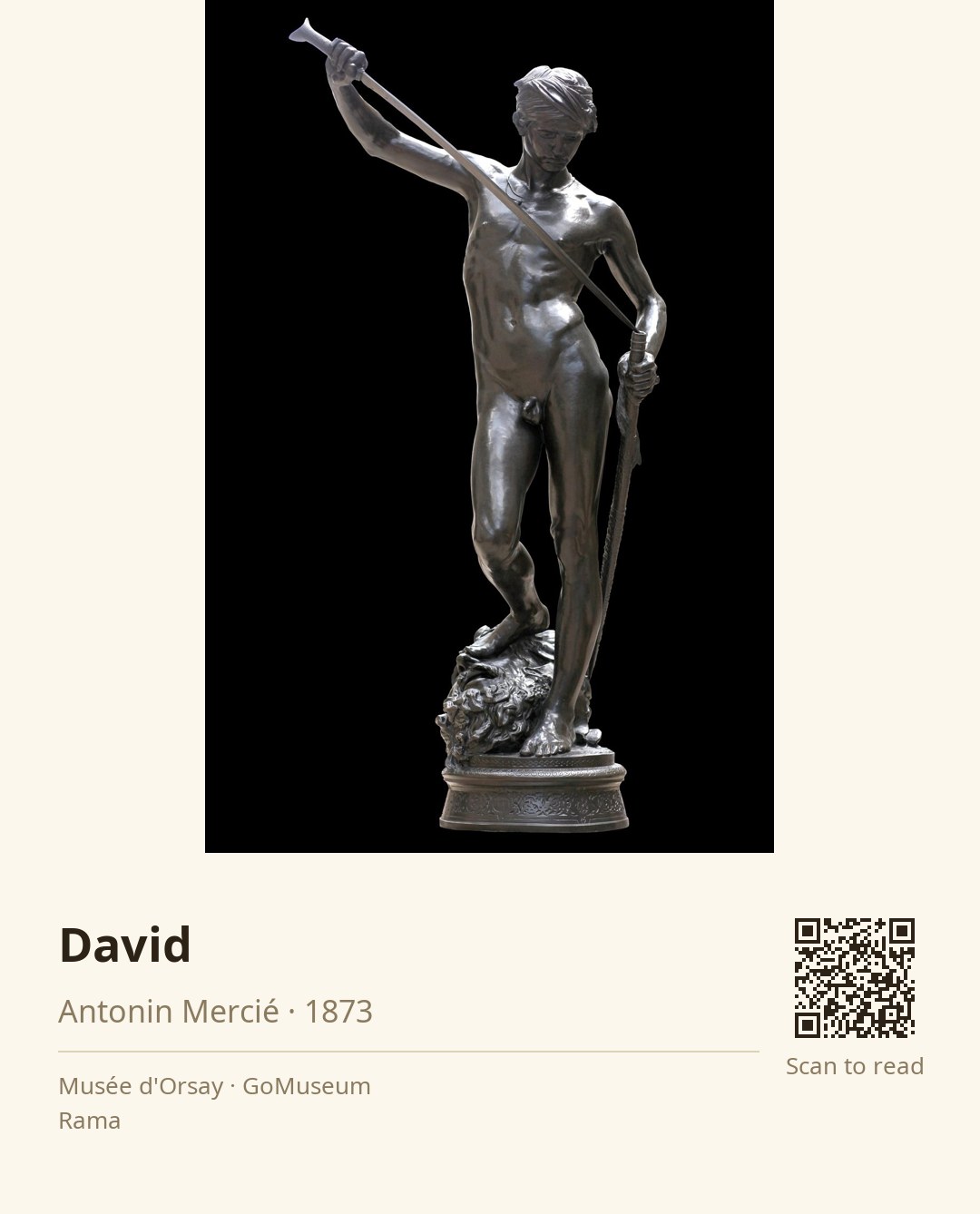
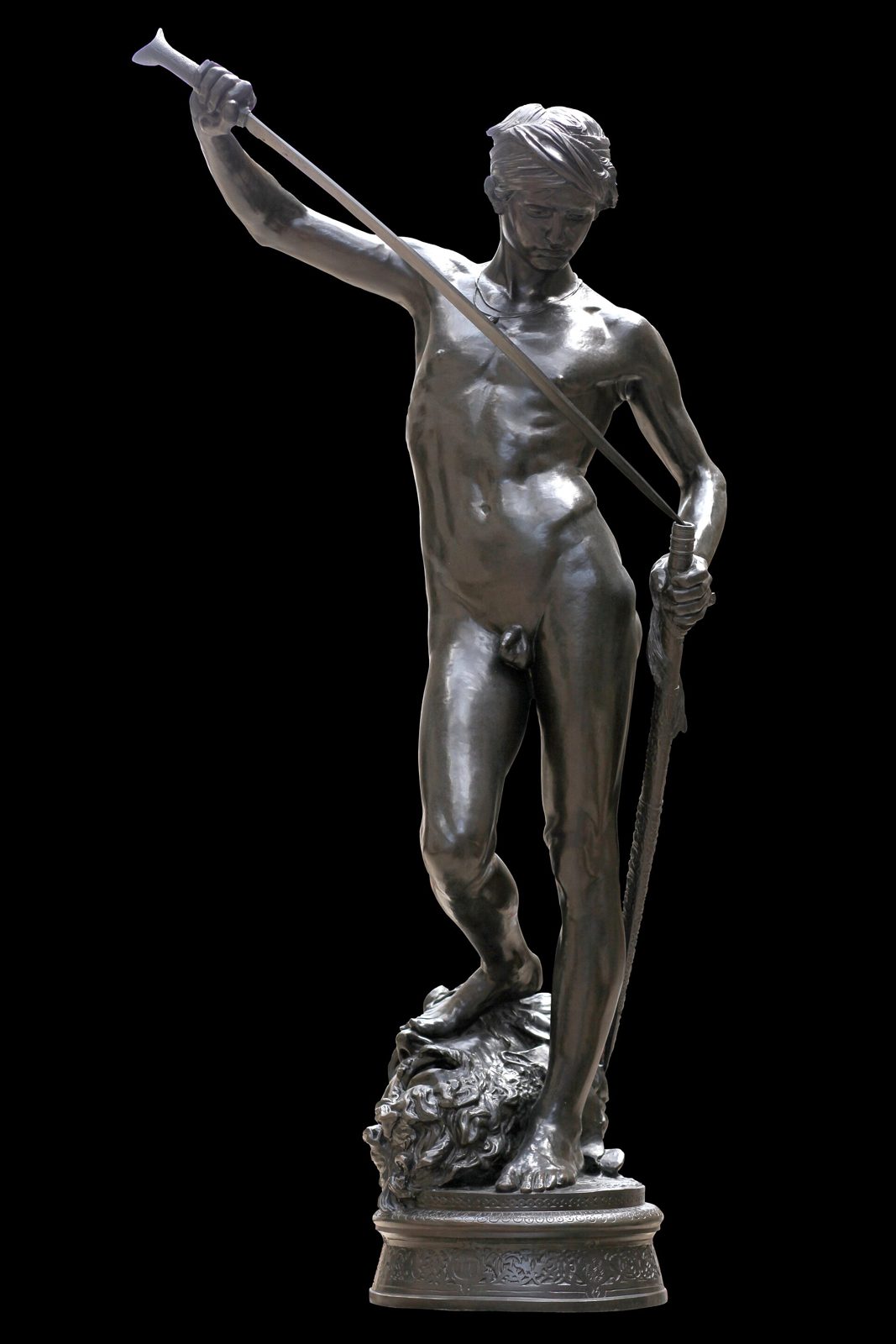
The figure of David stands poised with a sword raised high, embodying a moment of triumph and strength. His muscular form is accentuated by the smooth surface of the sculpture, showcasing intricate details in his facial features and the tension in his limbs. The lion's head beneath his left foot adds a dramatic touch, symbolizing conquest and power, while the headband hints at his heroic status.
This depiction captures not just the physical prowess of the biblical hero but also the spirit of the era in which it was created. The circular base, adorned with elaborate patterns, grounds the figure while enhancing its sense of elevation and grandeur. The choice to portray David in the nude aligns with classical traditions, celebrating the human form and its capabilities.
Marius Jean Antonin Mercié, the artist behind this piece, was a prominent French sculptor who gained recognition early in his career, winning the Grand Prix de Rome at just 23 years old. His works, including the original bronze David, became widely celebrated, with numerous reproductions made, solidifying his legacy in the world of sculpture.
Marius Jean Antonin Mercié was a prominent French sculptor, medallist, and painter born on October 30, 1845, in Toulouse. He studied at the École des Beaux-Arts in Paris, where he was influenced by notable mentors like Alexandre Falguière. His talent was recognized early when he won the Grand Prix de Rome at just 23. Mercié gained fame for works such as "David" and "Gloria Victis," both of which showcased his ability to blend classical themes with contemporary patriotism, earning him accolades at the Paris Salon.
His "David," a striking bronze statue, draws comparisons to Donatello's work, while "Gloria Victis" became a symbol of French resilience. Throughout his career, Mercié created numerous monuments, including those honoring historical figures like Louis-Philippe and Adolphe Thiers. He also contributed to the art world as a professor at the École des Beaux-Arts and was elected to the Académie française in 1891.
Mercié's legacy is marked by his ability to capture the human spirit in bronze and marble, leaving a lasting impact on French sculpture. He passed away in Paris on December 12, 1916, but his works continue to be celebrated in museums and public spaces, reflecting his significant place in art history.
Many reproductions of the sculpture include a loincloth that covers David's genitalia, while leaving his buttocks exposed.
The bronze David became one of Mercié's most celebrated and popular works.