 Image: Sukkoria
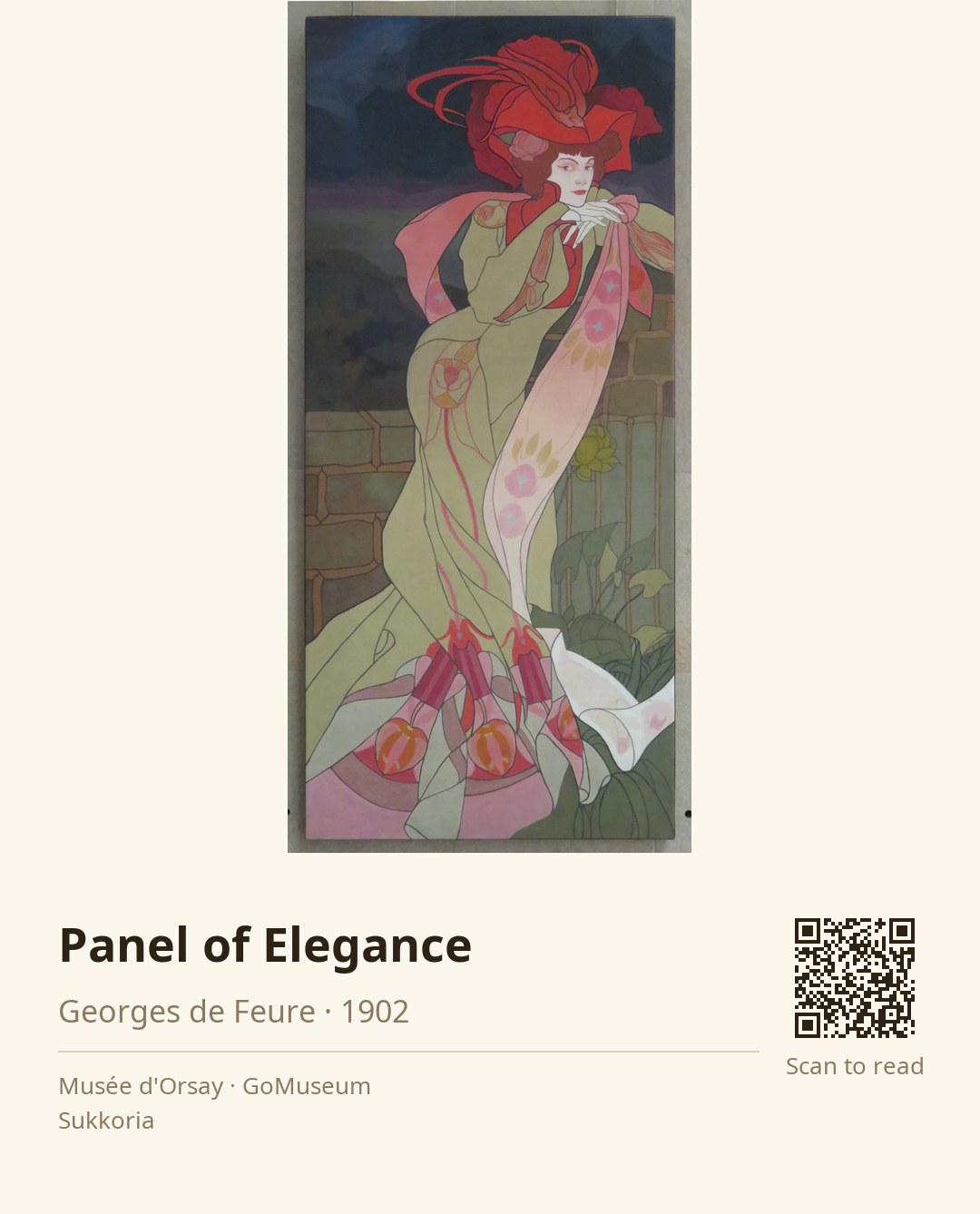
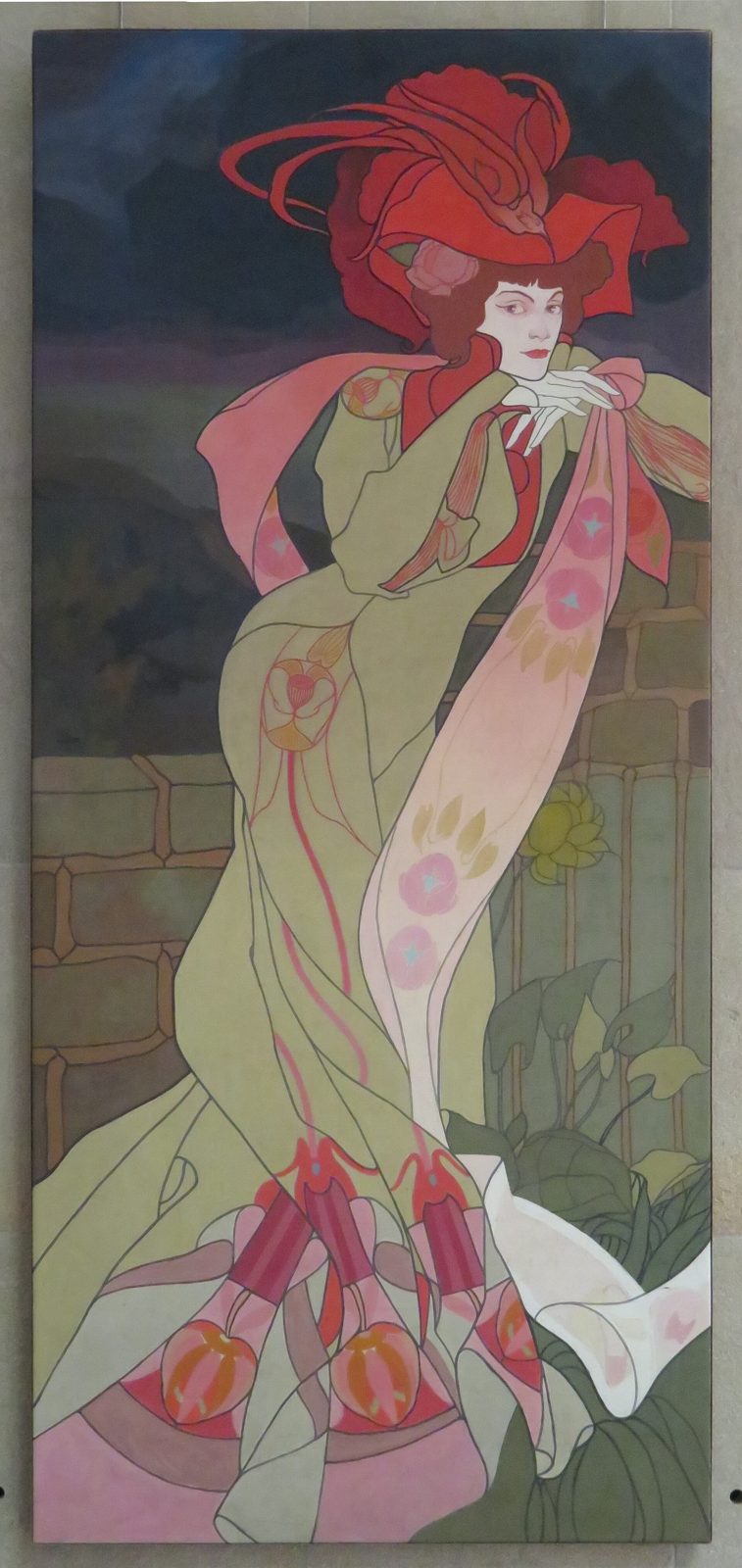
Panel of Elegance
🎧 This work has audio narration — listen in the appTake a moment to really soak in the elegance of this piece, "Panel of Elegance" by Georges de Feure. Notice how the flowing lines and soft colors seem to dance together, creating a sense of movement that draws your eye across the canvas. Look closely at the delicate details in the woman's attire—the intricate patterns and the way they seem to shimmer with life. These details matter because they embody the essence of the Art Nouveau movement, which celebrated beauty and nature through organic forms. De Feure was a master at capturing the allure of femininity, and here, he transforms a simple panel into a celebration of grace and sophistication. Created in 1902, this work reflects not just the artist's skill, but also the cultural zeitgeist of the time, where art was becoming increasingly intertwined with everyday life. De Feure, influenced by the Symbolist movement, sought to evoke emotion and beauty, making his art a feast for the senses. As you stand here, consider how this panel invites you to reflect on elegance in your own life. What does elegance mean to you? What moments of beauty do you cherish? Let this artwork linger in your thoughts as you explore further.
Georges de Feure, born Georges Joseph van Sluijters in 1868, was a Dutch-French artist known for his contributions to symbolism and Art Nouveau. Raised in The Hague, he returned to Paris in 1889, seeking a more vibrant artistic environment. Rejecting formal education, he carved his own path, drawing inspiration from the works of Jules Chéret and the literary musings of Charles Baudelaire.
De Feure became a prominent figure in the Parisian art scene, designing posters and theatrical sets, particularly for the famous cabaret Le Chat Noir. His work was celebrated for its depiction of the femme fatale, a recurring theme in Art Nouveau. His innovative designs earned him recognition, including a nomination as Chevalier in the Legion of Honour in 1901.
He played a pivotal role in the 1900 Exposition Universelle, where his contributions to the pavilion of L'Art Nouveau showcased his talent in furniture and decorative arts. Despite his early success, de Feure faced financial difficulties later in life, ultimately passing away in poverty in 1943. His legacy endures as a key figure in the evolution of modern decorative arts, bridging the gap between the elegance of Art Nouveau and the emerging Art Deco style.
Georges de Feure's 'Panel of Elegance' was created in 1902, a time when the Art Nouveau movement was flourishing, intertwining art with everyday life. De Feure, already recognized for his contributions to decorative arts, had previously showcased his work at the 1900 Exposition Universelle in Paris, where he gained significant acclaim. However, despite his early success, de Feure's later years were marked by financial struggles, culminating in his death in poverty in 1943. This stark contrast between his artistic achievements and personal hardships adds a poignant layer to his legacy.
As you gaze at 'Panel of Elegance,' pay attention to the brushwork—it's fluid and almost lyrical, mirroring the grace of the figures depicted. De Feure employs a soft color palette, dominated by pastel hues that evoke a sense of tranquility and beauty. Notice how the light seems to dance across the surface, highlighting the intricate details of the woman's attire. The composition is carefully structured, drawing your eye along the flowing lines that guide you through the scene. This deliberate arrangement creates a rhythm, inviting you to linger on each element. The scale of the panel, while modest, feels expansive due to the way de Feure captures movement and emotion, making the viewer feel as though they are part of this elegant world.
One surprising tidbit about Georges de Feure is that he was not only a painter but also ventured into industrial design, even co-founding an airplane manufacturing company in 1909. This venture into aviation was quite ambitious for an artist of his time, showcasing his innovative spirit. However, after a serious accident during early flight tests, he shifted his focus back to art and design, illustrating just how unpredictable the paths of creative individuals can be.
At the 1900 Exposition Universelle, de Feure's designs for the pavilion of Art Nouveau showcased his innovative approach to decorative arts, earning him critical acclaim and solidifying his status as a leading figure in the movement.