 Image: Ibex73 · filip · Adrian Scottow from London, England · Sukkoria · Sukkoria
The Little Dancer Aged Fourteen
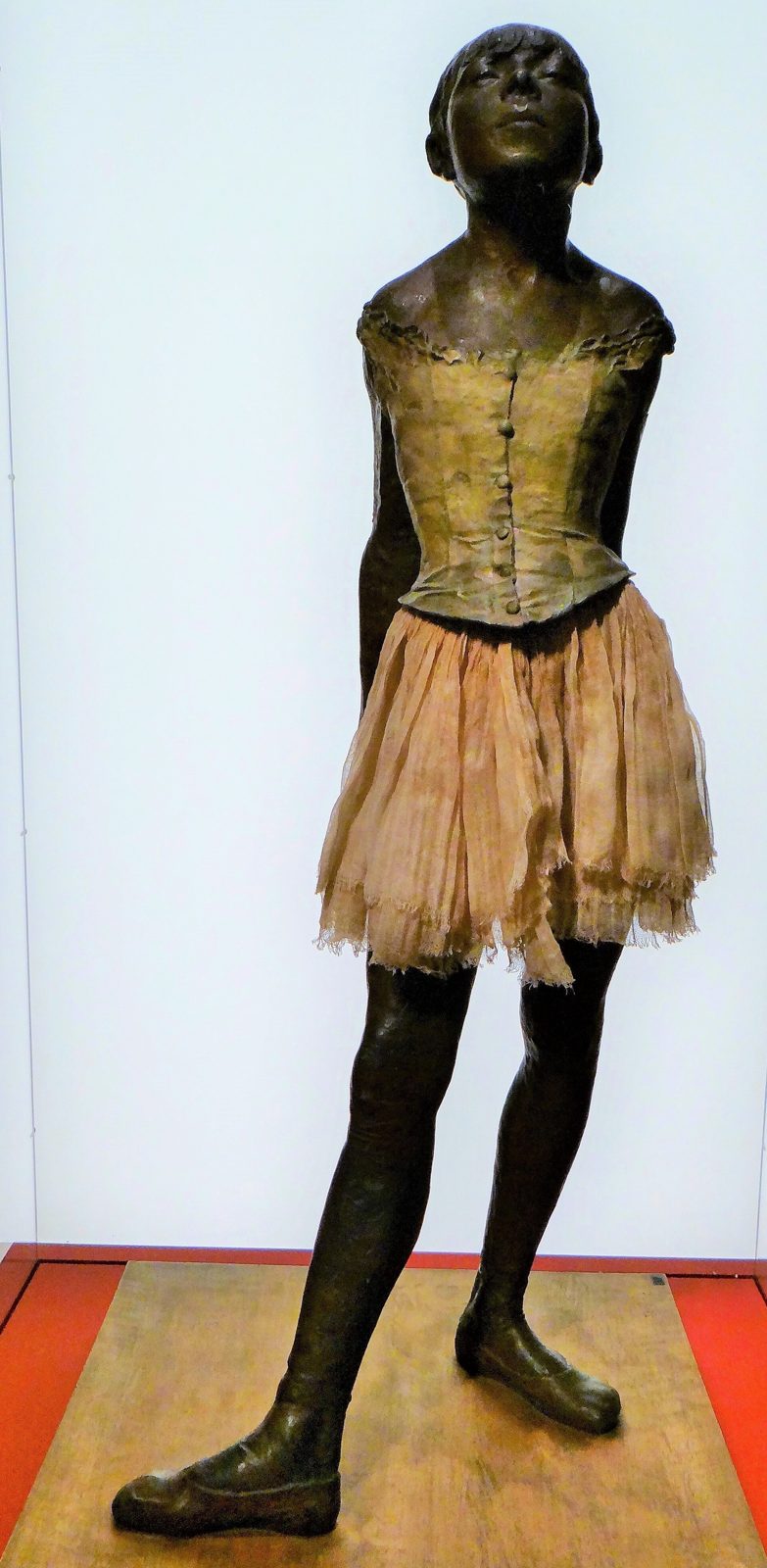
🎧 This work has audio narration — listen in the appTake a moment to really look at "The Little Dancer Aged Fourteen" by Edgar Degas. Notice how the figure stands poised, one foot slightly forward, as if caught in a moment of graceful movement. The delicate details of her tutu and the way her arms are positioned evoke a sense of both innocence and strength. These elements are crucial because they reveal Degas's fascination with the world of ballet, a theme he explored throughout his career. This sculpture captures not just a dancer, but the very essence of youth and ambition, reflecting the dreams and struggles of young performers. Degas chose to depict her in a way that feels both realistic and idealized, showcasing his mastery in portraying movement and emotion. Degas created this piece in the late 19th century, a time when ballet was becoming a popular spectacle in Paris. His choice to use wax instead of traditional materials like marble or bronze was revolutionary, allowing for a more intimate and personal connection with the viewer. As you stand here, consider what this dancer might represent for you. What dreams or aspirations do you hold onto, much like she does?
Edgar Degas, born on July 19, 1834, in Paris, was a pivotal figure in the Impressionist movement, though he preferred to be labeled a realist. Known for his exceptional skill in drawing, Degas focused on capturing movement, particularly in his depictions of dancers, which constitute over half of his oeuvre. His works also include racehorses and portraits that reveal psychological depth and human isolation.
Degas came from a cultured, affluent family; his mother was a Creole from New Orleans, and his father was a banker. After his mother's death, he pursued art against his father's wishes, studying at the École des Beaux-Arts and drawing inspiration from classical masters during his time in Italy. His early ambition to be a history painter shifted as he embraced contemporary subjects, influenced by artists like Édouard Manet.
Despite being a founding member of the Impressionists, Degas's approach diverged from his peers, as he often worked in his studio rather than en plein air. His innovative techniques and themes sparked debate among critics and continue to influence art history today. Degas passed away on September 27, 1917, leaving behind a legacy that challenges traditional boundaries in art.
As you gaze at 'The Little Dancer Aged Fourteen,' pay attention to the wax material that Degas chose for this piece. Notice the texture of the tutu, the way it seems to flutter, almost alive. The surface feels almost tactile, inviting you to imagine the dancer's fabric brushing against your fingertips. This choice of medium reflects Degas's innovative spirit, pushing the boundaries of sculpture in his time.
One fascinating aspect of 'The Little Dancer Aged Fourteen' is that it was initially met with mixed reactions when it was first exhibited in 1881. Many viewers were shocked by the use of real fabric for the tutu and the lifelike quality of the sculpture, which was quite unconventional for its time. Degas's choice to incorporate actual materials, like tulle, into his work was a bold move that blurred the lines between sculpture and reality, making the dancer feel almost alive.
Degas's Creole heritage and upbringing in a cultured, affluent family in Paris provided him with a unique perspective on art and society. This background influenced his choice of subjects, particularly the world of ballet, which was a reflection of both his personal interests and the social dynamics of his time.