Jester with lute
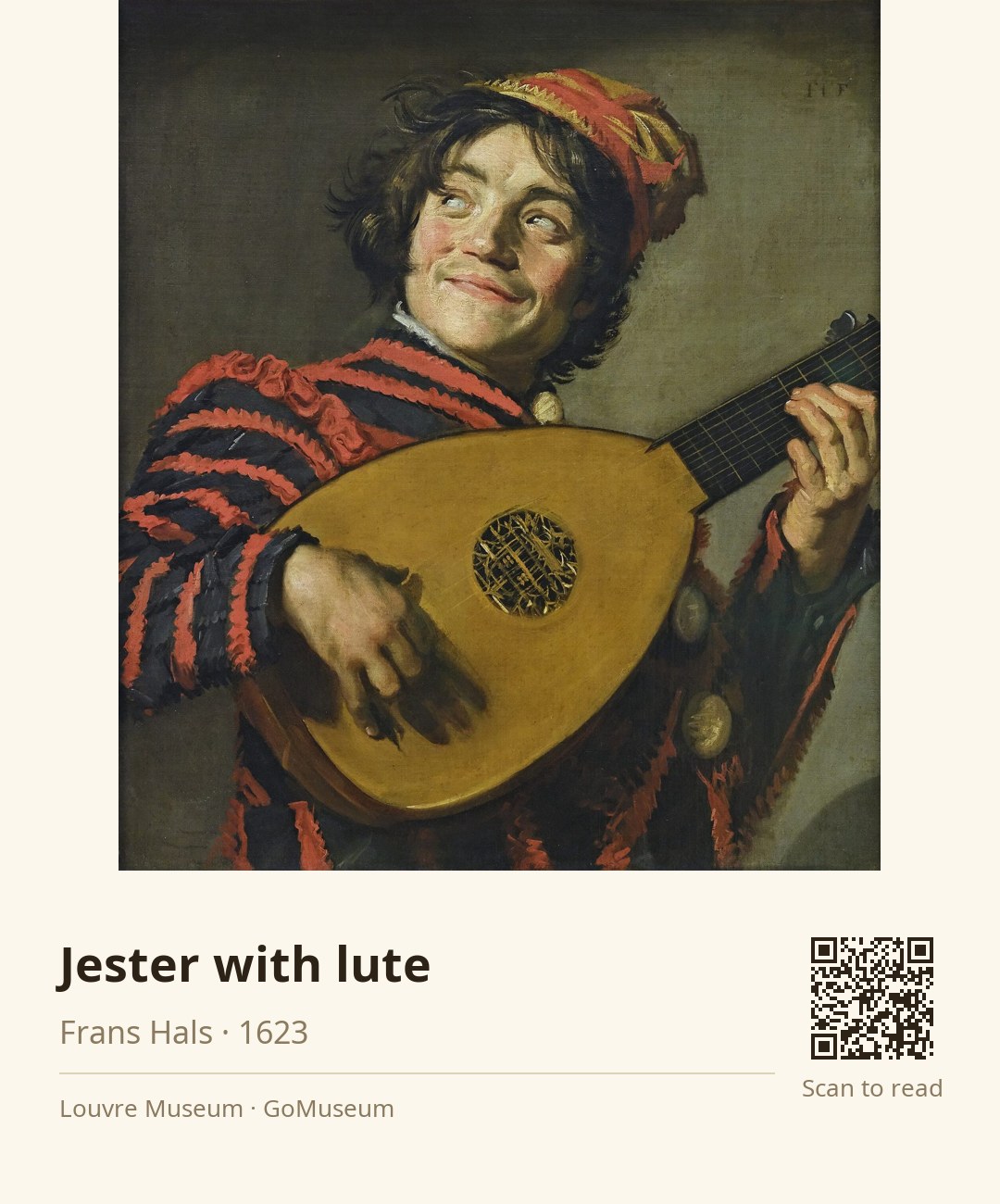
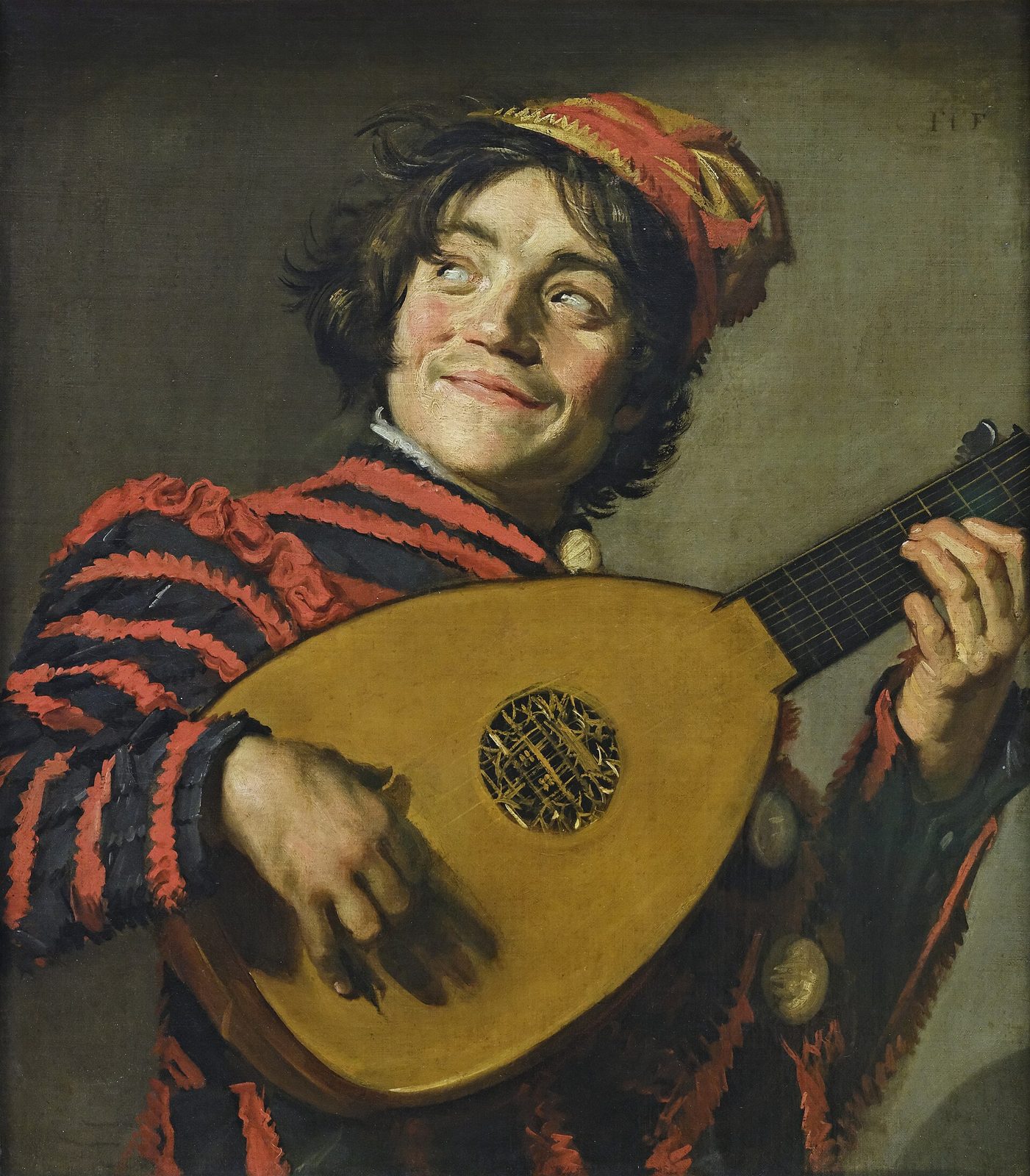
🎧 This work has audio narration — listen in the appTake a moment to really look at this lively painting, “Jester with Lute” by Frans Hals. Notice how the jester’s bright red and yellow costume seems to leap off the canvas, almost inviting you to join in his merriment. His expression is captivating—he's not just playing; he’s smiling, looking up as if sharing a moment with an unseen audience or fellow musician.
This joyful interaction is key to understanding Hals’s work. Unlike many of his contemporaries, who painted more posed subjects, Hals captures spontaneity and life. The loose brush strokes create a sense of movement, making it feel as if the jester might burst into song at any moment. This technique, often referred to as his “rough style,” adds a layer of intimacy and immediacy, drawing you into the scene.
Created in 1623, this painting reflects the Dutch Golden Age's fascination with genre scenes—everyday life depicted with a touch of humor and warmth. Hals was known for his ability to infuse personality into his subjects, and this jester is a perfect example of that talent.
As you stand here, think about the laughter and music that might have filled the air when this jester performed. What stories do you think he could tell?
Frans Hals the Elder was a prominent Dutch Golden Age painter, born around 1582 in Antwerp. His family fled to Haarlem during the tumultuous period of the Spanish rule, where he would spend the rest of his life. Hals became renowned for his lively and expressive portraits, capturing the essence of his subjects with a unique painterly style that contrasted with the more formal approaches of his contemporaries. His work often featured a subdued palette, reflecting the fashions of his wealthy clients, yet the personalities he portrayed radiated warmth and vitality.
Joining the Haarlem Guild of Saint Luke in 1610, Hals initially worked as an art restorer before achieving fame with his group portrait "The Banquet of the Officers of the St George Militia Company" in 1616. His influence extended beyond his lifetime, impacting later movements such as realism and impressionism. Despite personal challenges, including the loss of his first wife and struggles with financial stability, Hals remained a dedicated father and a steadfast figure in Haarlem's art scene, insisting that patrons come to him rather than seeking opportunities elsewhere. His legacy endures as one of the great masters of portraiture, alongside figures like Rembrandt and Vermeer.
Frans Hals painted 'Jester with Lute' in 1623, during a vibrant period of the Dutch Golden Age. This lively piece was part of a genre that celebrated everyday life, capturing moments of joy and humor. The painting was documented in the late 19th and early 20th centuries by art historians like Wilhelm von Bode and Hofstede de Groot, who recognized its significance. It was once owned by Baron Gustave de Rothschild, who acquired it in 1873, and it remained in his family for over a century before entering the Louvre in 1984. The jester's playful demeanor and the lively colors reflect the spirit of the time, making it a beloved example of Hals's work. Its journey through various collections highlights its enduring appeal and the fascination it has inspired in viewers and collectors alike.
Hals's technique in 'Jester with Lute' is a masterclass in the use of loose brushwork, which creates a sense of immediacy and spontaneity. The vibrant red and yellow of the jester's costume are not just colors; they pulse with life, drawing your eye and evoking the festive atmosphere of a performance. Notice how the jester's upward gaze and smile suggest a connection with an unseen audience, enhancing the painting's narrative quality. The composition is structured yet dynamic, with the jester positioned slightly off-center, inviting you into the scene. The contrasting flesh tones and the reflections in his eyes are handled with a freedom that captures the essence of his character. This 'rough style' allows the viewer to feel the jester's joy almost tangibly, as if he might leap from the canvas at any moment.
This work not only showcases Hals' loose brushwork and vibrant color palette but also sets a precedent for future artists. It influenced contemporaries like Hendrik ter Brugghen, who blended elements from both Hals and Dirck van Baburen, the latter being the first to introduce the lute player theme in the Netherlands. Hals' approach to portraying lively, expressive figures paved the way for later movements, impacting artists well into the Impressionist era, where the focus on capturing fleeting moments and emotions became paramount. Remember, this painting isn't just a jester with a lute; it's a bridge to the expressive styles that would dominate the art world for centuries.
While Baburen's lute player is depicted singing with an open mouth, Hals's jester engages with the viewer through a natural smile and upward gaze, showcasing his unique approach to character portrayal. This subtle shift in focus from performance to interaction highlights Hals's innovative spirit and his ability to convey deeper emotional connections.
The jester's upward gaze suggests a connection with an unseen audience, enhancing the narrative quality of the painting and inviting viewers to imagine the lively interactions that would have occurred during performances, thus bridging the gap between the artwork and its historical context.