Musician and Drinkers
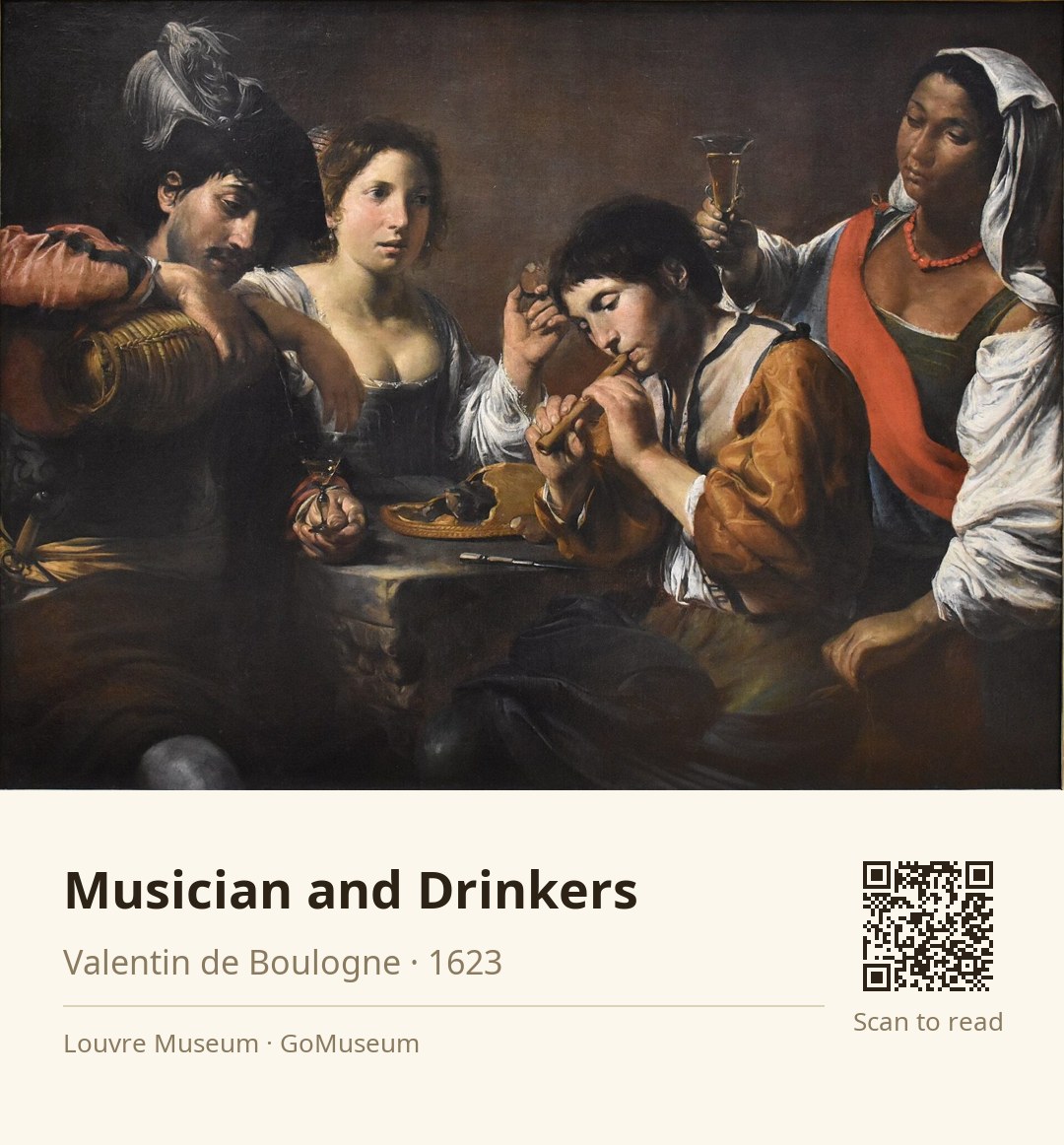
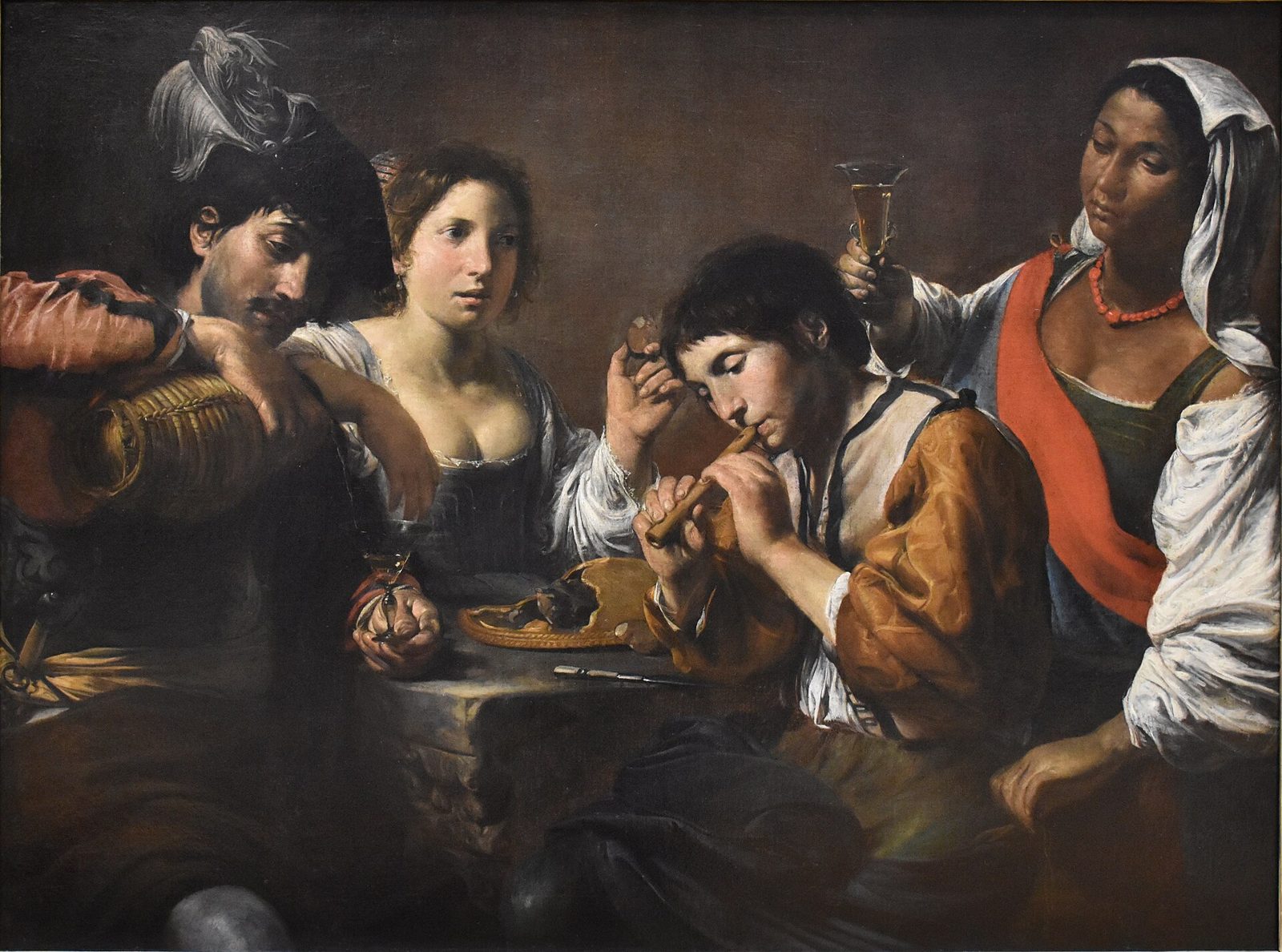
🎧 This work has audio narration — listen in the appA woman in a headscarf raises a glass in a toast, while a man in a feathered hat leans on the table, jug in hand. In the center, another man plays a flute, eyes closed, lost in the music. This lively gathering captures a moment of camaraderie and celebration, set against a dark background that draws your focus to their illuminated faces and the modest feast before them.
The figures, each distinct in their expressions and postures, reflect the social dynamics of 17th-century tavern life, where music and drink fostered connection and revelry. Valentin de Boulogne's use of natural light enhances this intimate scene, inviting you into their world. The loaf of bread and knife on the table symbolize sustenance and shared experience, while the act of toasting suggests a ritual of friendship and joy amidst the simplicity of their surroundings.
Painted in 1623, this work exemplifies Boulogne's mastery of genre scenes, influenced by the dramatic realism of Caravaggio.
Valentin de Boulogne, born around 1590 in Coulommiers, France, emerged as a prominent tenebrist painter in the early 17th century. He was the son of a painter and likely began his artistic journey in his father's studio before moving to Italy. Influenced by Caravaggio and Bartolomeo Manfredi, Valentin adopted a dramatic style characterized by vivid chiaroscuro and a focus on everyday subjects, such as tavern scenes and fortune tellers. His compositions often depicted the interplay of human emotions, showcasing a subtle psychological depth.
Valentin's time in Italy saw him join the Bentvueghels, a group of expatriate artists, where he earned the nickname "innamorato." His works, around 75 of which survive today, were well-received, attracting the attention of patrons like Pope Urban VIII. Despite his success, he lived a precarious life, often indulging in wine and revelry, which ultimately led to his untimely death in 1632 after a cold bath following a night of drinking.
Valentin's legacy lies in his unique blend of Caravaggesque realism and a distinct introspective quality, influencing later artists and securing his place in art history as one of the foremost French painters of his time.
The figures are rendered with a remarkable attention to detail, their expressions and postures conveying a sense of intimacy and spontaneity. The soft, natural light illuminates their faces, creating a warm glow that contrasts sharply with the dark background, drawing the viewer's eye directly to the subjects. Boulogne's brushwork is fluid and dynamic, capturing the textures of the clothing and the subtle variations in skin tones. The composition is structured around the table, a focal point that anchors the scene, while the arrangement of the figures creates a sense of movement and interaction. This careful orchestration of elements not only enhances the narrative but also invites the viewer into the moment, making them feel like a part of the gathering.
An intriguing tidbit about Boulogne is that he was a member of the Bentvueghels, a group of expatriate artists in Rome known for their boisterous lifestyle. His nickname within this group was 'innamorato,' which reflects not only his charm but also his penchant for revelry and the pleasures of life, often depicted in his art. This connection to a lively artistic community likely influenced the vibrant scenes he created, capturing the essence of camaraderie and celebration.
The Bentvueghels was a group of expatriate artists in Rome, known for their lively and extravagant lifestyle, and Boulogne was a member of this community, which likely influenced the vibrant and celebratory themes in his artwork.
Boulogne adopted a composition style from Caravaggio that features groups of figures, such as fortune tellers or drinkers, gathered around a table, emphasizing social interaction and drama in everyday life.