 Image: Roccuz [1] · Jean-Pierre Dalbéra · Ricardo André Frantz (User:Tetraktys) · Ricardo André Frantz (User:Tetraktys) · Zde
Rampin Rider
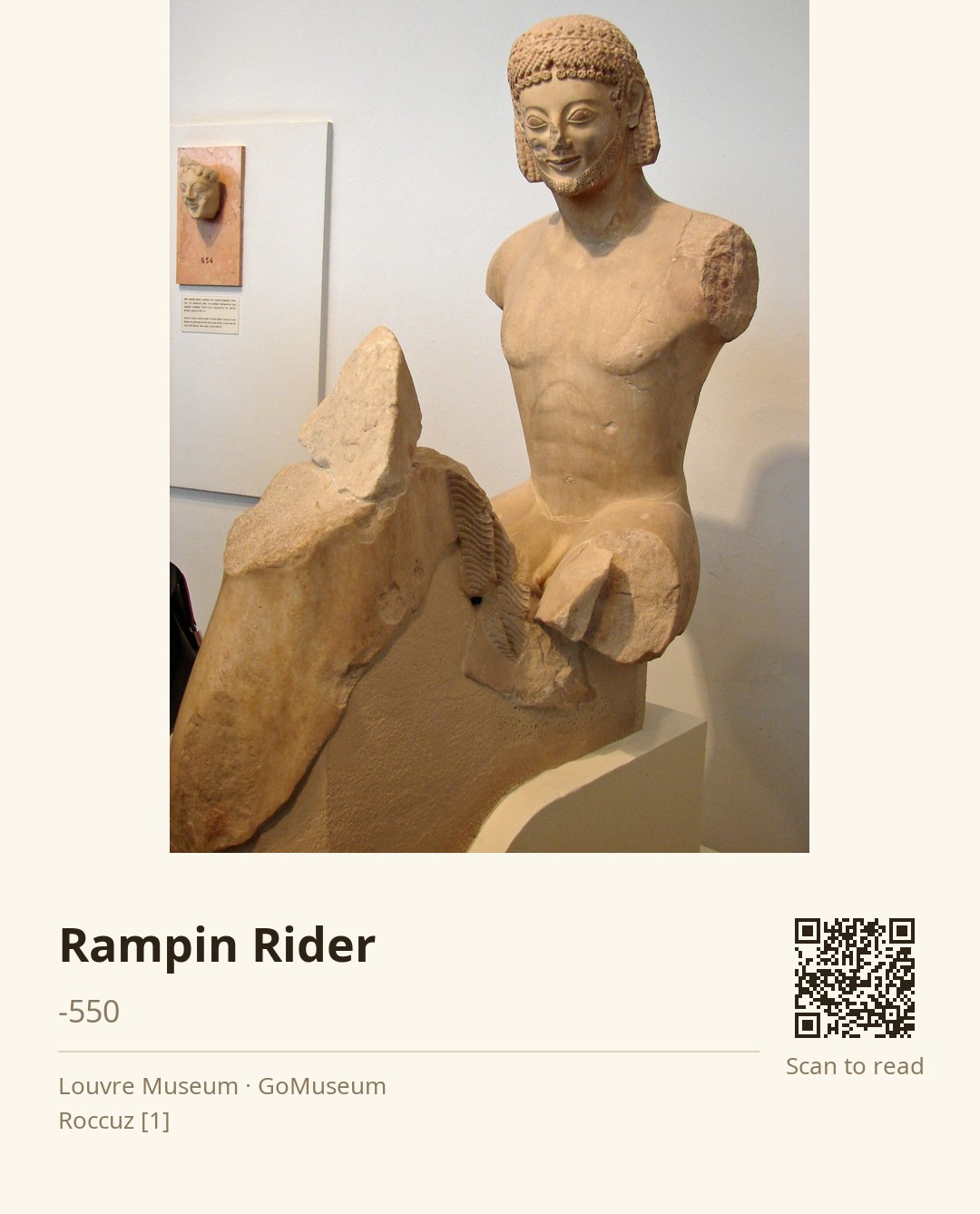
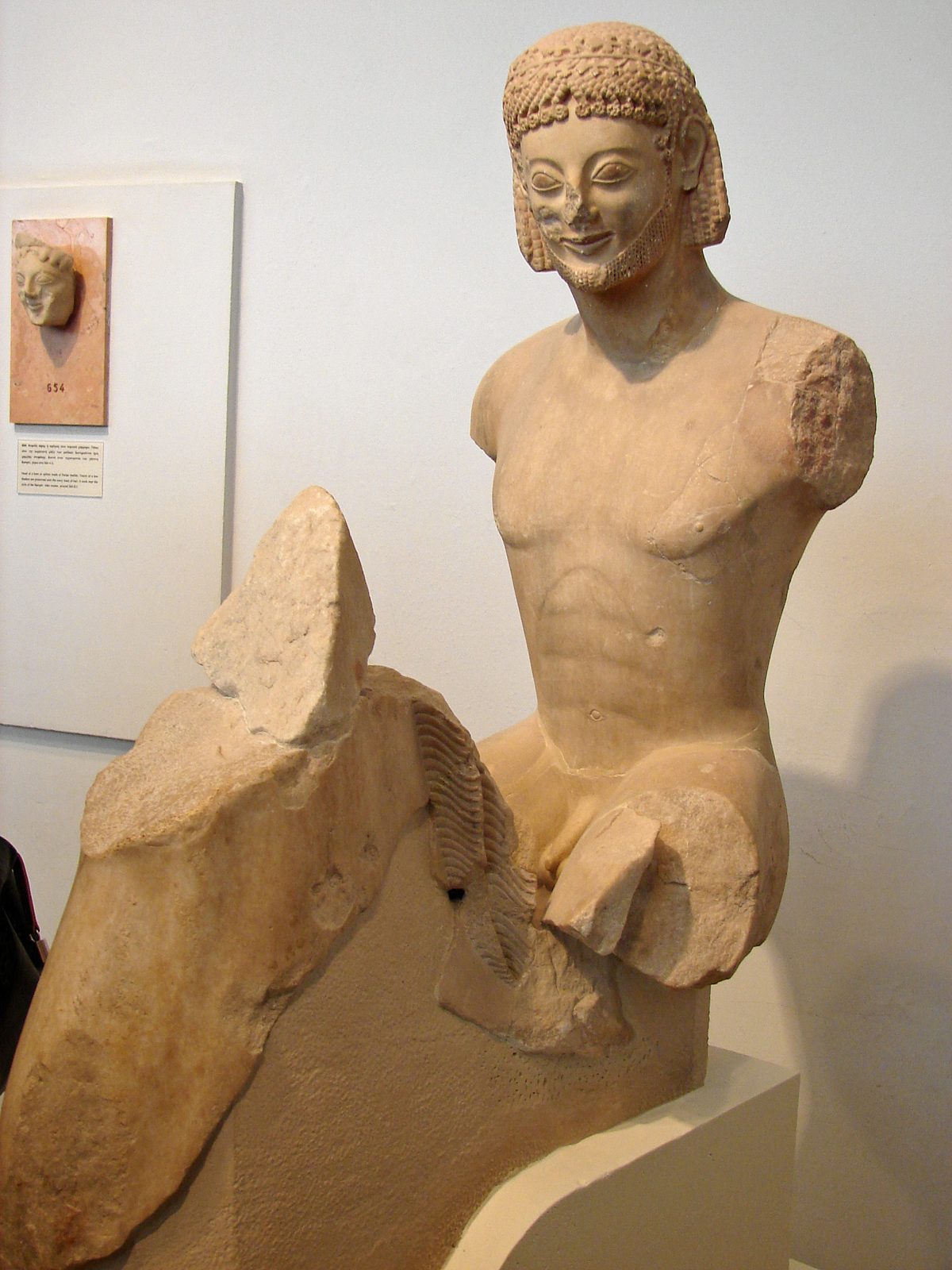
🎧 This work has audio narration — listen in the appTake a moment to really look at the Rampin Rider. Notice how the figure sits confidently atop the horse, a posture that speaks volumes about the importance of equestrian culture in ancient Greece. The way the body is sculpted—strong yet slightly asymmetrical—breaks from the rigid conventions of the time, hinting at a more dynamic representation of the human form.
Discovered in pieces over a century apart, this statue has a fascinating history. The head was found on the Acropolis in 1877, while the body was unearthed in a ditch filled with broken statues from the Persian sack of Athens in 480 BC. The fact that these fragments were separated for so long adds a layer of intrigue to the piece, as if it were waiting for its story to be pieced together.
As you stand here, think about the legacy of this rider. What stories might he tell if he could speak? How does his presence connect us to the values and aspirations of a civilization long gone? Let your imagination roam as you ponder the echoes of glory and competition that this ancient figure embodies.
Take a closer look at the Rampin Rider, and you'll notice it's carved from marble, a material that not only signifies durability but also showcases the skill of the sculptor. The surface has traces of red and black paint, hinting at the vibrant colors that once adorned this figure, bringing it to life in a way we can only imagine today. Notice the asymmetrical features, especially in the torso and face, which give the rider a sense of movement and individuality, a departure from the more rigid forms of earlier sculptures.
The Rampin Rider has a captivating history that began around 550 BC, during the Archaic Period of Ancient Greece. Its fragments were discovered in two separate excavations: the head was unearthed on the Acropolis in 1877, while the body and horse were found a decade earlier in a ditch filled with broken statues from the Persian sack of Athens in 480 BC. Initially, the head was acquired by Georges Rampin, a wealthy collector, and was showcased at the 1878 World’s Fair before being donated to the Louvre in 1896. It wasn't until 1936 that the connection between the head and the body was made, thanks to the keen intuition of archaeologist Humphrey Payne. However, despite efforts, the two parts remain in different museums, each telling part of the same story.
It showcases the transition from rigid forms to a more dynamic representation of the human figure. This equestrian statue, with its blend of traditional kouros features and asymmetrical elements, influenced later artists who sought to capture movement and emotion in their work. Its discovery and reconstruction sparked discussions about identity and representation in art, as the rider remains anonymous, yet embodies the spirit of competition and celebration in ancient Greece.
Did you know that the Rampin Rider has a bit of a jigsaw puzzle history? The head was discovered on the Acropolis in 1877, but it wasn’t until 1936 that an archaeologist realized it belonged to the body found a decade earlier in a ditch filled with broken statues from the Persian sack of Athens. Imagine the excitement of piecing together this ancient puzzle, connecting the head to its long-lost body after so many years apart!
The head of the Rampin Rider has a broken stem at the top, which may have originally supported a crescent or disk, suggesting it was once adorned with additional decorative elements.
Initially, it was thought that the Rampin Rider might be part of a set of statues, possibly representing the mythological twins Castor and Pollux, which were commonly depicted in equestrian scenes during that era.