Leonidas at Thermopylae
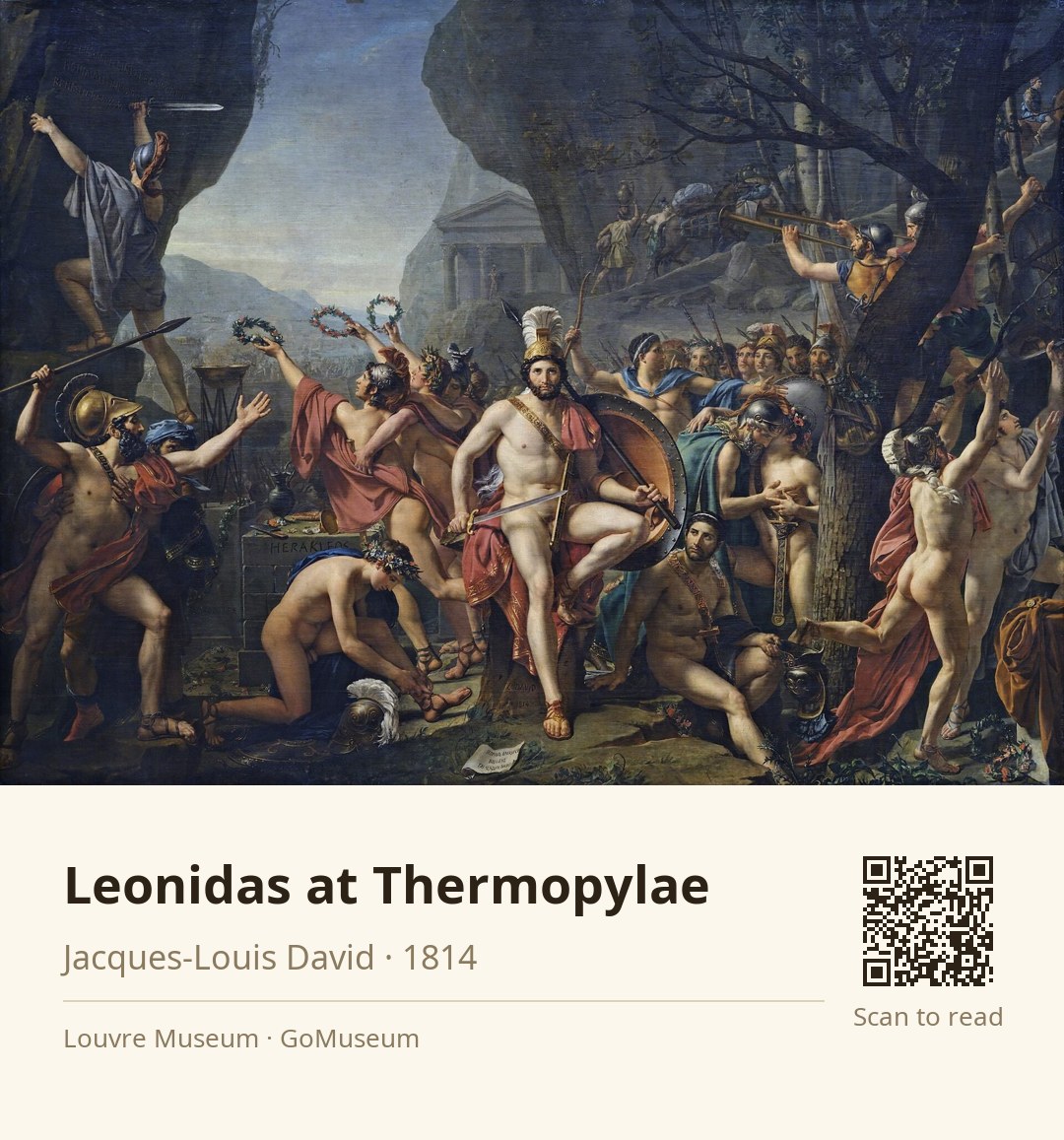
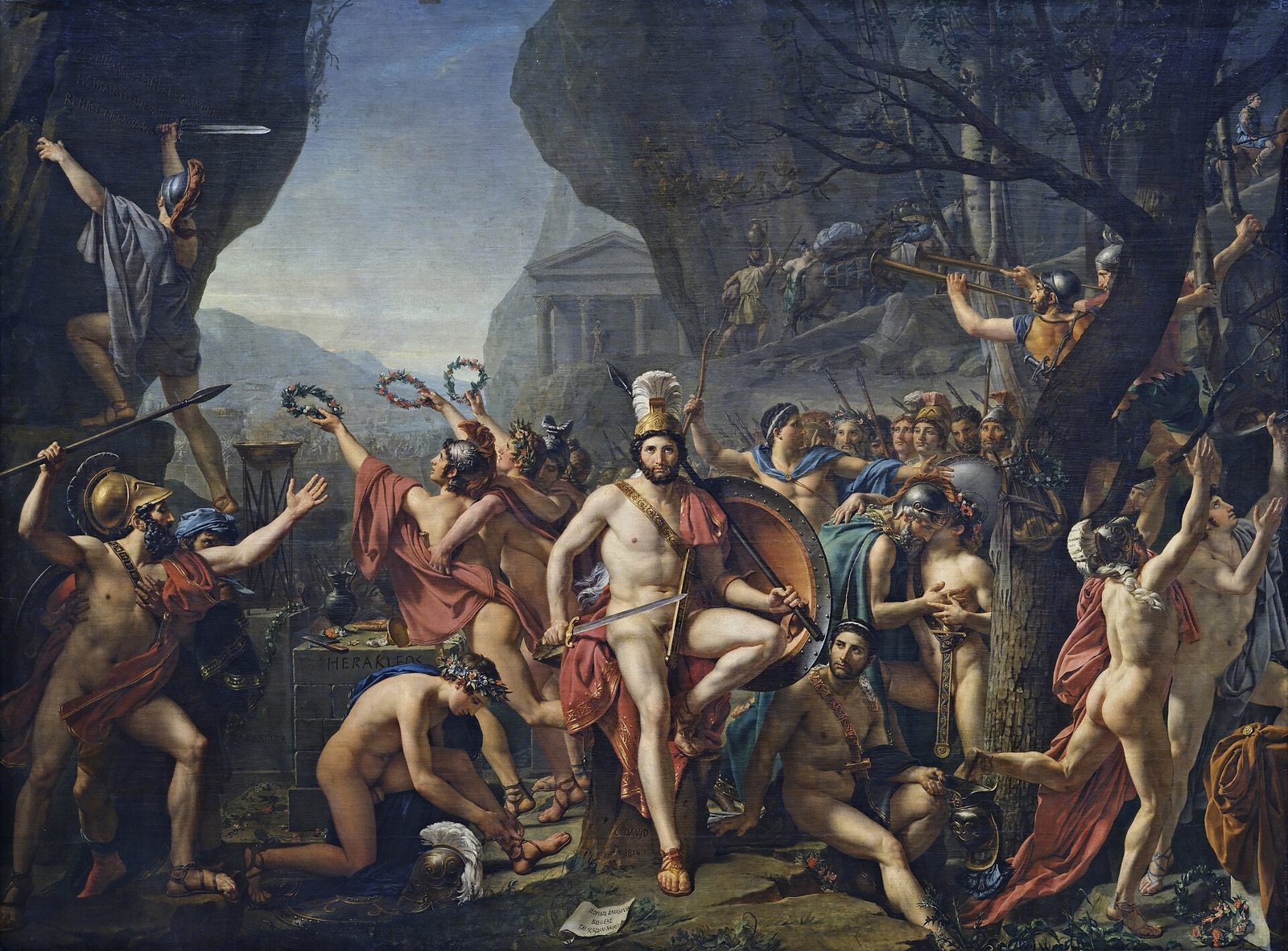
🎧 This work has audio narration — listen in the appTake a moment to really look at "Leonidas at Thermopylae." Notice how the light falls dramatically on the central figure of Leonidas, almost as if he’s glowing amidst the chaos of battle. His calm, contemplative expression stands in stark contrast to the frantic movements of the soldiers around him. This isn’t just a snapshot of a fight; it’s a moment of profound reflection before sacrifice.
These details matter because they encapsulate the essence of heroism and leadership. Leonidas, the Spartan king, is depicted not just as a warrior but as a symbol of courage and duty, poised on the brink of his fate. The golden embroidery on his cape and the grandeur of his shield highlight his noble status, while his upward gaze suggests a plea for divine assistance. David painted this during a tumultuous time in France, drawing parallels between Leonidas's sacrifice and the struggles of his own nation.
Completed in 1814, this work was a response to the political upheaval of David’s time, echoing the themes of bravery and sacrifice that resonated deeply with the French audience. As you stand here, think about what it means to face overwhelming odds. What sacrifices are we willing to make for our beliefs?
Jacques-Louis David was a pivotal French painter born on August 30, 1748, in Paris. He emerged as the leading figure of the Neoclassical movement, marking a significant shift in artistic taste from the frivolity of Rococo to a more austere and emotionally charged classical style. His early life was marked by personal tragedy, losing his father at a young age, which shaped his character and determination to pursue art against familial expectations.
David's career flourished during the tumultuous political landscape of France, where he became an ardent supporter of the French Revolution, aligning himself with figures like Robespierre. His political engagement influenced his art, producing iconic works such as "The Death of Marat" and "The Coronation of Napoleon," which reflect both historical narratives and his personal convictions. After the fall of Napoleon, David faced exile but continued to influence generations of artists, establishing a legacy that shaped academic painting in the early 19th century. His works remain celebrated in major museums, particularly the Louvre, solidifying his status as a cornerstone of Western art history. David's life and art were inextricably linked to the evolving identity of France, embodying the spirit of revolution and the quest for artistic integrity.
Jacques-Louis David's 'Leonidas at Thermopylae' was a monumental undertaking that began in the late 18th century, specifically around 1799. However, it wasn't until 1814 that David finally completed this grand oil-on-canvas work, which now resides in the Louvre. In 1819, it was purchased by Louis XVIII for a staggering 100,000 francs, a testament to its significance. The backdrop of the painting reflects the tumultuous times in which David lived, as he drew parallels between the heroic sacrifice of Leonidas and the struggles faced by France during the Napoleonic Wars.
Completed in 1814, it emerged during a turbulent period in France, reflecting the spirit of sacrifice and heroism that David admired in the story of Leonidas and his 300 Spartans. By depicting a moment of contemplation before battle, David challenged the conventions of action in art, inviting viewers to reflect on the deeper meanings of sacrifice and leadership. Remember, this painting isn't just about a historical event; it's a timeless exploration of courage in the face of overwhelming odds.
Interestingly, before settling on the final composition, David created numerous sketches, including one that was a compositional study completed in two parts. This early sketch revealed a more cluttered background with trees and branches, which he later simplified to enhance the clarity of the scene.
David's early sketches featured a more cluttered background with trees and branches, which he later simplified to enhance the clarity of the scene, showcasing his evolving artistic vision.
Georges Rouget, David's pupil, collaborated on 'Leonidas at Thermopylae', indicating the collaborative nature of artistic production during that era and the influence of mentorship in David's work.