The Adoration of the Shepherds
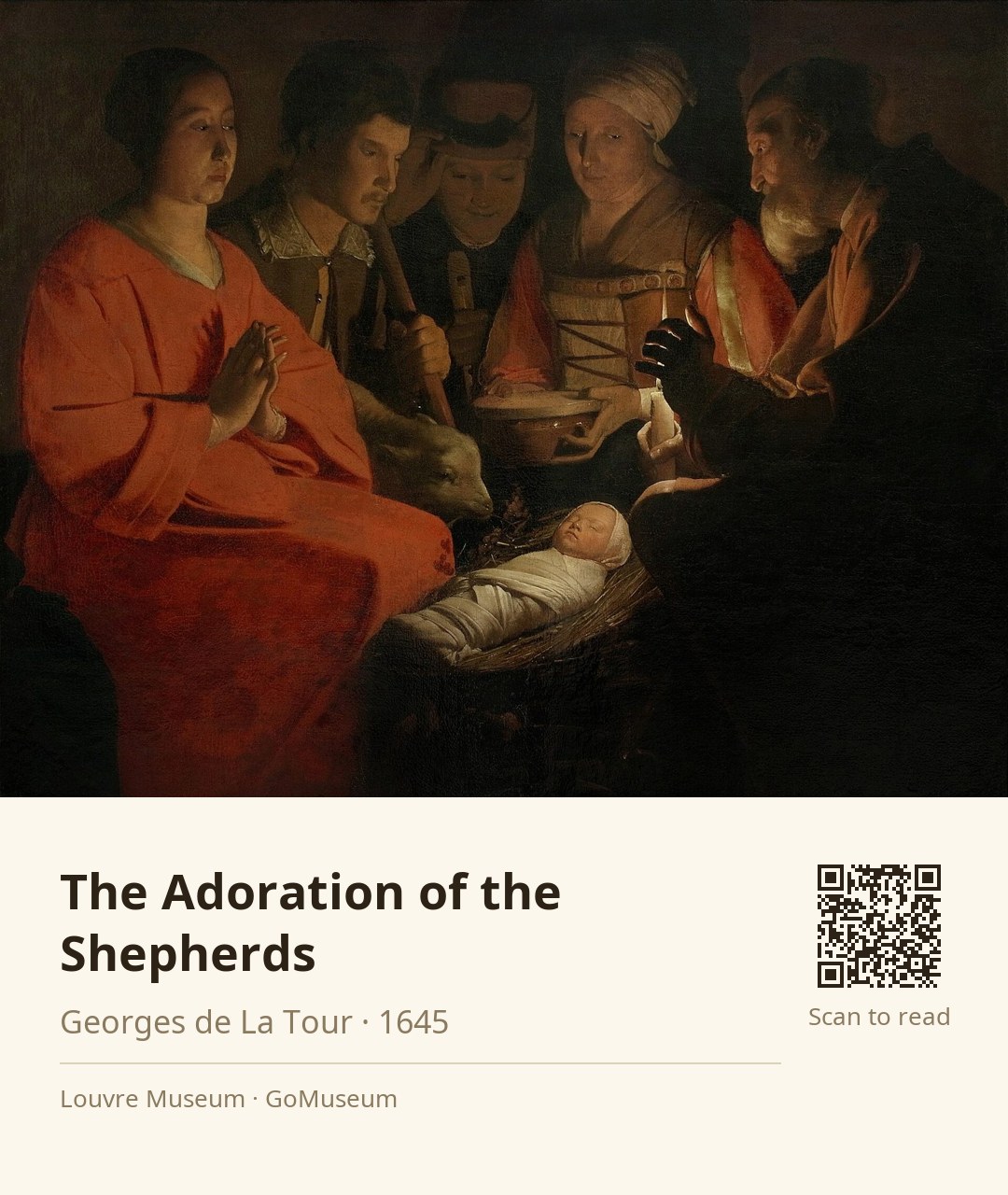
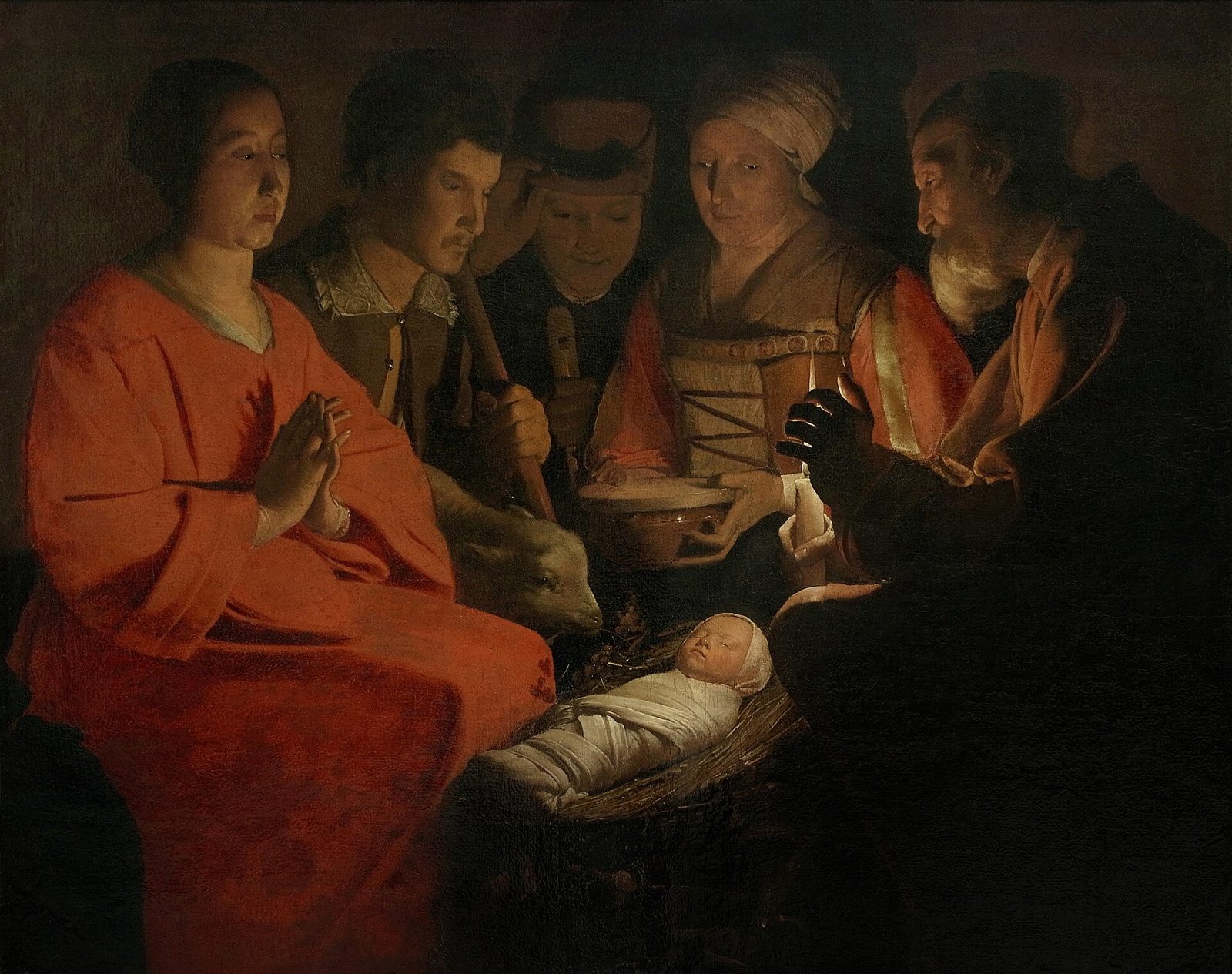
🎧 This work has audio narration — listen in the appTake a moment to really soak in the warmth of this scene. Georges de La Tour’s “The Adoration of the Shepherds” draws you in with its flickering candlelight, illuminating the faces of those gathered around the newborn Jesus. Notice how the light dances on their expressions, particularly on the Virgin Mary’s vibrant red robe, a striking contrast against the deep shadows that envelop the rest of the room.
This isn’t just a pretty picture; it’s a masterclass in chiaroscuro, a technique that La Tour perfected. The way the light seems to emanate from the child himself suggests a divine presence, transforming an ordinary moment into something sacred. The old man’s hand, obscuring the candle, enhances this effect, making you feel as if the glow is a direct link to the holy child.
The shepherds are dressed in contemporary clothing, grounding the scene in the artist's own time and inviting you to connect with it on a personal level.
As you stand here, think about what it means to witness such a moment of reverence and wonder. How does this scene resonate with your own experiences of awe and discovery?
Georges de La Tour was a French Baroque painter born on March 13, 1593, in Vic-sur-Seille. He spent most of his life in the Duchy of Lorraine, where he became known for his religious paintings characterized by dramatic chiaroscuro and candlelit scenes. Influenced by Caravaggio and the Dutch Caravaggisti, La Tour's work reflects a unique blend of Nordic, Italian, and French artistic traditions. His keen observation of everyday life and mastery of light and shadow set him apart as an original successor to Caravaggio.
Married to Diane Le Nerf in 1617, La Tour established a successful studio in Lunéville, gaining recognition as "Painter to the King" in 1638. Despite his acclaim during his lifetime, he fell into obscurity after his death in 1652, largely forgotten until his rediscovery in the early 20th century by art historian Hermann Voss. La Tour's influence extended beyond painting, inspiring writers such as André Malraux and René Char. His legacy endures as a pivotal figure in art history, celebrated for his innovative approach to light and composition in religious art.
Georges de La Tour's "The Adoration of the Shepherds" was likely commissioned in 1644 by the citizens of Lunéville as a tribute to their new governor, Marquis de la Fert. This painting, completed in 1645, initially slipped into obscurity after its creation. It wasn't until it was rediscovered in Amsterdam that it gained attention again. In 1926, the Louvre Museum in Paris acquired it, where it remains today. The painting reflects a common theme in 17th-century art, particularly among Caravaggesque painters, who often depicted biblical scenes illuminated by candlelight.
As you gaze at this painting, notice how La Tour's masterful use of chiaroscuro creates a dramatic interplay between light and shadow. The flickering candlelight, the sole source of illumination, casts a warm glow on the figures, particularly highlighting the Virgin Mary's vibrant red robe. This choice of color not only draws your eye but also symbolizes her importance in the scene. The old man's hand, obscuring the candle, enhances the illusion that the light emanates from the Child Jesus himself, creating a direct link between the divine and the viewer. The composition is carefully structured, with the figures arranged in a semi-circle around the child, fostering a sense of unity and reverence. The scale of the painting, intimate yet impactful, invites you to step closer and immerse yourself in this sacred moment.
Influenced by Caravaggio, La Tour's use of chiaroscuro and candlelight creates an intimate, almost mystical atmosphere that draws viewers into the scene. This painting not only redefined the visual language of nativity scenes but also inspired future artists to explore the emotional depth and human experience within religious themes. Its legacy is felt in the way it emphasizes personal connection over grandiosity, marking a significant moment in the evolution of Baroque art.
The citizens of Lunéville wanted to honor their leader, but after its creation in 1644, the painting faded into obscurity for years. It wasn't until it was rediscovered in Amsterdam that it found its way to the Louvre in 1926. Imagine a masterpiece getting lost in the shuffle of history, only to be celebrated decades later!
In La Tour's painting, the Child Jesus is depicted lying in a wicker basket rather than a traditional manger, which is a departure from typical nativity iconography.
Georges de La Tour married Diane Le Nerf, from a minor noble family, which likely provided him with connections and support that helped him establish his studio in Lunéville and gain commissions from the local bourgeoisie.
After being forgotten for many years, 'The Adoration of the Shepherds' was rediscovered in Amsterdam, leading to its acquisition by the Louvre Museum in 1926, where it remains today.