Jupiter and Antiope
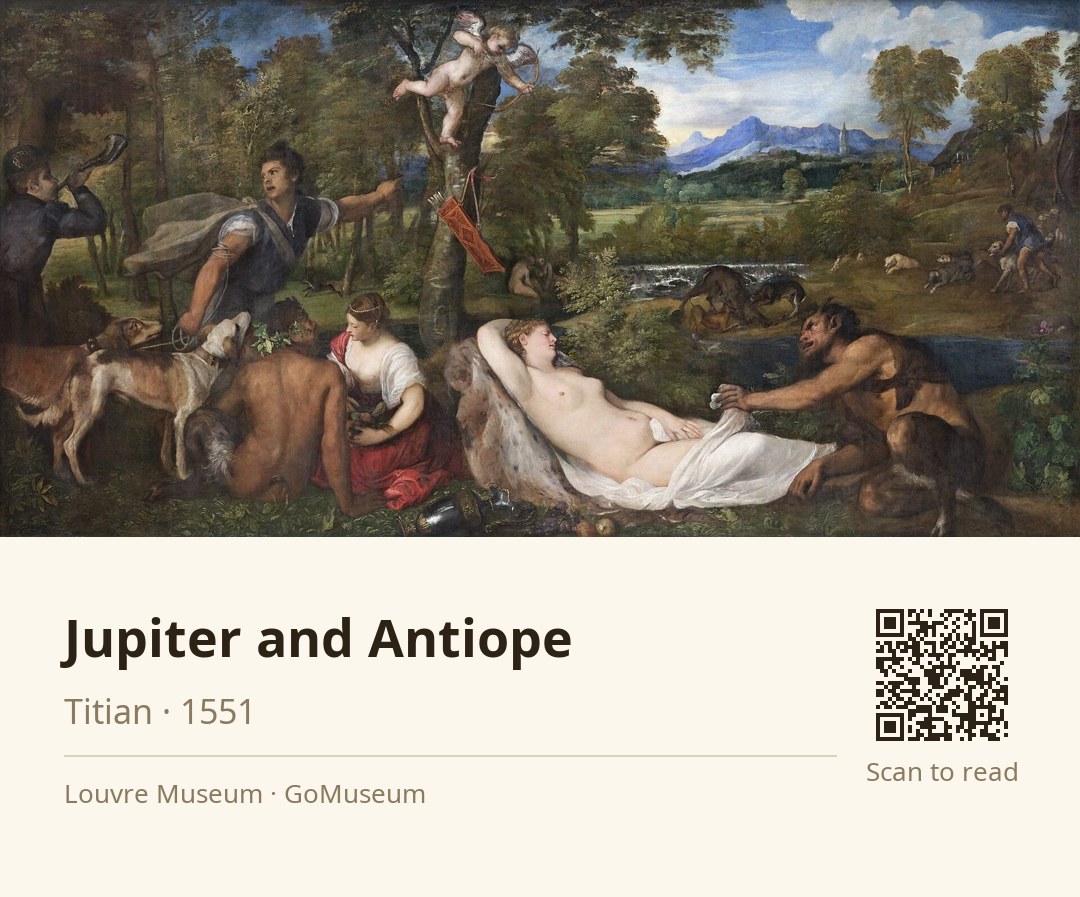
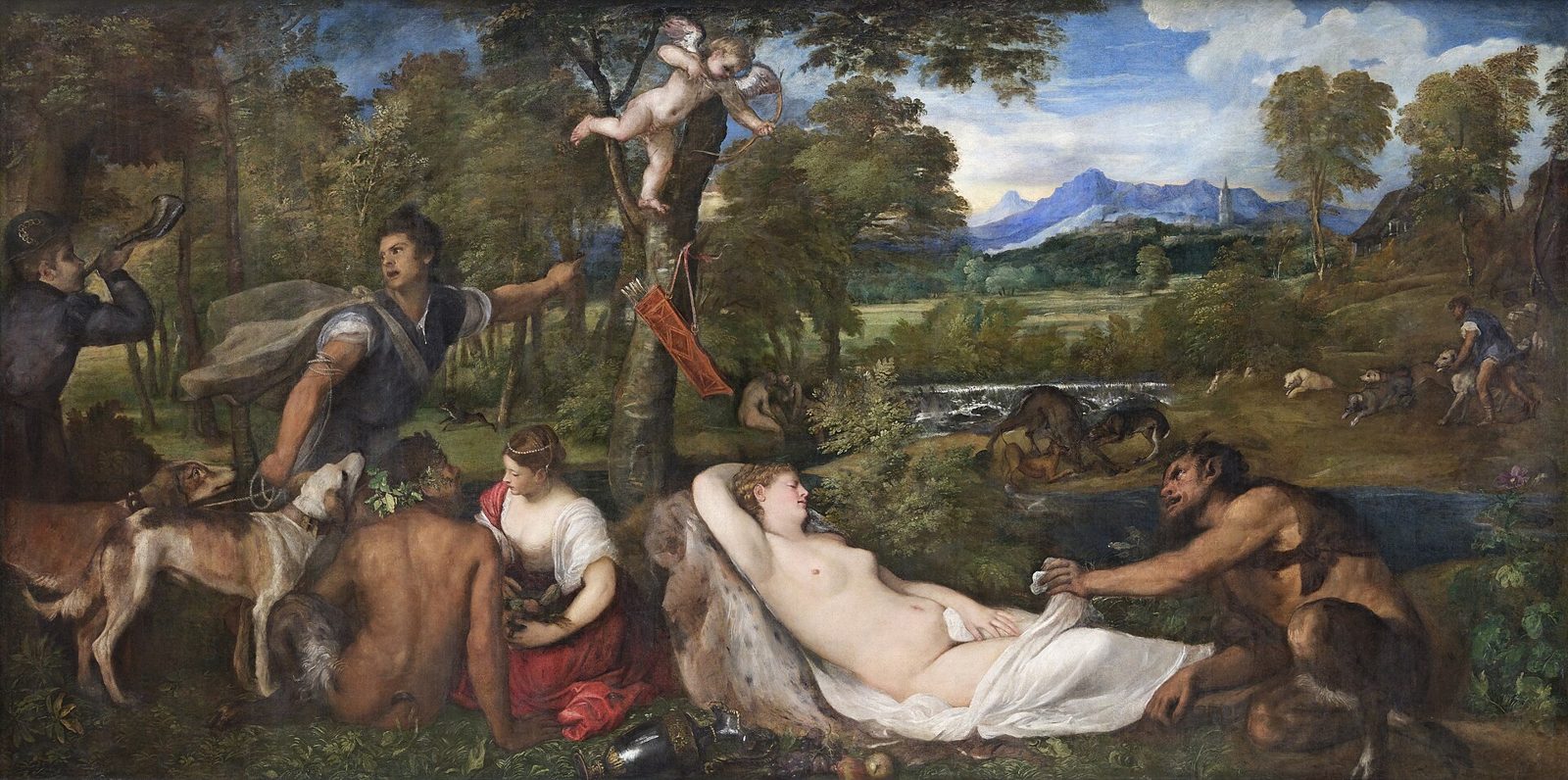
🎧 This work has audio narration — listen in the appAs you stand before Titian's "Jupiter and Antiope," take a moment to really look at the scene unfolding before you. Notice the way Jupiter, disguised as a satyr, is lifting the drapery from the sleeping figure—who some believe to be Antiope, others say Venus. This tension between the figures is palpable, isn’t it?
Now, focus on the expressions and the details: the serene face of the sleeping woman contrasts sharply with the predatory gaze of Jupiter. This juxtaposition is crucial; it highlights the themes of desire and violation that permeate the painting. Titian captures a moment that is both intimate and unsettling, inviting us to ponder the complexities of power and vulnerability.
Created in 1551 for Philip II of Spain, this painting is one of Titian's largest mythological works. It reflects the artist's mastery of color and composition, drawing on classical themes from Ovid's "Metamorphoses." The lush landscape behind the figures is not just a backdrop; it mirrors the emotional landscape of the narrative, filled with both beauty and foreboding.
As you absorb this scene, think about the questions it raises: What does it mean to be both a subject of beauty and a victim of desire? How does Titian challenge us to reflect on our own perceptions of power and innocence? Let these thoughts linger as you continue your exploration of this remarkable work.
Titian, born Tiziano Vecellio around 1488 in Pieve di Cadore, was a pivotal figure in the Italian Renaissance, particularly in Venetian painting. Renowned for his versatility, he excelled in portraits, landscapes, and mythological themes, becoming a sought-after artist among patrons, including the Habsburgs and the papacy. His innovative use of color and brushwork transformed the art of painting, liberating it from the rigid constraints of line and form that characterized earlier periods.
Titian's career began in Venice, where he trained under notable masters such as Giovanni Bellini and Giorgione. His early works reflected the influence of these artists, but he quickly developed a distinctive style that emphasized color and emotional depth. His masterpiece, "Assumption of the Virgin," showcased his ability to blend religious themes with dynamic composition, setting a new standard in Christian art.
Throughout his life, Titian's artistic evolution mirrored his personal experiences, including the loss of his wife and the challenges of his time. He became a prominent portraitist, capturing the essence of his subjects with remarkable realism. His legacy endures, influencing countless artists and solidifying his place as one of the greatest painters in Western art history. Titian passed away in 1576, leaving behind a rich body of work that continues to inspire and captivate audiences today.
Titian's 'Jupiter and Antiope' was commissioned in 1551 by Philip II of Spain, marking a significant moment in the artist's career as it was his first major mythological painting for the king. The work was initially housed in the Royal Palace of El Pardo near Madrid, a testament to its importance. Over the years, it changed hands, eventually being gifted to Charles I of England in 1623. Following the tumultuous events surrounding Charles's execution, the painting was acquired by Cardinal Mazarin and later became part of Louis XIV's collection in 1661. Today, it resides in the Louvre Museum in Paris, where it continues to captivate audiences. The painting's title has sparked debate; while it is often referred to as 'Jupiter and Antiope', some historical references suggest it may depict Venus instead, adding layers of intrigue to its interpretation.
In 'Jupiter and Antiope', Titian's masterful brushwork and vibrant color palette create a dynamic tension between the figures and their surroundings. The composition is cleverly divided by a central tree, guiding your eye from the voyeuristic satyr to the serene figure of the sleeping woman. Notice how the light dances across the landscape, illuminating the lush greens and warm earth tones, enhancing the emotional depth of the scene. Titian's technique of layering paint allows for a rich texture that feels almost alive, while the loose brushstrokes give the impression of movement, as if the figures might shift at any moment. The juxtaposition of the intimate moment with the broader hunting scene in the background adds complexity, inviting you to ponder the themes of desire and power that permeate the work.
One surprising aspect of 'Jupiter and Antiope' is its uncertain identity; while many believe the sleeping figure to be Antiope, historical records show that Titian himself referred to the subject simply as 'the landscape' or 'the nude woman', leaving art historians to debate the true identity of the figure. This ambiguity adds an intriguing layer to the painting, as it invites viewers to interpret the work through their own perspectives and experiences.
Titian modified a Bacchanalian scene that he had begun much earlier in his career, completing the landscape background and adding figures to create this painting.
Initially referred to simply as 'the landscape' or 'the nude woman', the title 'Jupiter and Antiope' emerged later, reflecting the evolving interpretations and attributions of the work.
The composition is cleverly divided by a central tree, which not only organizes the scene but also enhances the tension between the voyeuristic satyr and the serene figure of the sleeping woman.