Resurrection of Christ
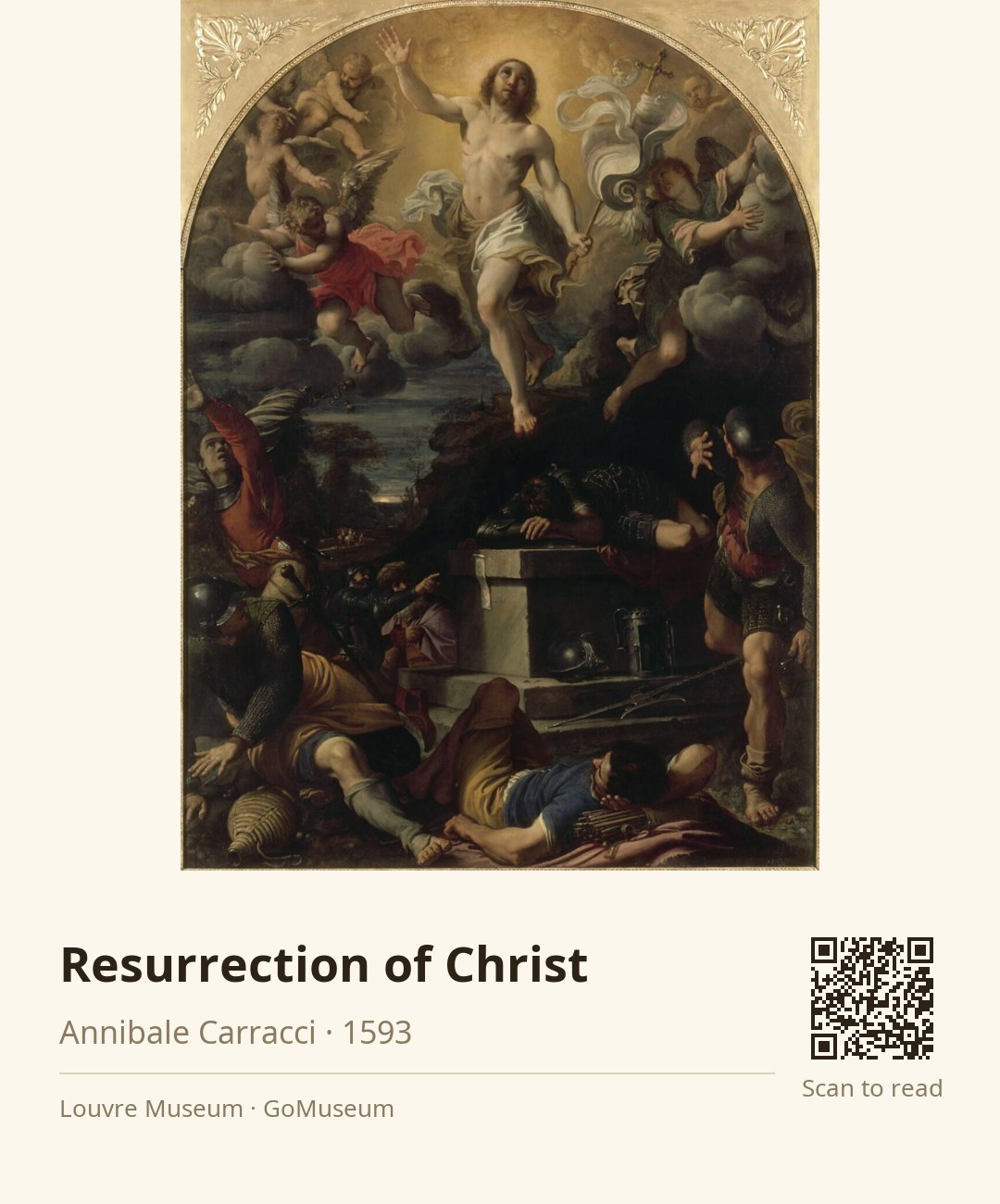
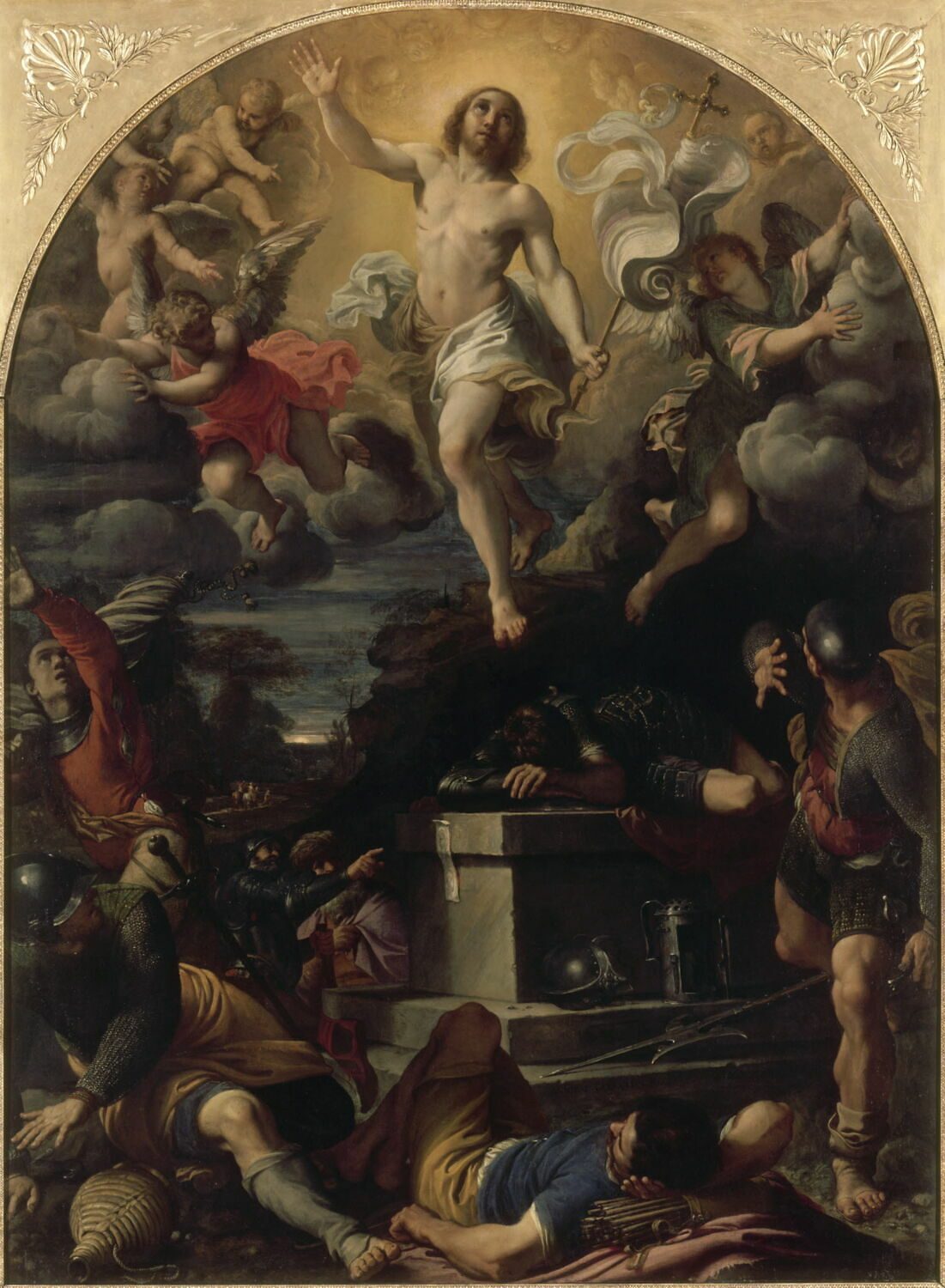
🎧 This work has audio narration — listen in the appTake a moment to gaze at the vibrant scene unfolding in front of you. In Annibale Carracci's "Resurrection of Christ," the moment of divine triumph is captured with a breathtaking intensity. Notice how Christ, radiant and elevated, holds the banner of the cross, surrounded by a chorus of angels bathed in a warm, celestial light. This stark contrast to the darker, misty background emphasizes the miracle taking place.
Carracci's use of light not only highlights Christ’s resurrection but also symbolizes hope and rebirth, drawing the viewer into a moment that transcends time. The sealed tomb beneath Him, untouched and intact, serves as a powerful testament to the miracle, while the soldiers below react in a spectrum of disbelief and awe, each pose telling a story of its own.
Created in 1593 for a private chapel in Bologna, this painting reflects Carracci's mastery of blending classical influences with a dynamic Baroque style. His work was revolutionary, paving the way for future generations of artists.
How does it resonate with your own experiences of hope and renewal?
Annibale Carracci was an Italian painter born in Bologna in 1560, who played a pivotal role in the evolution of Baroque art. Alongside his brother Agostino and cousin Ludovico, he established the Accademia degli Incamminati, a groundbreaking art school that emphasized life drawing and became a model for future institutions across Europe. Carracci's work is characterized by a synthesis of various Renaissance styles, drawing inspiration from masters like Raphael and Titian while striving for a return to classical grandeur infused with dynamic vitality.
His early career saw him creating significant works in Bologna, including altarpieces and frescoes, but it was his monumental frescoes in the Palazzo Farnese in Rome that cemented his legacy. The ceiling of the grand salon, depicting The Loves of the Gods, showcased his mastery of illusionistic techniques and narrative depth, influencing generations of artists. Carracci's approach contrasted sharply with that of Caravaggio, as he sought to revive the classical tradition while embracing a more naturalistic style.
Carracci's contributions to art history are profound; he is celebrated as a founder of the Baroque style, whose innovative techniques and emphasis on realism laid the groundwork for future developments in painting. His influence persisted well into the 17th and 18th centuries, marking him as a key figure in the transition from Renaissance to Baroque art. He passed away in 1609, leaving behind a legacy that continues to resonate in the art world.
Annibale Carracci's "Resurrection of Christ" was painted in 1593, commissioned for the private chapel of the Palazzo Luchini in Bologna. This work, now housed in the Louvre, was part of a collection that belonged to the Angelelli family for many years before being transferred to the Corpus Domini monastery. The painting quickly gained acclaim, becoming one of the most celebrated pieces of the Bolognese school by the end of the 17th century. Interestingly, Carracci's payment for this monumental work was modest, with part of his compensation even coming in the form of food. After the French occupation in 1797, the painting was seized and never returned to Italy, marking a significant moment in its storied provenance.
As you take in the painting, notice how Carracci's brushwork creates a dynamic interplay of light and shadow. The warm, supernatural light illuminating Christ contrasts sharply with the darker, misty background, drawing your eye to the central figure. This technique not only emphasizes Christ's divine nature but also enhances the emotional weight of the moment. The composition is meticulously structured; the figures of the soldiers at the bottom react in varied poses, showcasing Carracci's mastery of foreshortening and anatomical accuracy. Each detail, from the rolling flask to the carefully rendered weapons, adds a layer of realism that invites you to explore the scene further, almost as if you're witnessing the miracle unfold.
One soldier is shown sleeping on the tombstone, which adds a layer of irony to the scene, as he is oblivious to the miraculous event occurring right above him. This juxtaposition of awareness and ignorance among the soldiers enhances the dramatic tension of the moment.