 Image: anonymous
Christ and Abbot Mena
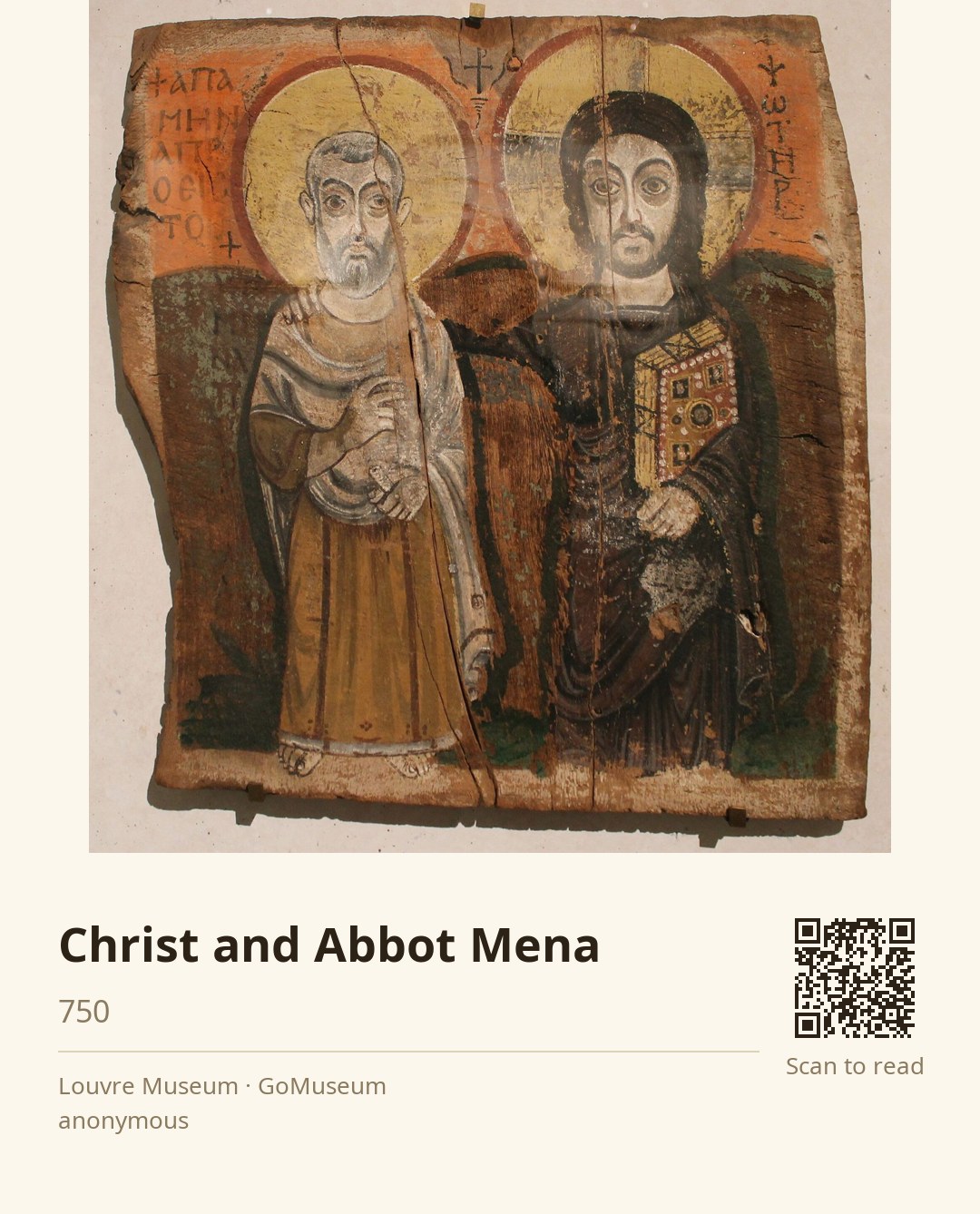
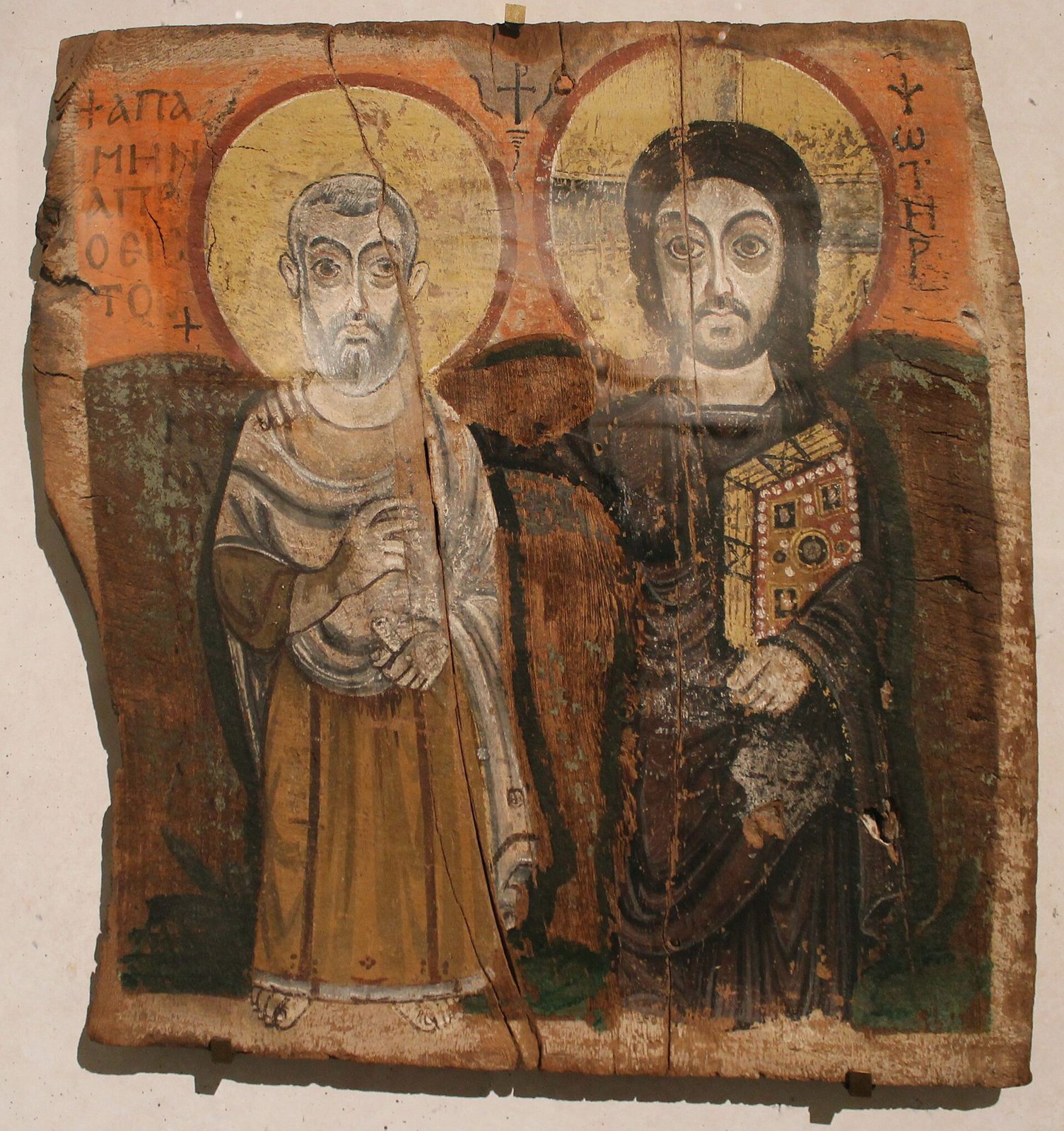
🎧 This work has audio narration — listen in the appTake a moment to really look at the figures in front of you. Notice how Christ stands with a protective arm around Abbot Mena, his gaze both warm and commanding. The large, expressive eyes of both figures draw you in, almost as if they’re peering into your very soul.
These exaggerated eyes aren’t just for show; they symbolize spiritual vision, inviting you to connect with the divine. Christ’s right eye focuses on Mena, while Mena’s left eye looks out at you, creating a bridge between the sacred and the viewer. This intimate connection hints at the relationship between the divine and humanity, a theme that resonates deeply in Coptic art.
As you stand here, consider what it means for these figures to be presented together. What might their relationship tell us about faith and protection? Take a moment to reflect on the connection between the sacred and your own life.
The icon was brought to the Louvre in Paris after being stolen and subsequently purchased in 1918. Its journey from the monastery to the museum reflects the tumultuous history of art and artifacts, often marked by theft and recovery. Despite suffering damage over the years, including pigment loss and cracks, the icon remains a striking representation of its time, showcasing the unique blend of artistry and spirituality that flourished in Egypt before the Arab conquest. The inscriptions identifying the figures as Christ and Abbot Mena add to its historical significance, linking it directly to the Coptic Christian tradition.
Interestingly, the icon's discovery was part of a larger excavation that unearthed numerous other works, including entire rooms filled with icons of saints. Many of the icons were created with the foresight that the depicted individuals might later be canonized, allowing them to be preserved without needing retouching. This foresight speaks to the deep connection between art, faith, and the community's aspirations for sanctity.
The icon employs exaggerated features, particularly the large eyes, which were a common stylistic choice in Coptic art to convey spiritual vision and divine connection. This technique, along with the use of color gradients in the background, illustrates the unique artistic language that developed within the Coptic tradition during this period.