The Archangel Leaves Tobias and his Family
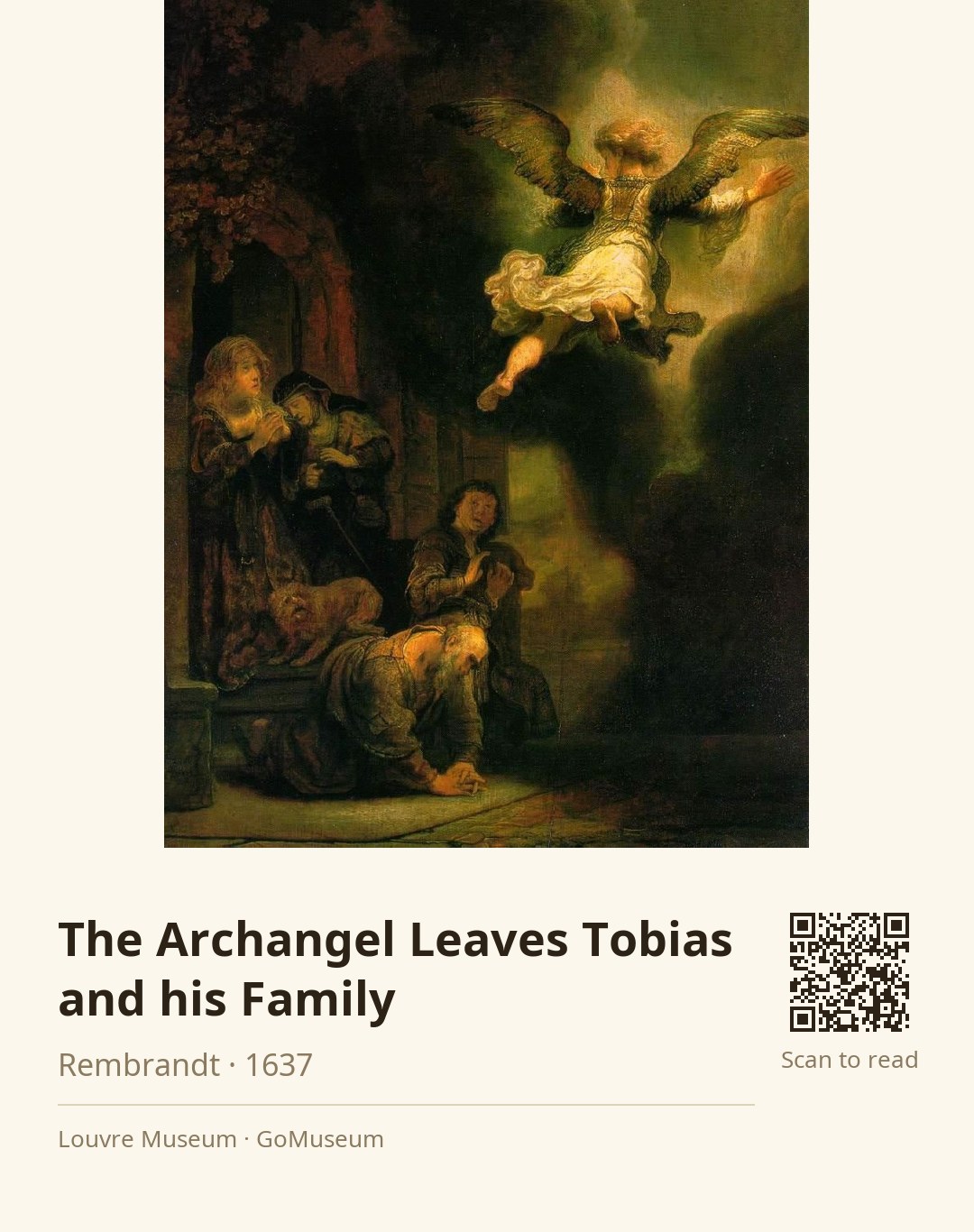
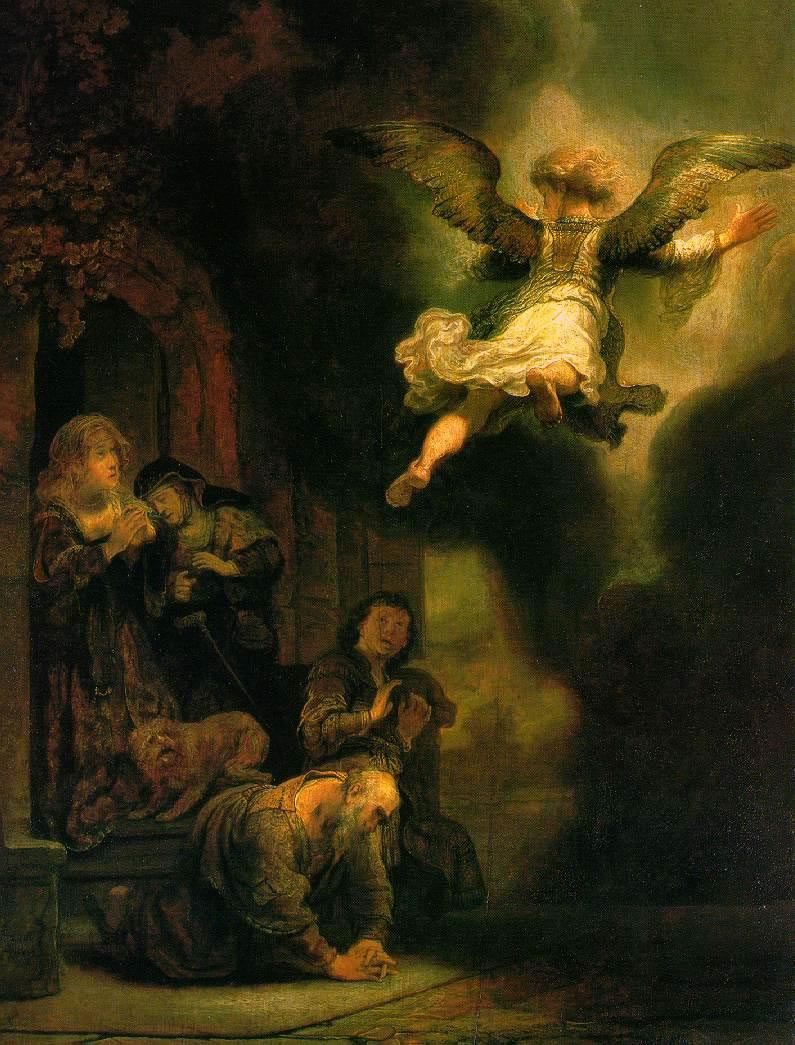
🎧 This work has audio narration — listen in the appThe archangel Raphael, with his magnificent wings spread wide, ascends into the light in the upper right corner, leaving behind a scene filled with emotion. Below him, Tobias kneels, his face a mixture of awe and disbelief, while his family stands close by, their expressions reflecting a profound sense of gratitude and contemplation. The dark, earthy tones of the interior contrast sharply with the angel’s ethereal glow, drawing your eye along the path from the kneeling figure to the heavenly departure.
This moment captures the culmination of Raphael’s mission: guiding Tobias on a journey that not only healed his father’s blindness but also led him to love. The small dog at Tobias's feet symbolizes loyalty and the human emotions of fear and curiosity, grounding the divine encounter in everyday life. Rembrandt’s use of chiaroscuro emphasizes the angel's distance, enhancing the feeling of separation as he prepares to leave.
Painted in 1637, this work reflects the biblical narrative from the Book of Tobit, where Raphael departs after fulfilling his role as a guide and healer.
Rembrandt Harmenszoon van Rijn, born on July 15, 1606, in Leiden, was a pivotal figure of the Dutch Golden Age and is celebrated as one of the greatest artists in Western art history. His oeuvre includes around three hundred paintings, three hundred etchings, and numerous drawings, showcasing a remarkable range of styles and subjects, from intimate portraits to grand historical and biblical scenes.
Rembrandt's artistic journey began in Leiden, where he was influenced by both Dutch and Italian masters. He opened his studio in 1625 and quickly gained recognition for his portrait work. His move to Amsterdam marked a significant turning point, as he became a sought-after portraitist and married Saskia van Uylenburgh, a union that brought both joy and tragedy. The couple faced immense personal losses, including the deaths of their children and Saskia's own passing in 1642, which deeply affected his work.
Despite financial struggles later in life, Rembrandt's innovative techniques, particularly in etching, transformed the medium into a respected art form. His mastery of light and shadow, known as chiaroscuro, and his empathetic portrayal of human experience set him apart from his contemporaries. Rembrandt's legacy endures through his profound ability to capture the complexities of the human condition, making him a cornerstone of art history.
In this painting, Rembrandt employs oil on panel to create a striking visual narrative. The brushwork is both bold and delicate, allowing for a rich texture that draws you into the scene. The dark, earthy palette sets a somber tone, contrasting sharply with the luminous figure of the archangel Raphael. This use of chiaroscuro not only highlights the angel's ethereal glow but also emphasizes the emotional weight of the moment. The composition is dynamic, leading the viewer's eye from the kneeling Tobias to the ascending angel, creating a sense of movement and urgency. The scale of the figures, particularly the towering angel, enhances the dramatic impact, making Raphael's departure feel monumental. Rembrandt's choice to depict the angel from behind adds to the sense of distance and separation, inviting contemplation on the themes of guidance and farewell.
By showing the angel from behind, Rembrandt creates a feeling of distance and separation, encouraging viewers to reflect on the themes of guidance and farewell.