 Image: Shonagon · painter from Brockhaus and Efron Encyclopedic Dictionary · ArkéoTopia · ArkéoTopia · ArkéoTopia
Sarcophagus of the Spouses
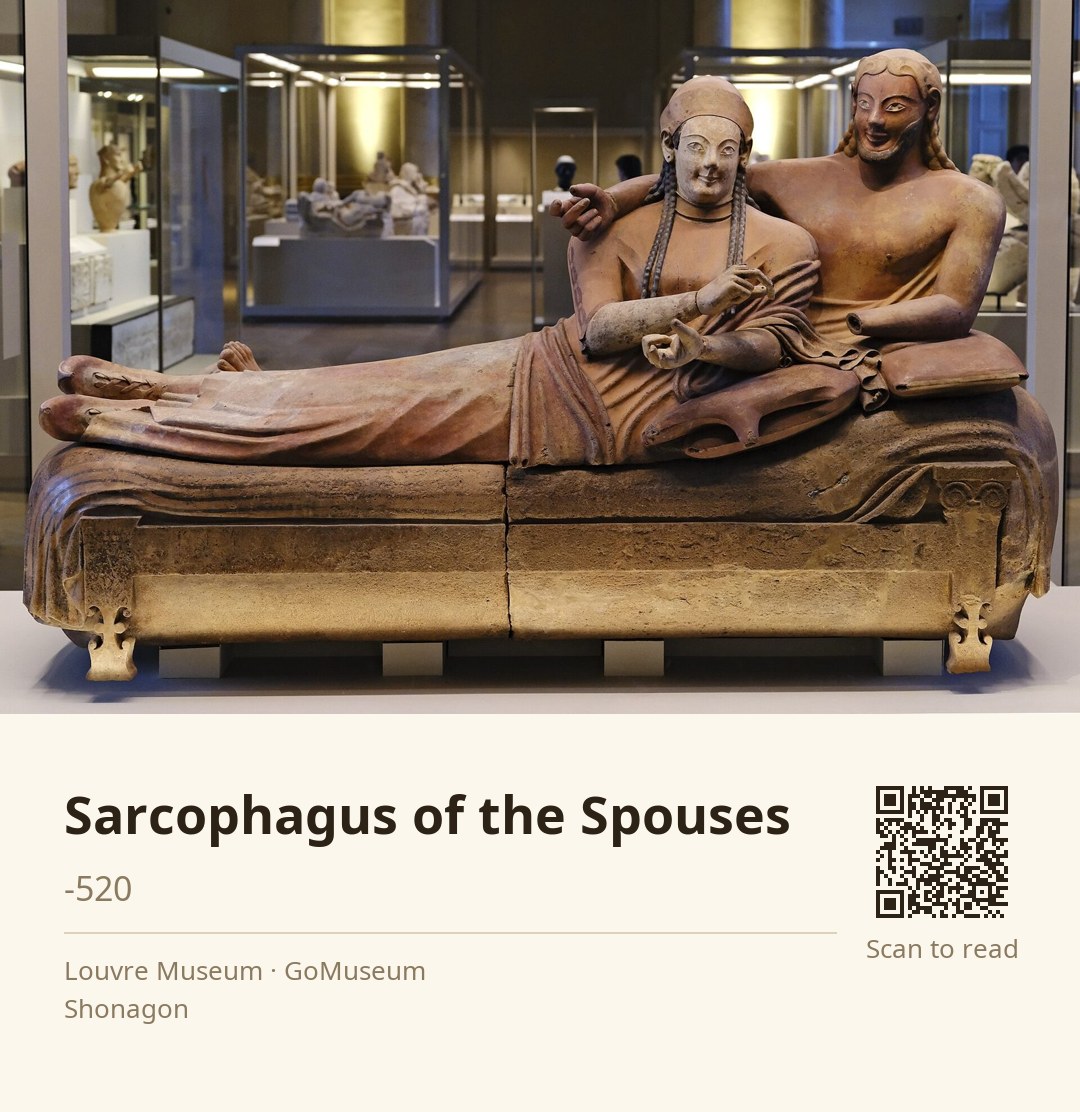
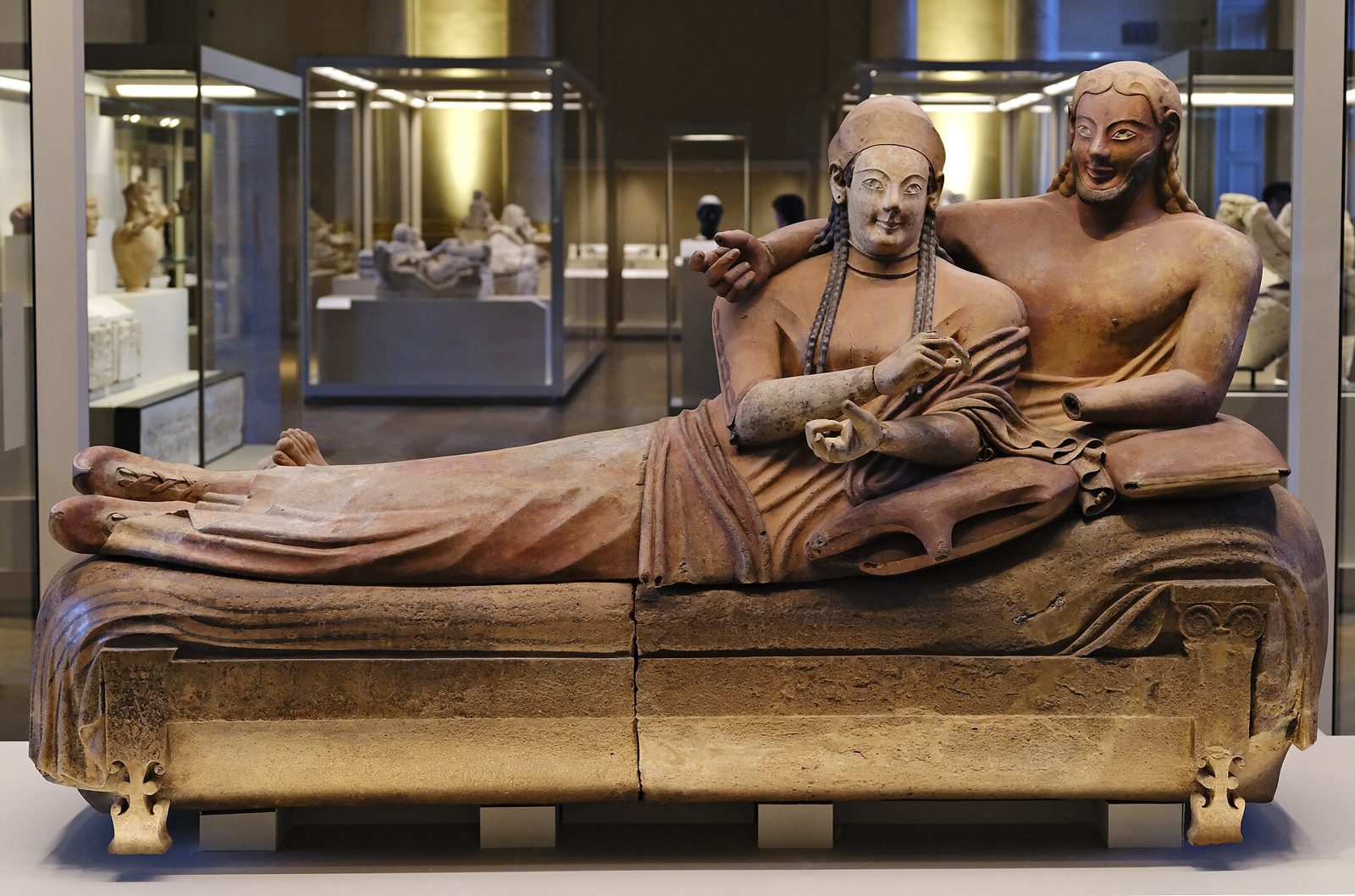
🎧 This work has audio narration — listen in the appTake a moment to really look at the Sarcophagus of the Spouses. Notice how the couple lies together, relaxed and intimate, as if they’re sharing a moment of joy even in death. Their bodies are elegantly intertwined, with the husband propped up on one elbow, a smile on his face, while his wife lovingly pours perfume into his hand.
These details matter because they reveal so much about Etruscan beliefs regarding love and the afterlife. This isn’t just a tomb; it’s a celebration of their bond, a testament to the importance of marriage and companionship in Etruscan culture. The way they are positioned reflects a banquet scene, symbolizing that life continues in the afterlife, filled with feasting and joy.
Created around 520 BCE in Caere, this monumental terracotta piece showcases the artistry and craftsmanship of the Etruscans, who were known for their elaborate funerary practices.
As you stand here, consider: what moments of connection would you want to be remembered for?
As you gaze at the Sarcophagus of the Spouses, let’s dive into the craftsmanship. This monumental piece is made of terracotta, a material that allowed for intricate detailing. Notice the smoothness of the surface and the lifelike expressions on the couple’s faces. The artisans of Caere, where this was crafted, were skilled in creating large-scale works, and you can see their expertise in the way the figures are proportioned and positioned. The original polychrome finish would have added vibrant colors, enhancing the lifelike quality of the scene. Imagine the artisans carefully shaping each detail, from the folds of their garments to the delicate way the wife pours perfume into her husband's hand, capturing a moment of intimacy that transcends time.
This sarcophagus, dating back to around 520 BCE, was discovered in the Banditaccia necropolis in Cerveteri, Italy, a site rich with Etruscan tombs. It was unearthed in the mid-19th century by the marquis Giampietro Campana, who had a keen eye for antiquities. After being part of his collection, it was acquired by Napoleon III in 1861 for the Louvre. The piece has since been restored and was a highlight of the exhibition 'Les Étrusques et la Méditerranée' at the Louvre-Lens in 2013-2014.
Did you know that this sarcophagus is part of a larger tradition of Etruscan funerary art? There are several examples of similar sarcophagi, each depicting couples in various poses of intimacy. However, the Sarcophagus of the Spouses stands out for its size and the detailed craftsmanship that captures the essence of Etruscan life and beliefs. It’s fascinating to think that while many of these pieces were created for the elite, they all shared a common goal: to honor the deceased and celebrate their lives.
The Sarcophagus of the Spouses is notable for its size and the intimate portrayal of the couple, which reflects a specific Etruscan tradition of depicting spouses together in a banquet pose, emphasizing their bond even in death.
It was initially part of the collection of marquis Giampietro Campana, who unearthed it in the Banditaccia necropolis in the mid-19th century, and was later acquired by Napoleon III in 1861 for the Louvre.
The sarcophagus underwent restoration at the Louvre-Lens in October 2013, ensuring its preservation and enhancing its display for the exhibition 'Les Étrusques et la Méditerranée'.