Saint John the Baptist
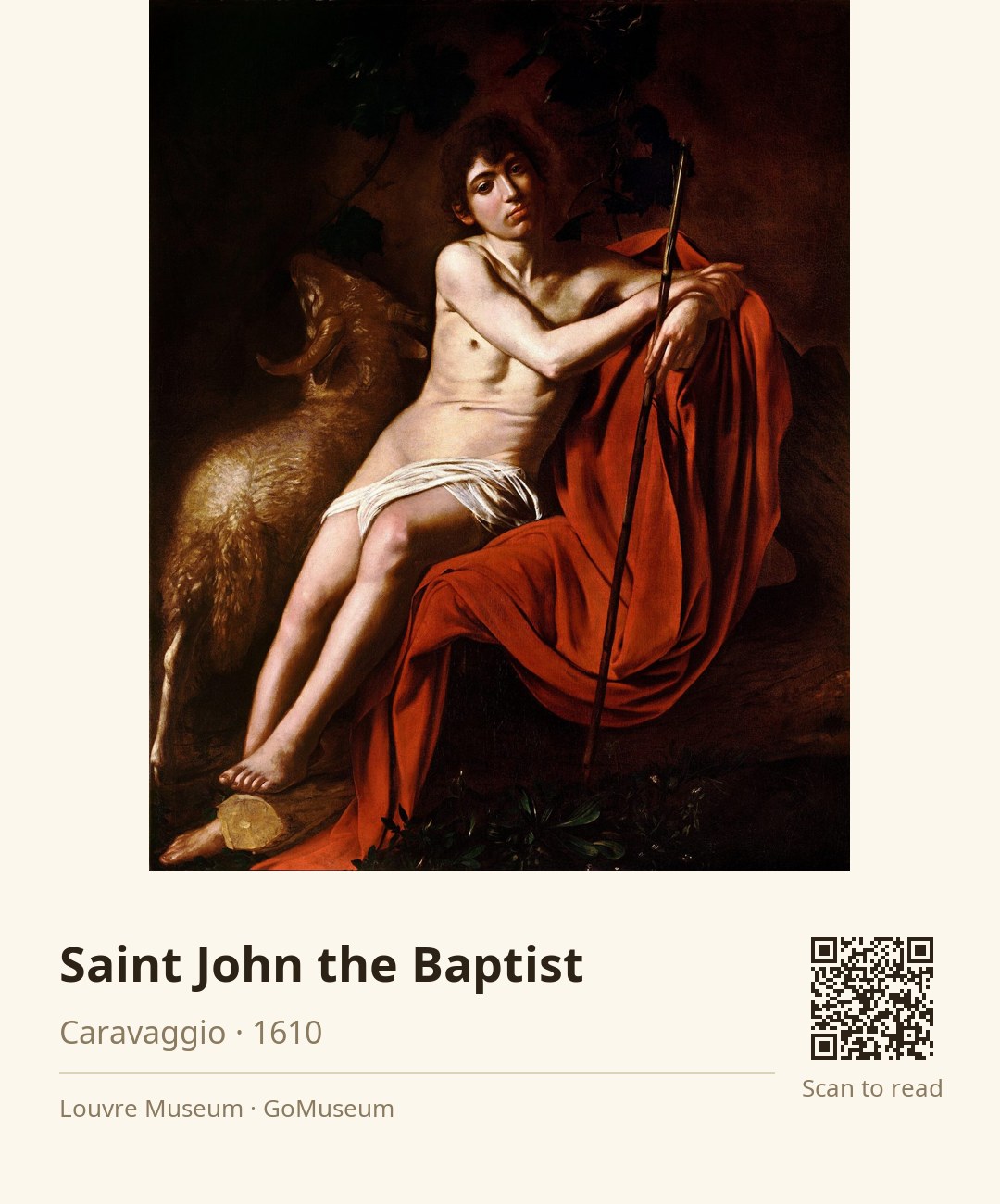
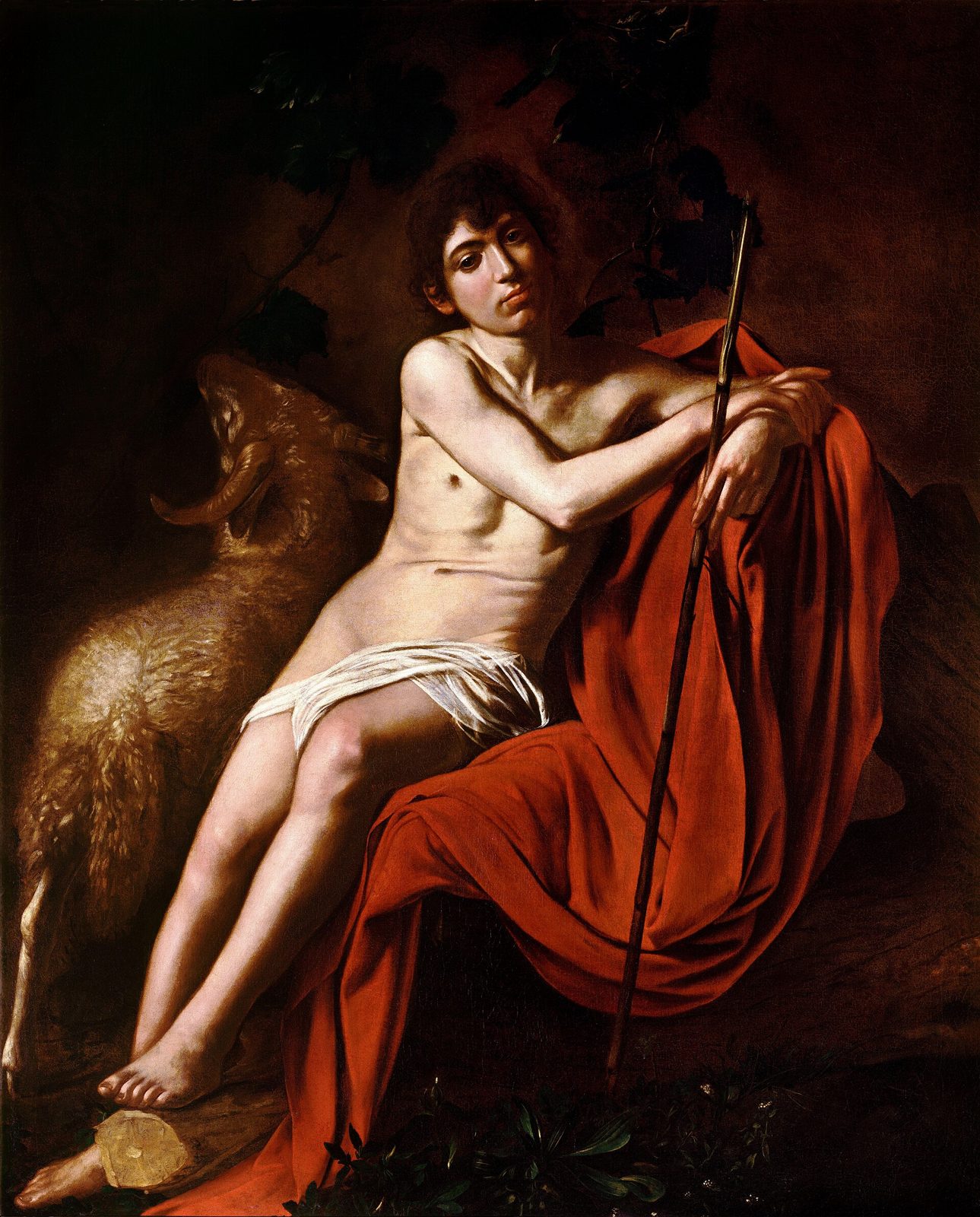
🎧 This work has audio narration — listen in the appTake a moment to really look at Caravaggio's "Saint John the Baptist." Notice how the young figure, draped in that striking red cloak, seems to almost glow against the dark background. It’s as if he’s a flame flickering in the shadows, drawing your eye in.
Now, focus on his expression—there’s a deep melancholy there, isn’t there? He appears lost in thought, perhaps contemplating the sacrifices that lie ahead, both for himself and for Christ. This isn’t just a pretty picture; it’s a powerful moment of introspection, capturing the weight of his prophetic role.
Caravaggio painted this in 1610, just before his untimely death, and you can feel the urgency in his brushstrokes. The rough texture of the paint adds to the raw emotion, reflecting the turbulent life he led—filled with violence, passion, and a relentless search for redemption.
As you stand here, consider how this painting is one of several interpretations of John the Baptist, yet it stands out for its emotional depth and realism. Caravaggio’s approach was revolutionary, paving the way for future artists to explore the human experience in such a visceral way.
So, what do you think Saint John is dreaming about in this moment? What thoughts might be crossing his mind as he gazes into the distance?
Michelangelo Merisi da Caravaggio, born in Milan in 1571, became one of the most influential figures in Baroque art. His early life was marked by tragedy and hardship, losing family members to the plague and growing up in poverty after his mother’s death. Caravaggio trained as a painter in Milan, where he developed a keen eye for realism, influenced by the naturalism of Lombard art and the dramatic compositions of the Counter-Reformation.
Moving to Rome in the early 1590s, Caravaggio's career flourished as he gained recognition for his innovative use of chiaroscuro, known as tenebrism, which brought a striking emotional depth to his subjects. His paintings often depicted intense moments of struggle and suffering, reflecting both physical and psychological states. However, his tumultuous personal life, marked by violence and legal troubles, led to his exile from Rome after killing a man in a brawl.
Despite his troubled existence, Caravaggio continued to produce powerful works in Naples, Malta, and Sicily until his untimely death in 1610. His legacy, initially overshadowed by his notorious reputation, was rediscovered in the 20th century, cementing his status as a precursor to modern painting. His influence is evident in the works of many artists, and he remains a pivotal figure in the history of Western art.
Caravaggio's 'Saint John the Baptist' was painted in 1610, the very year of his death, and it has a fascinating history tied to its commission and provenance. Initially thought to have been acquired by Cardinal Scipione Borghese between 1605 and 1606, scholars like Roberto Longhi suggest it was actually painted during Caravaggio's Sicilian period, post-1608. The Borghese collection is notorious for its aggressive expansion tactics, including the imprisonment of rival artist Giuseppe Cesari to seize his works. This painting, along with others, became part of Borghese's extensive collection, showcasing the artist's tumultuous life and the high stakes of art patronage in the Baroque era. The painting's journey reflects the shifting tides of Caravaggio's reputation, from celebrated artist to fugitive, and back to a revered figure in art history.
The coarse surface not only allows for quick drying but also mirrors the precariousness of Caravaggio's life at this time. Notice how the dramatic chiaroscuro enhances the figure of John, casting him in stark relief against the dark background. This technique draws your eye to the vibrant red of his cloak, which serves as the sole splash of color, igniting the canvas with life amidst the shadows. The composition is intimate, almost confessional, inviting you to ponder John's internal struggle. The way Caravaggio captures the light reflects his mastery of tenebrism, making the viewer feel the weight of John's prophetic burden.
Caravaggio's influence on the art world is monumental, marking a departure from the idealized forms of the Renaissance to a more visceral, human experience. His innovative use of light and shadow not only defined the Baroque style but also inspired countless artists, known as 'Caravaggisti,' who emulated his dramatic realism. This painting, in particular, exemplifies his emotional depth and has left a lasting impact on how religious figures are depicted in art. It paved the way for future explorations of human emotion and realism, fundamentally altering the trajectory of Western painting.
One intriguing aspect of 'Saint John the Baptist' is that it is one of several versions Caravaggio created on this theme. While some versions are contested in terms of attribution, this particular painting stands out for its emotional resonance and technical mastery. It showcases how Caravaggio's approach to biblical subjects was not just about representation but about evoking a profound psychological experience, a hallmark of his later works.
The red cloak worn by Saint John not only provides a striking contrast against the dark background but also symbolizes his prophetic role and the passion associated with his future sacrifices. This use of color reflects Caravaggio's innovative approach to emotional expression in his subjects.
Caravaggio's rough and coarse painting technique, which allowed for quick drying, mirrors the precariousness of his life during this period. His experiences of violence and urgency are captured in the raw texture of the paint, adding to the emotional intensity of the work.