 Image: Shonagon · Encyclopædia Britannica, 1911 · H. G. Wells · Gary Todd from Xinzheng, China
Stele of Naram-Sim
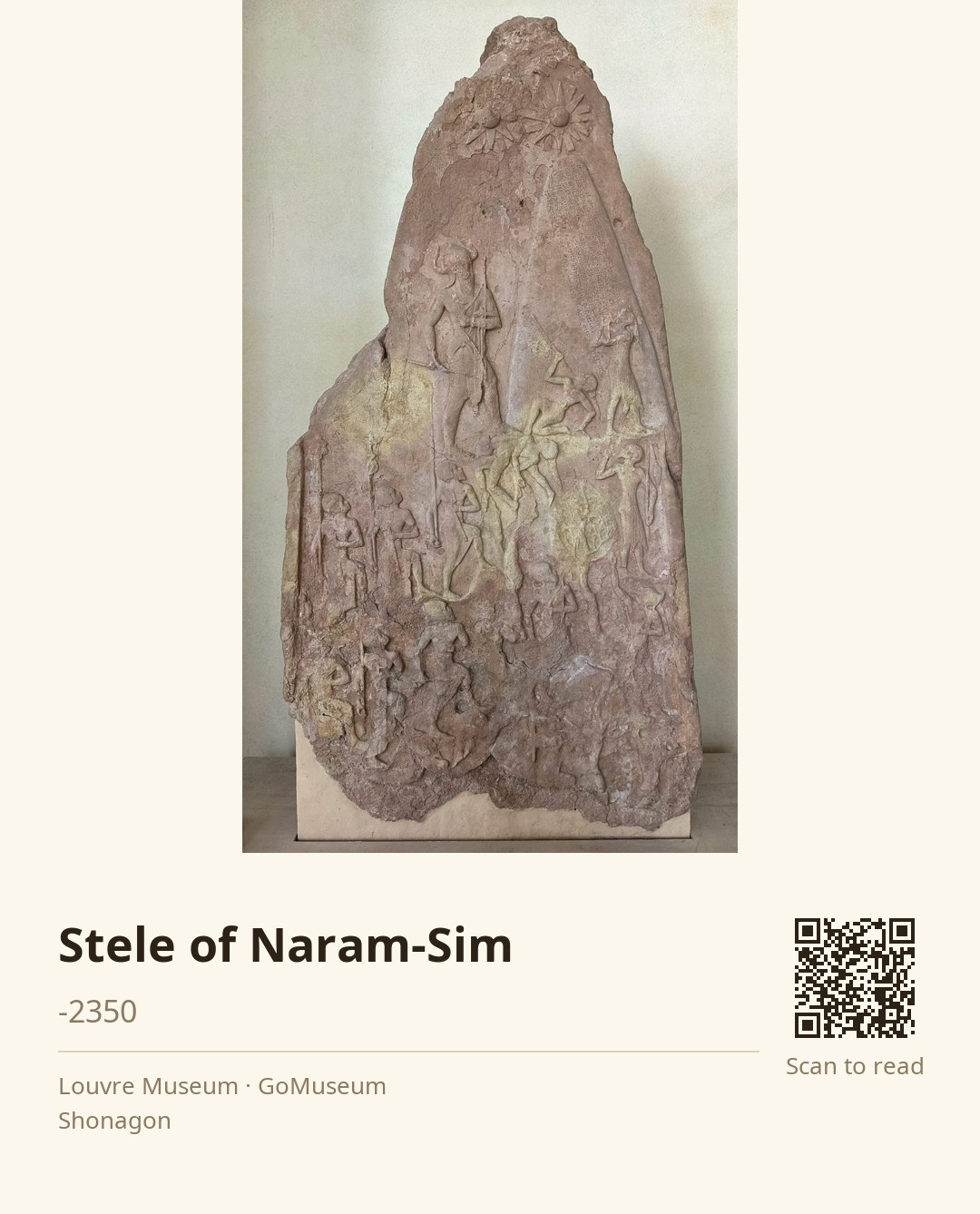
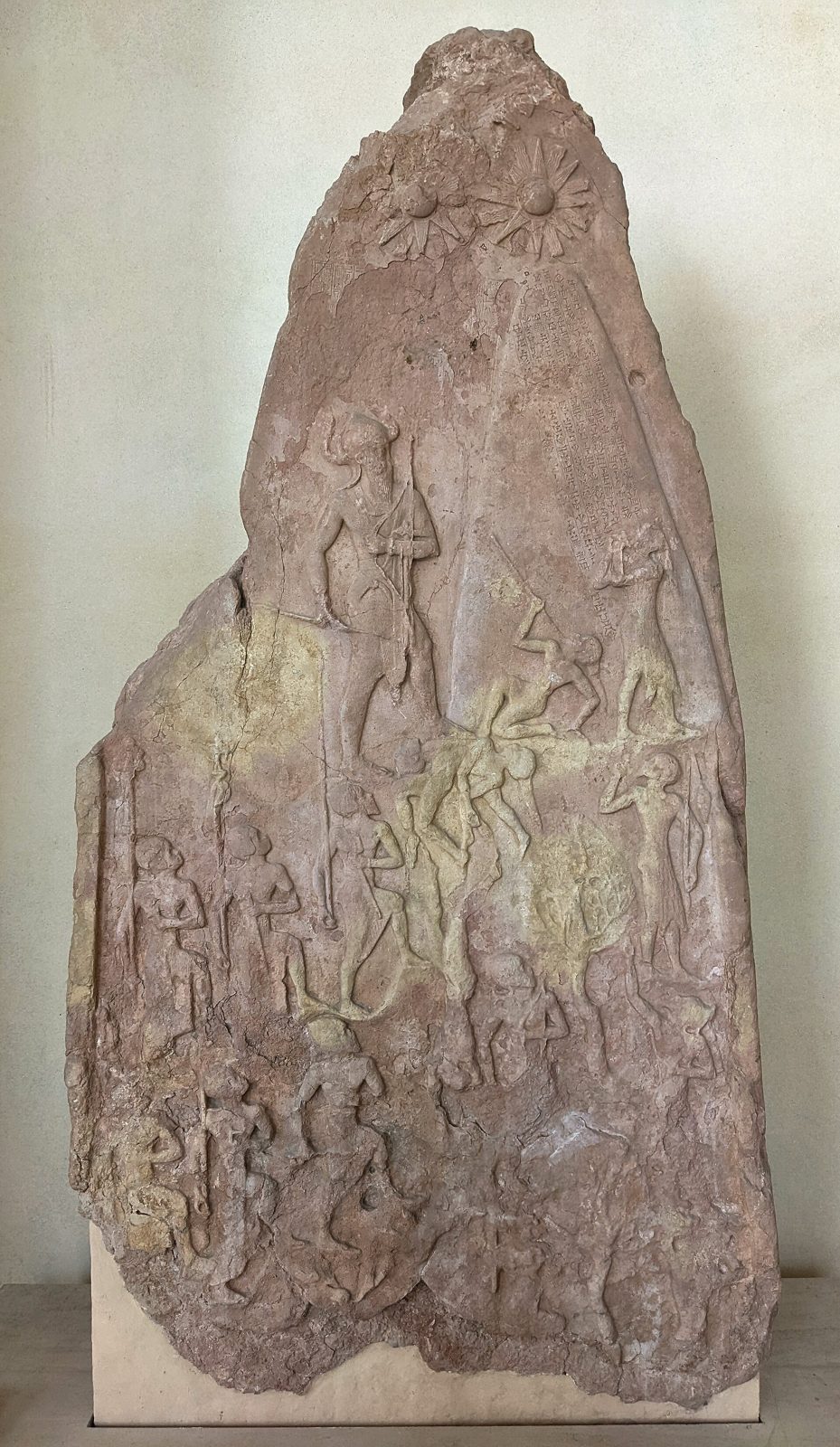
🎧 This work has audio narration — listen in the appTake a moment to really look at the Stele of Naram-Sin. Notice how the king stands tall, almost larger than life, wearing that distinctive bull-horned helmet. This isn’t just a fancy hat; it symbolizes his divine status, suggesting that he’s not just a ruler, but almost a god himself. Now, shift your gaze to the chaotic scene below him. The defeated Lullubi people are depicted in disarray, some begging for mercy, others tumbling down the mountainside. This stark contrast between Naram-Sin’s order and their chaos is crucial—it reinforces the idea that his victory is not only justified but divinely sanctioned.
Unlike typical horizontal battle scenes, this one is diagonal, allowing viewers to feel the dynamic movement of the battle. Naram-Sin’s gaze is directed toward the stars, hinting at a hierarchy of gods, reminding us that even he, despite his power, is not the supreme deity.
As you stand here, think about the message this stele conveys: the triumph of civilization over chaos, and the divine right of kings. What does that say about how power was viewed in ancient times?
This impressive stele, originally standing up to three meters tall, was erected to commemorate King Naram-Sin's victory over the Lullubi people, a rebellious group from the Zagros Mountains. It was initially displayed in Sippar, where it celebrated the king's divine right to rule. However, in the 12th century BC, the Elamite King Shutruk-Nakhunte, a descendant of the very people depicted as defeated, seized the stele during his conquest and transported it to Susa. He added his own inscription, honoring his achievements while acknowledging Naram-Sin's legacy. Rediscovered in 1898 by French archaeologist Jacques de Morgan, the stele now resides in the Louvre, where it continues to draw admiration and intrigue.
One fascinating detail about the Stele of Naram-Sin is its unique diagonal composition, which was quite revolutionary for its time. Unlike traditional horizontal battle scenes, this stele captures the action in a dynamic way, allowing viewers to feel the tension and movement of the battle. This innovative approach not only enhances the narrative but also emphasizes Naram-Sin's dominance, making him appear almost god-like as he gazes upward toward the stars, reinforcing his divine status.
The stele's diagonal composition was revolutionary, breaking away from the traditional horizontal layouts, which allowed for a more dynamic representation of the battle and emphasized the king's dominance over the chaotic scene below.