 Image: Unknown authorUnknown author
Frieze of Archers
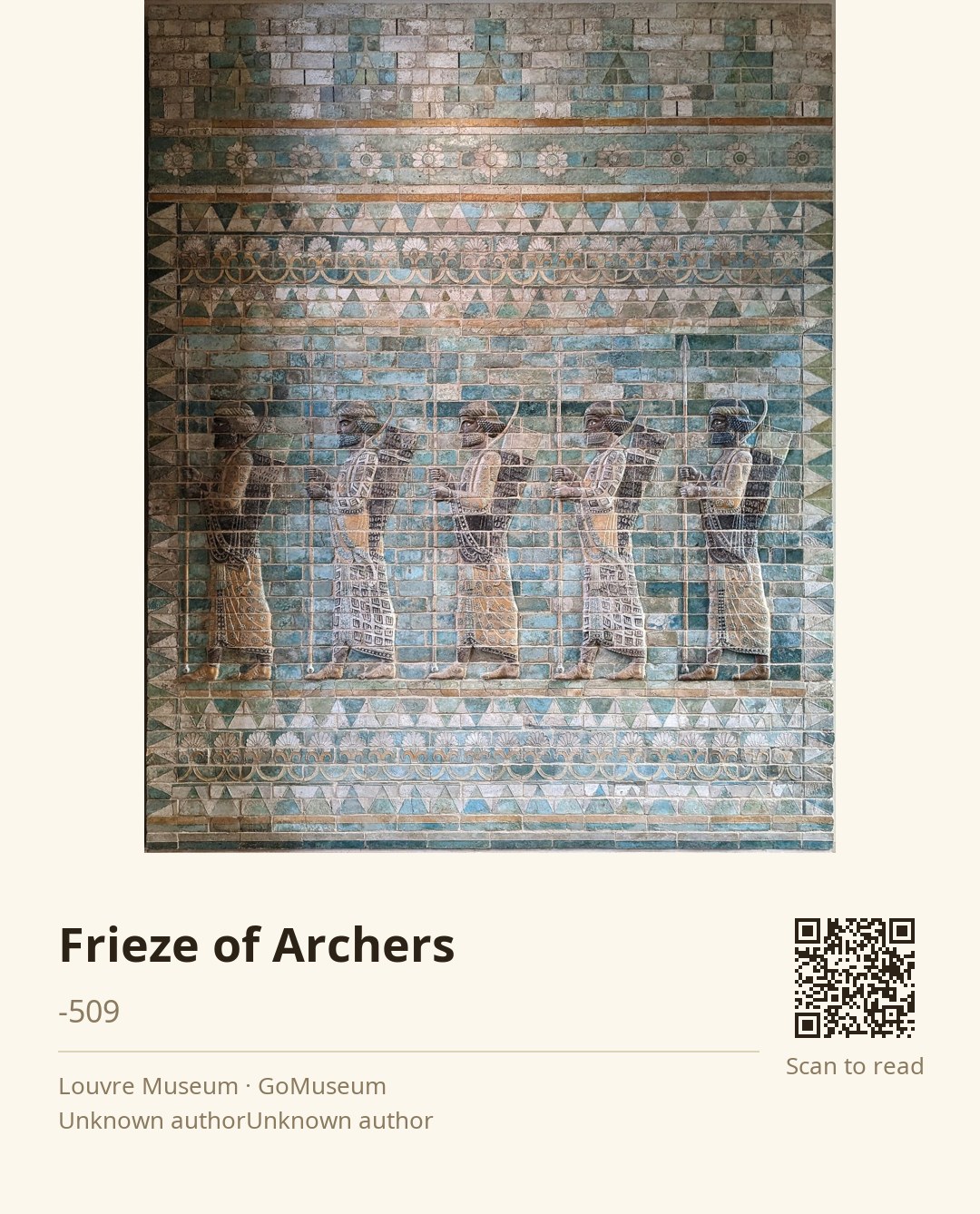
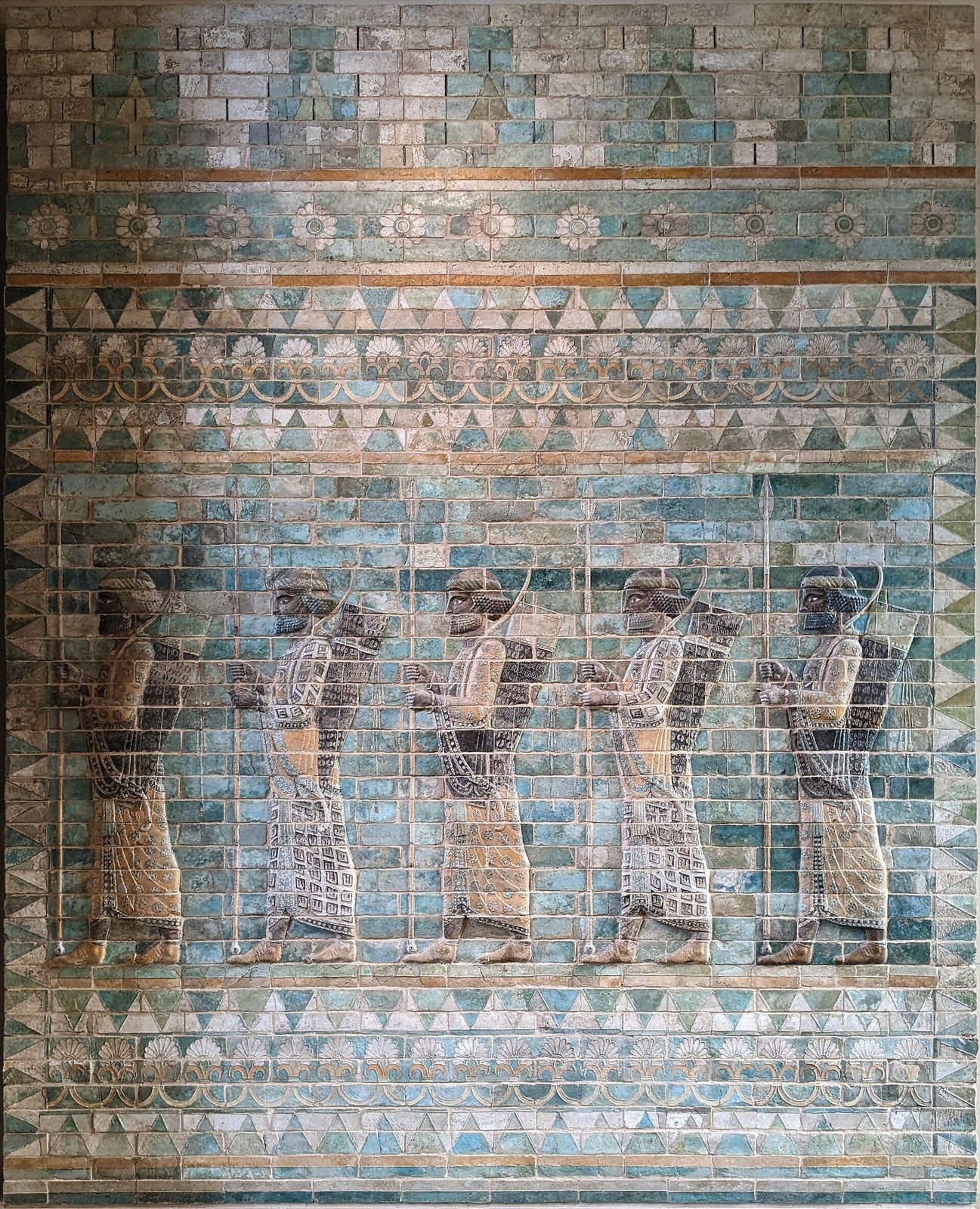
🎧 This work has audio narration — listen in the appFive archers stand in a precise line, each one adorned in patterned robes and holding a spear, their quivers resting on their backs. The earthy palette of blues, greens, and beiges brings a sense of harmony to the scene, while the intricate geometric and floral motifs in the background add a layer of richness to the composition.
The attention to detail in their attire—from the elaborate headgear to the textured fabrics—reflects the sophistication of Persian craftsmanship. The arched bows and quivers, decorated with animal motifs, hint at the cultural exchanges within the empire, showcasing influences that extended far beyond Persia itself.
Discovered in the ruins of the Apadana at Susa, this relief was unearthed during excavations led by Jane and Marcel Dieulafoy in the late 19th century. The frieze was originally part of a grand architectural scheme, likely intended to impress visitors and convey the power of the empire.
The Frieze of Archers, commissioned by Darius I, was crafted around 509 BCE and discovered in the Achaemenid palace at Susa during excavations led by Jane and Marcel Dieulafoy between 1884 and 1886. The Dieulafoys meticulously documented their findings, noting the vibrant details of the archers' attire and the overall grandeur of the palace's decorative scheme. Initially, the relief was transported to the Louvre aboard the cruiser Sané, alongside other significant artifacts. Over time, additional fragments were unearthed by other archaeologists, including Jacques de Morgan and Roland de Mecquenem, contributing to a richer understanding of this monumental work. While the exact original location of the frieze within the palace remains uncertain, it is believed to have adorned the apadana or audience hall, enhancing the splendor of the Achaemenid Empire's architectural legacy.
One intriguing detail about the Frieze of Archers is the unique portrayal of the archers' eyes, which are depicted with striking blackened outlines. The archers, while primarily shown in profile, have this singular feature that draws the viewer's attention, making them feel both present and powerful.
The majority of the archers are depicted with brown skin, but there are also some representations of white-skinned archers found on different bricks.
The archers are dressed in elaborate uniforms made from rich fabrics, showcasing intricate patterns and designs.
The archers' eyes are outlined in black, making them a distinctive feature that captures the viewer's focus.