 Image: Nathanael Burton
Death of Euryalus and Nysus
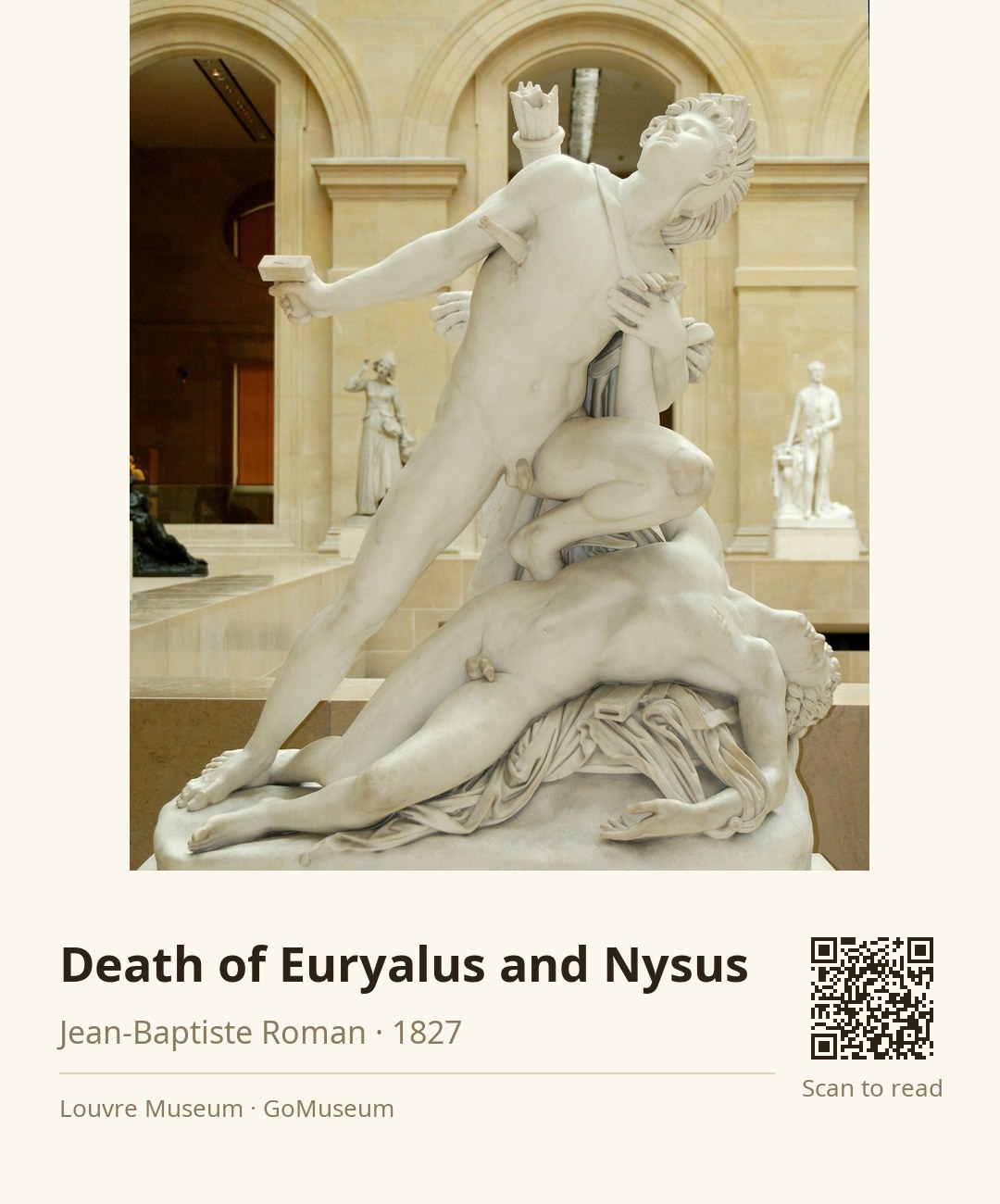
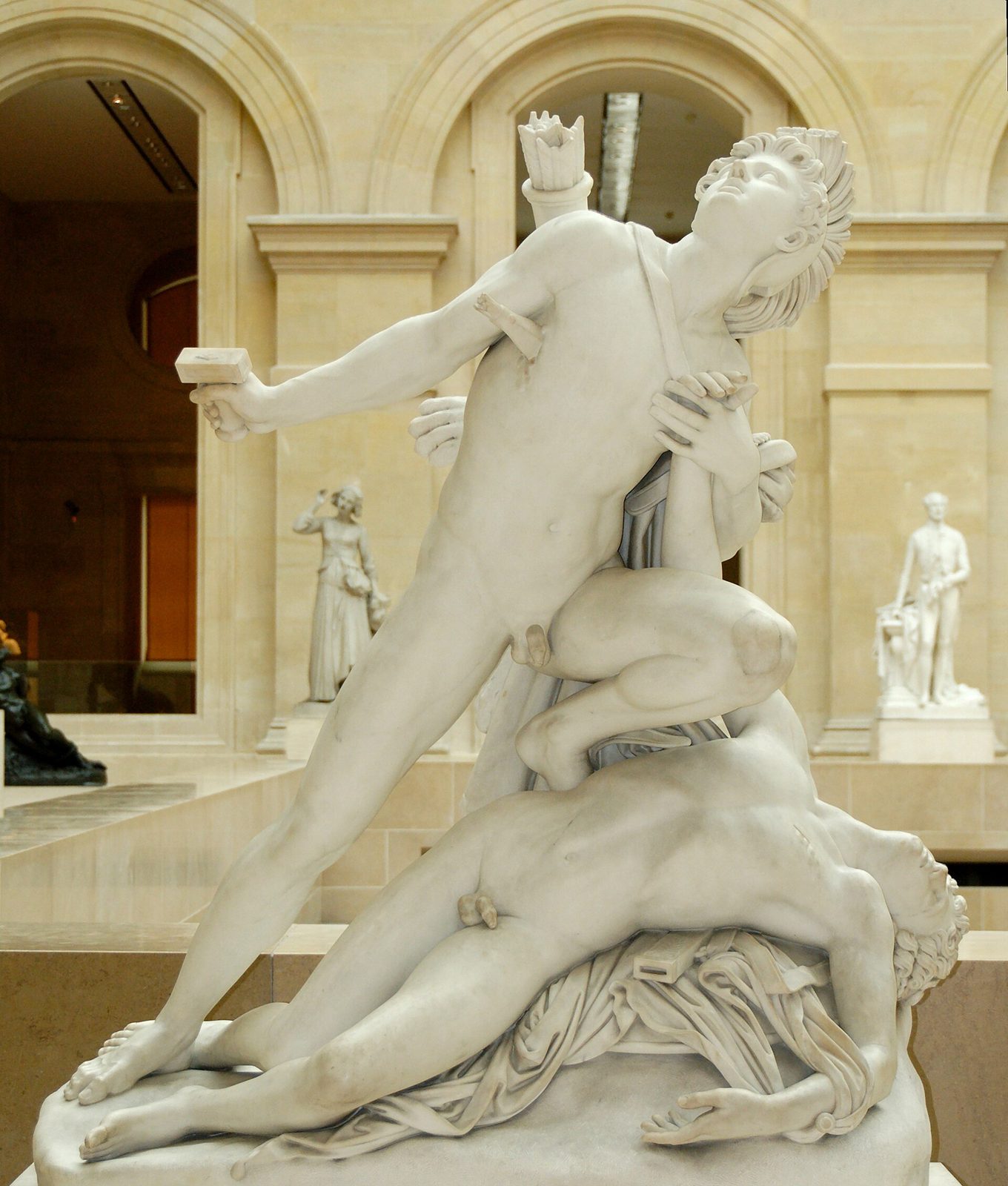
🎧 This work has audio narration — listen in the appTake a moment to really look at "Death of Euryalus and Nysus." Can you feel the tension in the air? Notice how the figures are locked in a dramatic embrace, their expressions a mix of despair and love. Euryalus, with his head thrown back, seems to be caught in a moment of tragic realization, while Nysus clutches him desperately, as if trying to hold onto life itself.
These details matter because they capture a powerful moment from Virgil’s epic, where love and sacrifice intertwine. Roman's skill in sculpting the human form brings this mythological tale to life, making you feel the weight of their fate.
Created in 1827, this piece reflects the neoclassical style that Roman mastered, drawing on themes of heroism and tragedy that resonated deeply in post-revolutionary France.
As you stand here, think about the stories that art tells us. What emotions do you feel when you look at their faces? How does this moment of love and loss resonate with your own experiences?
Jean-Baptiste Roman was a French sculptor born on October 31, 1792, in Paris, where he also passed away on February 13, 1835. A student of Pierre Cartellier, he gained recognition in the art world by winning the second prize of Rome in 1812 and the first in 1816. His works are characterized by a neoclassical style, often depicting historical and mythological figures, such as his notable sculpture of Cato the Younger, which reflects the revolutionary sentiments of his time. This piece, commissioned for the Louvre, was completed posthumously by François Rude.
Roman's artistic contributions include "L'Innocence," a representation of purity, and the portrait bust of painter Anne-Louis Girodet. He was an influential instructor at the École des beaux-arts, shaping future generations of artists. His legacy is marked by his membership in the Institut and his recognition as a knight of the Légion d'honneur. Despite his early death, Roman's works remain significant in the narrative of 19th-century French sculpture, showcasing the intersection of art and the evolving political landscape of his era.
Take a closer look at the texture of the marble. Roman’s craftsmanship is evident in the way he has carved the figures, capturing the delicate interplay of light and shadow across their forms. Notice the intricate details in the drapery, how it clings to the bodies, emphasizing their muscularity and the tension in their poses. The smoothness of the marble contrasts with the emotional turmoil depicted in their faces, creating a striking visual dialogue between material and emotion.
Jean-Baptiste Roman created 'Death of Euryalus and Nysus' in 1827, a time when neoclassicism was at its peak in France. This sculpture was showcased at the Salon, a prestigious exhibition that attracted significant attention. Roman was already an established artist, having won the Prix de Rome, and his works often explored themes of heroism and tragedy.
This sculpture captures a poignant moment of friendship and sacrifice, showcasing the deep bond between the two characters. Interestingly, Roman had initially presented a plaster model of this piece years earlier, but it wasn't until 1827 that the marble version was finally unveiled at the Salon. This delay only heightened the anticipation surrounding the work, making its debut all the more impactful.
After Jean-Baptiste Roman's death in 1835, his unfinished sculpture 'Caton d'Utique lisant le Phédon avant de se donner la mort' was completed by fellow sculptor François Rude, showcasing the collaborative spirit of the art community at the time.