 Image: Pierre Puget (French, 1620–1694), with the help of Christophe Veyrier
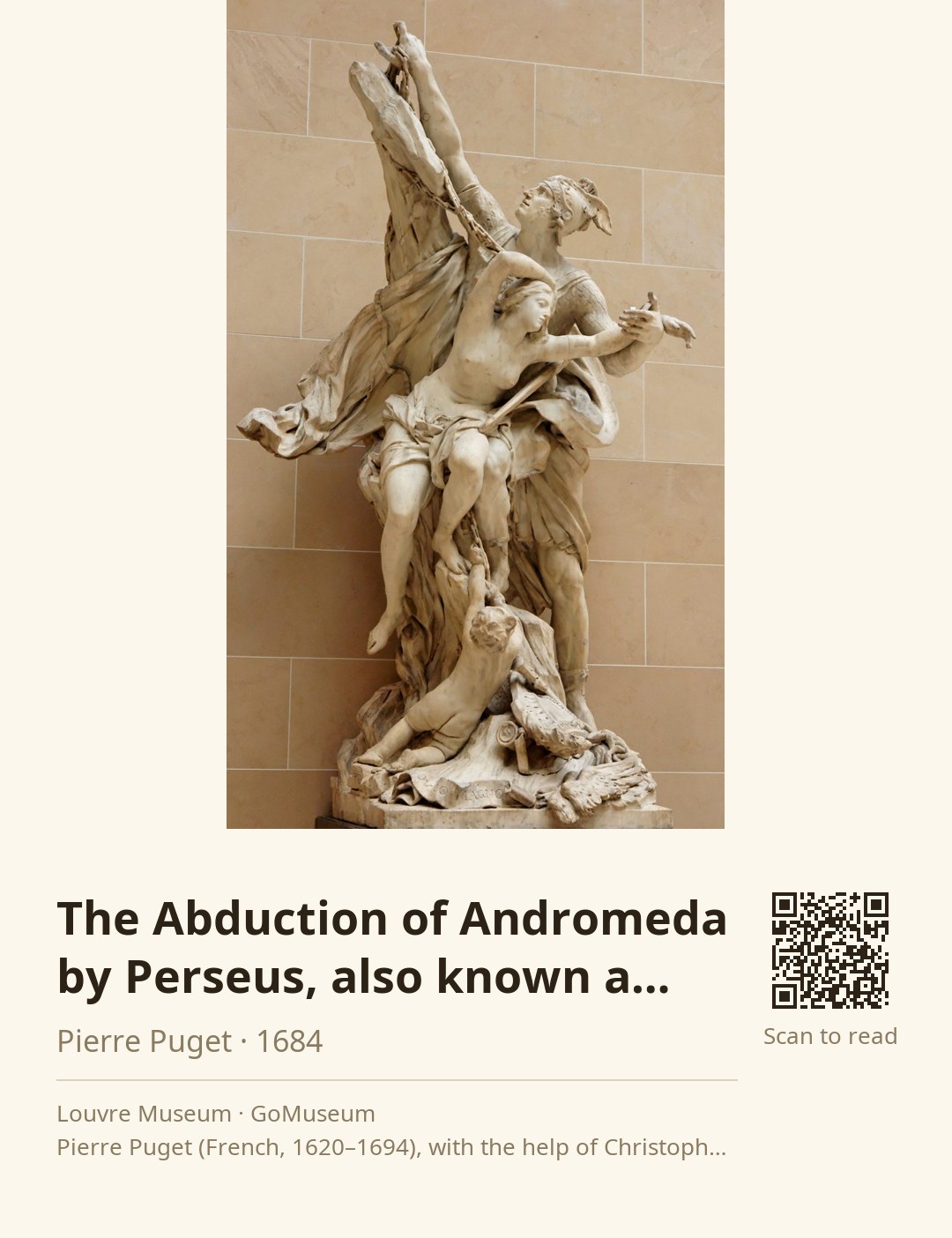
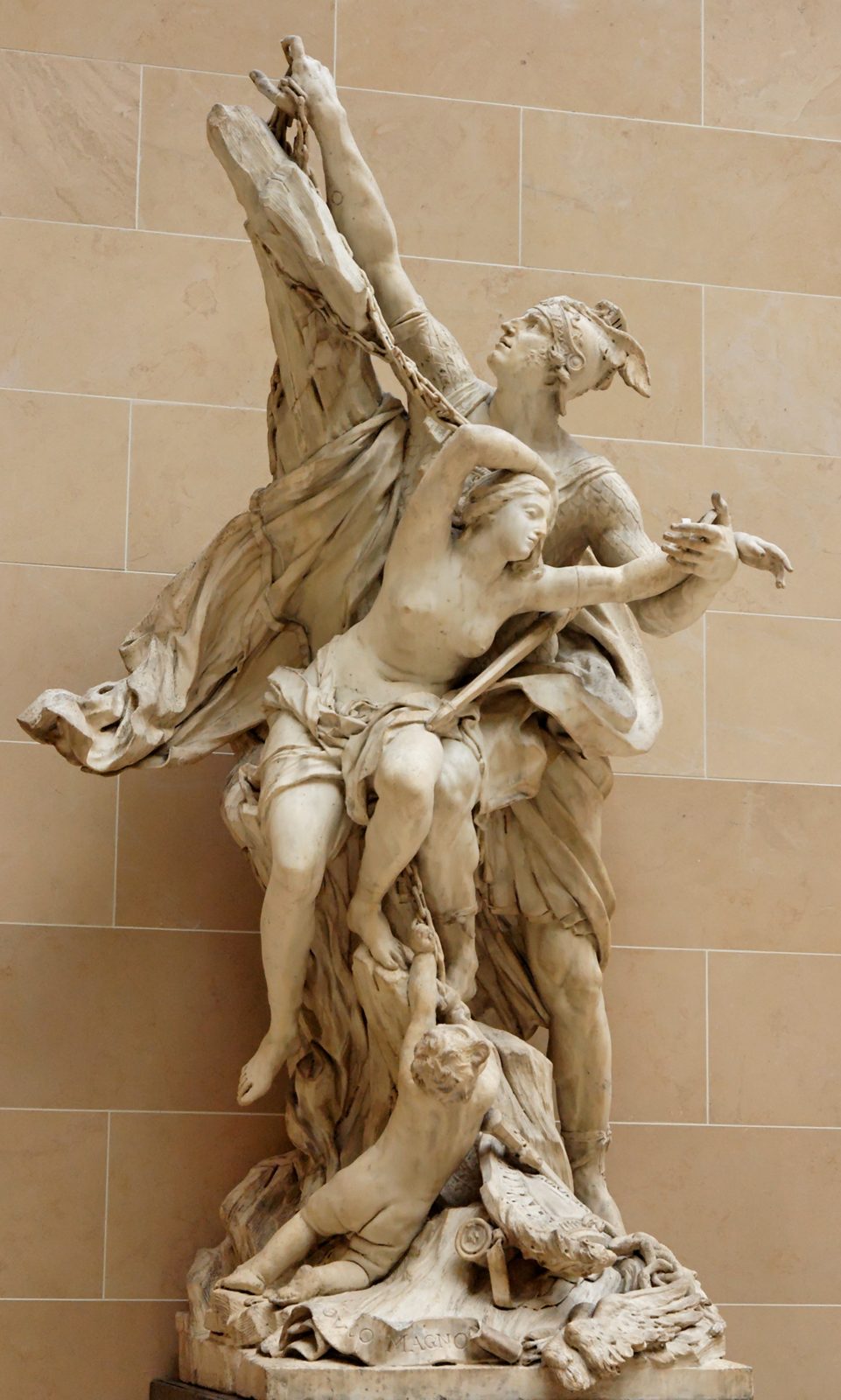
The Abduction of Andromeda by Perseus, also known as Perseus Delivering Andromeda
🎧 This work has audio narration — listen in the appThe central figure of Perseus, adorned with a helmet, reaches upward, gripping a flowing piece of drapery, while Andromeda, depicted in distress, extends her arm forward. Below them, a cherubic figure clings to her leg, adding a sense of urgency to the scene. The intricate carving showcases not only the detailed anatomy of the figures but also the dynamic interplay of their poses, evoking a moment of dramatic tension.
This sculpture, titled "L'enlèvement d'Andromède par Persée," captures a mythological narrative that resonates with themes of heroism and rescue. The way Perseus is positioned behind Andromeda suggests both protection and the impending danger she faces, reflecting the emotional depth that Puget infused into his work. The child-like figure reaching up adds a layer of innocence and vulnerability, emphasizing the stakes of the moment.
Created in 1684, this piece exemplifies the Baroque style that Puget championed, characterized by its emotional intensity and movement, setting it apart from the more restrained classical traditions of his time. Puget, often referred to as the "Michelangelo of France," was celebrated for his ability to convey pathos and drama through stone, a skill that he honed throughout his career. His work was commissioned by Louis XIV and became part of the royal collection, highlighting its significance in the context of 17th-century French art.
Pierre Paul Puget was a prominent French Baroque artist, born in Marseille in 1620 or 1622. Growing up in a working-class family, he was trained as a woodcarver and began his artistic journey at just fourteen. His early career included intricate wooden decorations for ships, showcasing his talent as both a painter and sculptor. In 1640, he traveled to Italy, where he worked under the renowned Baroque painter Pietro da Cortona, contributing to grand projects like the Palazzo Barberini's ceilings.
Returning to Marseille, Puget infused Italian Baroque styles into his work, gaining commissions for public fountains and religious paintings. However, a serious illness led him to abandon painting in favor of sculpture. His breakthrough came with the sculptural decoration of Toulon's Hôtel de Ville, where he captured the muscularity and emotion of laborers in his atlantes.
Puget's reputation grew, earning him prestigious commissions, including works for the gardens of Vaux-le-Vicomte. His sculptures, characterized by dramatic expression and emotional depth, positioned him as a key figure in the introduction of Baroque art to France. Celebrated as the "Michelangelo of France," Puget's legacy endures through his powerful and evocative works that transcend mere technique, embodying the spirit of his time. He passed away in 1694, leaving behind a significant mark on French art history.
Crafted from marble, this sculpture showcases Pierre Puget's exceptional skill in manipulating this challenging medium. The figures are not just carved; they seem to breathe with life, thanks to the meticulous attention to detail in their anatomy and drapery. You can almost feel the tension in Perseus's muscles as he reaches upward, the fabric flowing as if caught in a breeze. The child-like figure's delicate form contrasts with the robust strength of the adult figures, highlighting Puget's ability to convey emotion through texture and form. Each curve and fold in the marble tells a story of movement and urgency, inviting you to explore the physicality of the scene.
Puget, already celebrated for his dramatic style, was tasked with capturing the mythological moment of Perseus rescuing Andromeda. After its completion, the work was displayed prominently, garnering admiration for its emotional depth and technical prowess. Over the years, it passed through various collections, including that of the Crown, before becoming part of the museum's inventory.
An intriguing tidbit about Puget is that he initially trained as a woodcarver before transitioning to marble sculpture. His early experiences in the shipyards of Marseille, where he carved elaborate wooden ornaments, laid the groundwork for his later mastery of stone. This unique background gave him a distinct perspective on form and movement, which he carried into his marble works, making his sculptures not just visually striking but also deeply expressive.