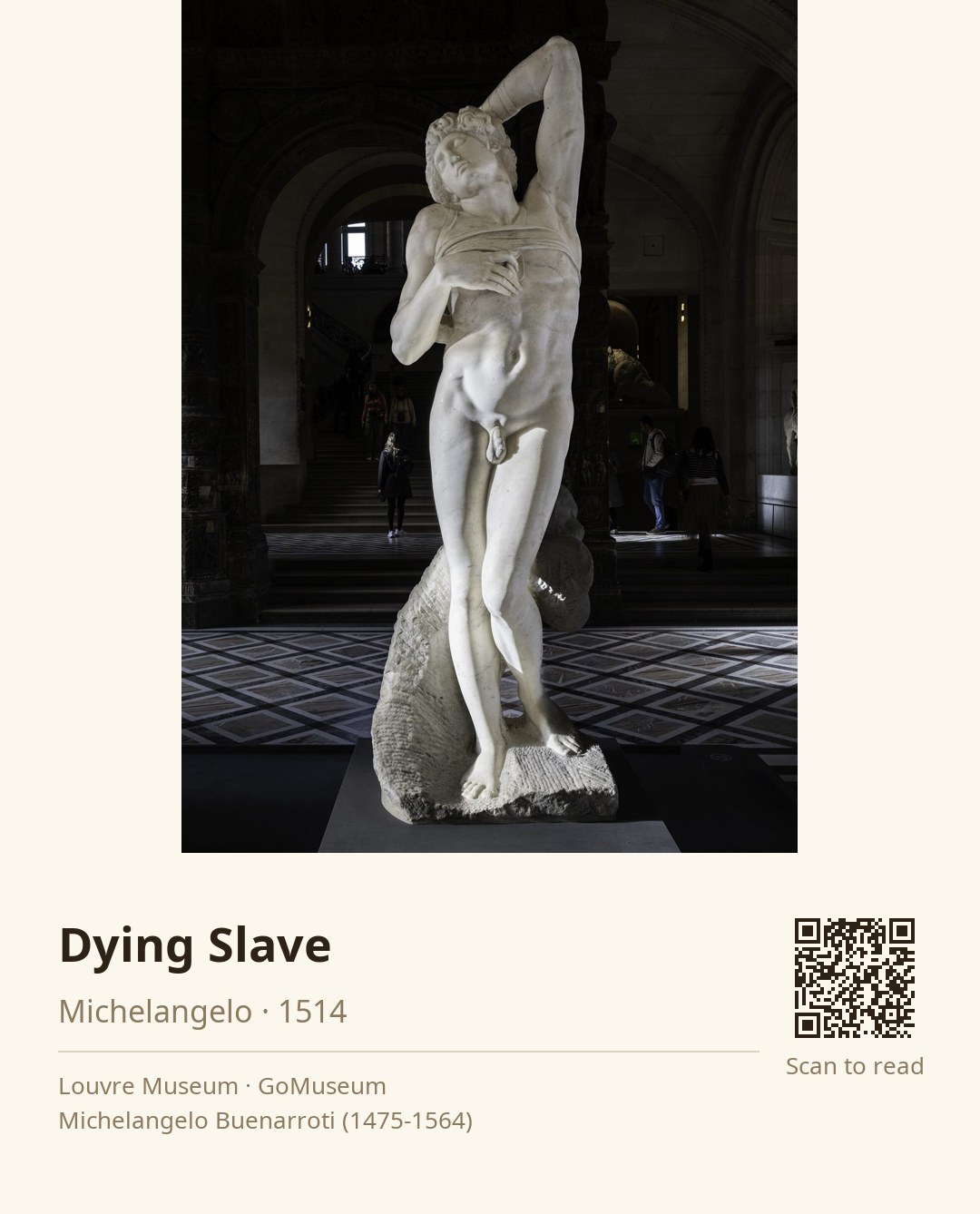
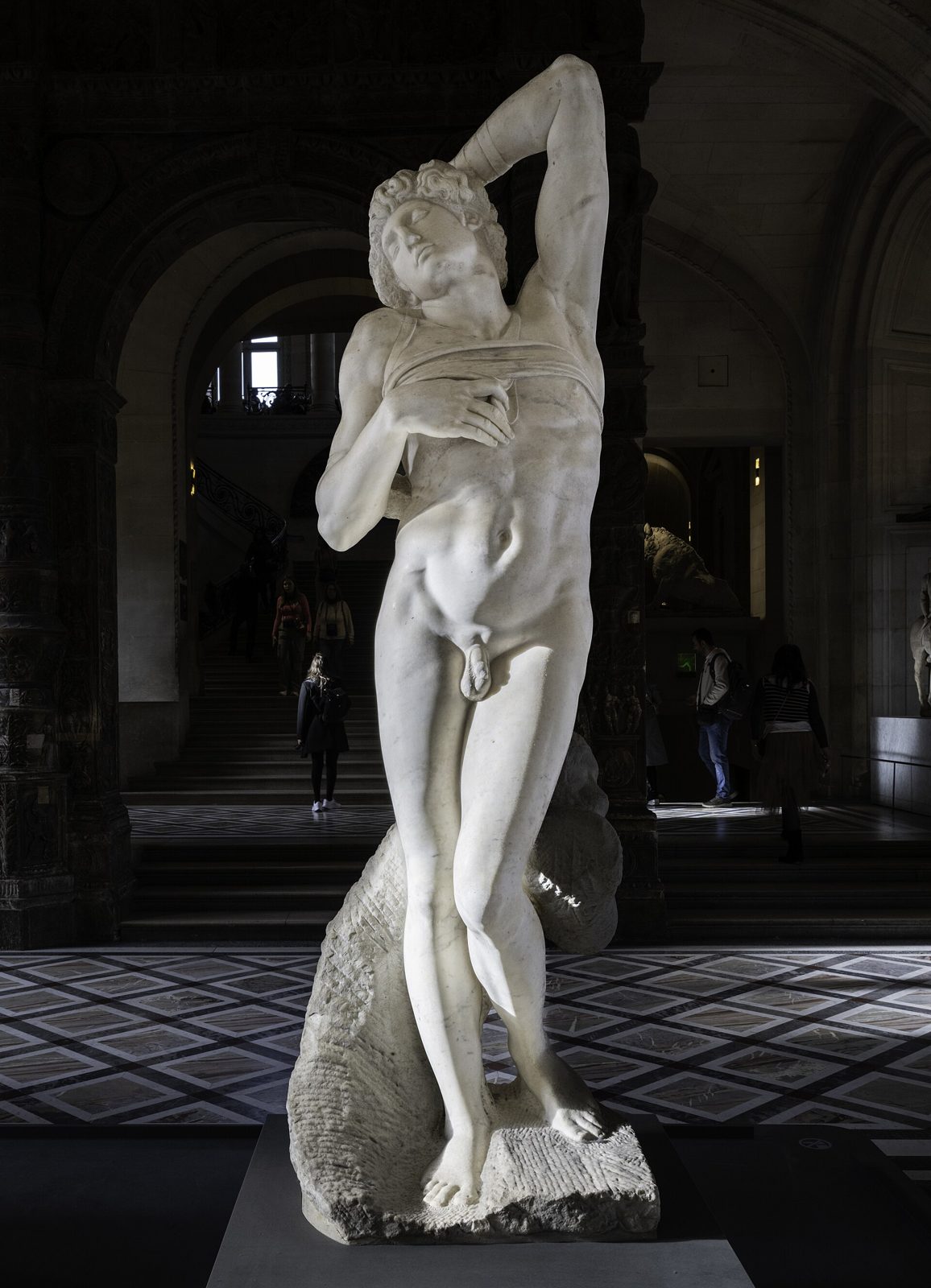
 Image: Michelangelo Buenarroti (1475-1564) · Jörg Bittner Unna · Jörg Bittner Unna · Jörg Bittner Unna · Jörg Bittner Unna
Take a moment to really look at the Dying Slave. Notice how Michelangelo captures the tension in this figure, the way his body is twisted as if caught between life and death. The smooth, polished front contrasts sharply with the rough, unfinished back, revealing the artist's hand at work.
These details matter because they speak to the very essence of Michelangelo's genius. He didn’t just create a statue; he sculpted a moment of struggle, a soul wrestling with its fate. The unfinished areas suggest that the figure is still emerging from the marble, embodying the idea of potential and the human experience of suffering and liberation.
Created around 1514, this sculpture was originally intended for the tomb of Pope Julius II, a project that consumed Michelangelo for decades. He envisioned it alongside the Rebellious Slave, both representing the tension of captivity and the yearning for freedom.
As you stand here, consider what this figure evokes for you. Does it remind you of your own struggles or the universal fight for liberation? What stories does it whisper to you from the depths of its stone?
Michelangelo di Lodovico Buonarroti Simoni, known simply as Michelangelo, was a towering figure of the High Renaissance, born on March 6, 1475, in Caprese, Italy. He grew up in Florence, where his early exposure to marble and art ignited a lifelong passion for sculpting. His formative years were marked by a profound influence from classical antiquity, shaping his artistic vision and driving his relentless pursuit of perfection across various mediums, including sculpture, painting, architecture, and poetry.
Michelangelo achieved remarkable fame early in his career, creating masterpieces such as the Pietà and David before turning 30. Though he considered himself primarily a sculptor, his frescoes on the Sistine Chapel ceiling and The Last Judgment are among the most significant works in Western art history. His architectural contributions, notably the design of St. Peter's Basilica, further solidified his legacy.
Regarded as "Il Divino" by his contemporaries, Michelangelo's ability to evoke awe through his art was unparalleled. He was one of the first artists to have his biography published during his lifetime, with Giorgio Vasari proclaiming him the greatest artist of all time. His impact on art is profound, influencing the Mannerist movement and leaving a lasting legacy that continues to inspire artists today. Michelangelo passed away on February 18, 1564, in Rome, but his work endures as a testament to the genius of the Renaissance.
As you gaze upon the Dying Slave, take a moment to appreciate the marble itself. Michelangelo chose a high-quality Carrara marble, known for its fine grain and translucency, allowing light to dance across the surface. Notice the smooth, polished front, which contrasts with the rough, unfinished back. This technique, known as 'non finito,' reveals the artist's hand and the struggle inherent in the creative process. The visible chisel marks on the back suggest that the figure is still emerging from the stone, a powerful metaphor for the tension between life and death. Look closely at the details—every curve and contour speaks of Michelangelo’s mastery of anatomy, capturing the essence of the human form in its most vulnerable state.
The Dying Slave was crafted during a tumultuous period in Michelangelo's life, specifically between 1513 and 1516, as part of his ambitious project for the tomb of Pope Julius II. Initially, the tomb was to be a grand monument, showcasing a series of figures, including the Dying Slave and its companion, the Rebellious Slave. However, the project underwent numerous revisions, and by the 1540s, these two figures were ultimately excluded from the final design. The Dying Slave was gifted to Ruberto Strozzi in 1546, a gesture of gratitude for his hospitality during Michelangelo's illness. Over the centuries, the sculpture changed hands among notable owners, including King Francis I of France, before finding its permanent home in the Louvre Museum after being acquired during the French Revolution.
Created during the early 16th century, it showcases Michelangelo's mastery of human anatomy and emotion, influencing countless artists who followed. The way he captures the tension between life and death, and the struggle of the human spirit, set a new standard for expressive sculpture. This work, alongside its counterpart, the 'Rebellious Slave', was originally intended for the Tomb of Pope Julius II, a project that underwent numerous revisions, reflecting Michelangelo's relentless pursuit of perfection. The unfinished quality of the 'Dying Slave' invites viewers to ponder the artist's process, making it a profound commentary on the nature of art itself — a dialogue between the artist and the material.
Did you know that a small, partially carved monkey figure appears behind the leg of the Dying Slave? This curious detail, often overlooked, adds an intriguing layer to the sculpture. Some interpret it as a symbol of folly or distraction, contrasting with the profound struggle depicted in the main figure. This playful element showcases Michelangelo's ability to blend serious themes with unexpected whimsy, inviting viewers to look deeper into the narrative of the sculpture.
The Dying Slave was originally intended to be part of the grand tomb for Pope Julius II, which Michelangelo envisioned as a monumental structure featuring multiple figures, including the Rebellious Slave. However, due to numerous revisions and changes in the project, these two figures were ultimately excluded from the final design.
After Michelangelo gifted the Dying Slave to Ruberto Strozzi in 1546, it passed through several notable owners, including King Francis I of France and Anne de Montmorency, who displayed it at the Château d'Écouen. Eventually, it was acquired by the French state during the Revolution and has been housed in the Louvre Museum since the late 18th century.
The small, partially carved monkey figure behind the leg of the Dying Slave is often overlooked, yet it adds an intriguing layer to the sculpture. Some interpretations suggest it symbolizes folly or distraction, contrasting with the serious themes of struggle and liberation depicted in the main figure, showcasing Michelangelo's ability to blend profound themes with unexpected elements.