 Image: Tangopaso · Darafsh · Carole Raddato
Venus and Mars
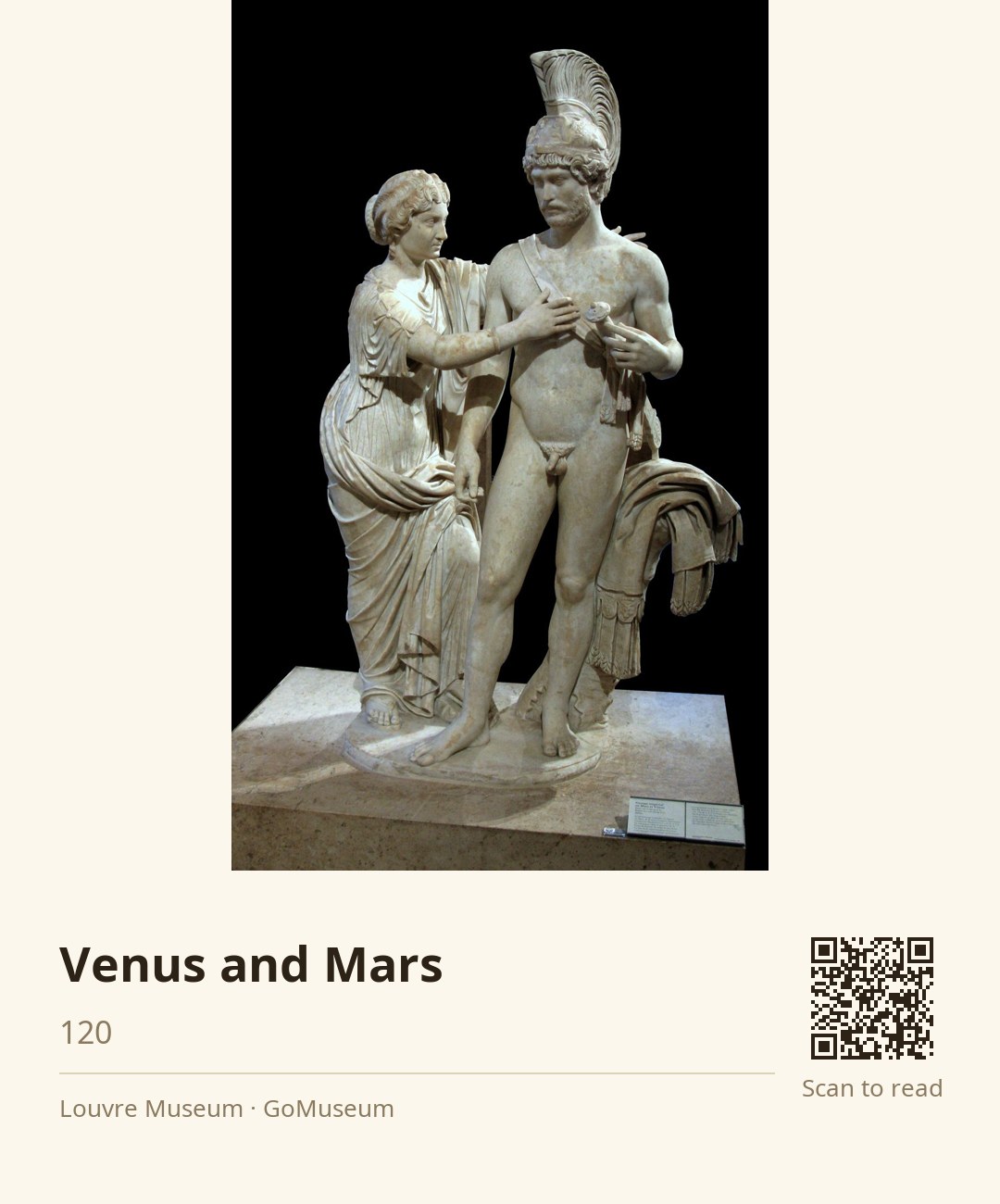
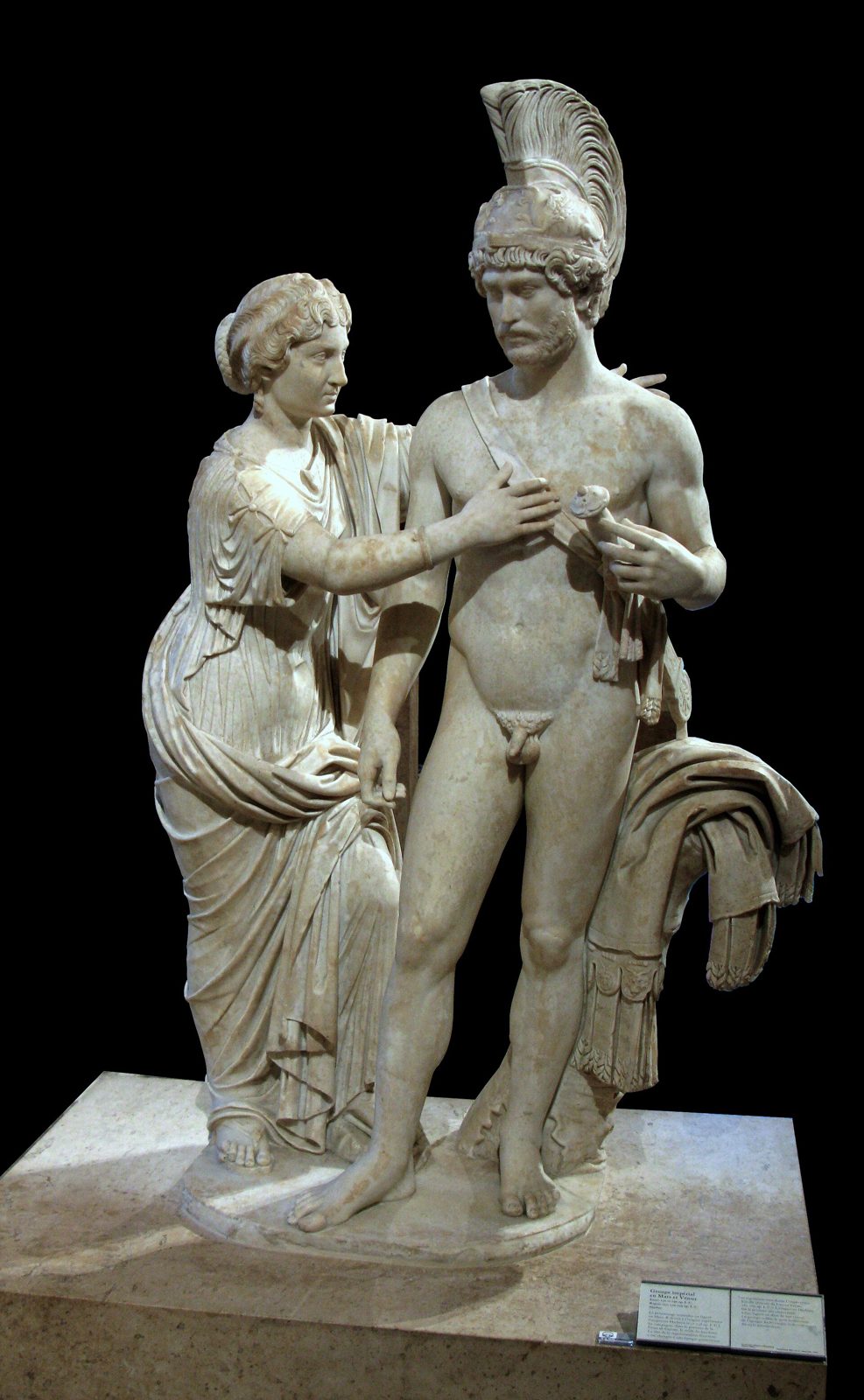
🎧 This work has audio narration — listen in the appTake a moment to really look at this striking sculpture of Venus and Mars. Notice how the male figure, originally representing Emperor Hadrian, stands tall and confident, embodying the god of war, Mars. His powerful stance contrasts beautifully with the gentle, almost tender way Venus, the goddess of love, leans into him, arming him with a shield.
These details matter because they illustrate a fascinating moment in history: Hadrian was one of the first emperors to be depicted as a god while still alive, a bold statement of his power and divine right. The choice to represent him in this way reflects the cultural shift of the Hadrianic era, embracing Hellenistic ideals and the revival of classical styles.
As you stand here, think about the layers of meaning in this artwork. What do you think it says about the relationship between power and love in ancient Rome?
As you gaze at this sculpture, take note of the marble's smooth surface, which has been meticulously carved to bring out the delicate features of both figures. The craftsmanship is exceptional; notice how the drapery flows around Venus, almost as if it’s alive, while Mars stands resolute, his muscles defined with precision. The restoration work, particularly on the heads, is a testament to the care taken to preserve this piece, blending ancient artistry with later interpretations. Can you feel the weight of history in this stone?
Imagine standing in the presence of a monumental marble statue, 'Venus and Mars,' crafted around 120 AD. This piece was originally commissioned to depict the emperor Hadrian as the god Mars, a bold choice for an emperor to be shown as a deity while still alive. It’s a striking statement of power and divinity, don’t you think? The statue stands at an impressive 1.73 meters tall, and over the years, its features have undergone some changes. The head of Hadrian was replaced with that of Lucius Verus, while the female figure, initially representing Hadrian's wife Vibia Sabina, now bears the likeness of Lucilla, Lucius Verus's wife. This transformation reflects the evolving tastes of the time, showcasing the hellenizing influences of the Hadrianic era. The statue was likely displayed in a prominent location, capturing the attention of all who passed by, and it still resonates with that grandeur today.
Imagine standing in the presence of a sculpture that not only captures the divine but also shifts the very narrative of power in art. 'Venus and Mars' is a groundbreaking piece from the early 2nd century, where Emperor Hadrian boldly steps into the realm of the gods while still alive. This was revolutionary! Before this, emperors were typically deified only after death. By portraying Hadrian as Mars, he set a precedent for future rulers, blending political authority with divine imagery. This fusion of mythology and leadership influenced countless artists and rulers, echoing through centuries of art history. The piece embodies the Hellenistic revival of Hadrian's era, showcasing a shift towards neo-classical ideals that would inspire generations to come. So, when you look at this sculpture, remember: it’s not just about the figures; it’s about the legacy of power and divinity intertwined in a single moment of marble.
It was replaced in antiquity with a head that belonged to Lucilla, the wife of Lucius Verus. This change adds a layer of intrigue, as it hints at the evolving interpretations and restorations that artworks undergo over time, often reflecting the tastes and values of different eras.
The Capuan Venus pose, characterized by a gentle and inviting demeanor, enhances the contrast between the strength of Mars and the tenderness of Venus, emphasizing the interplay of love and war in the context of Roman ideals.
The changes in the sculpture's heads illustrate how artworks can be reinterpreted to align with the prevailing cultural values and political narratives of subsequent periods, showcasing the fluidity of artistic identity over time.