 Image: Paolo Monti · Fabrizio Garrisi · Fabrizio Garrisi · Luistxo
Truth unveiled by Time
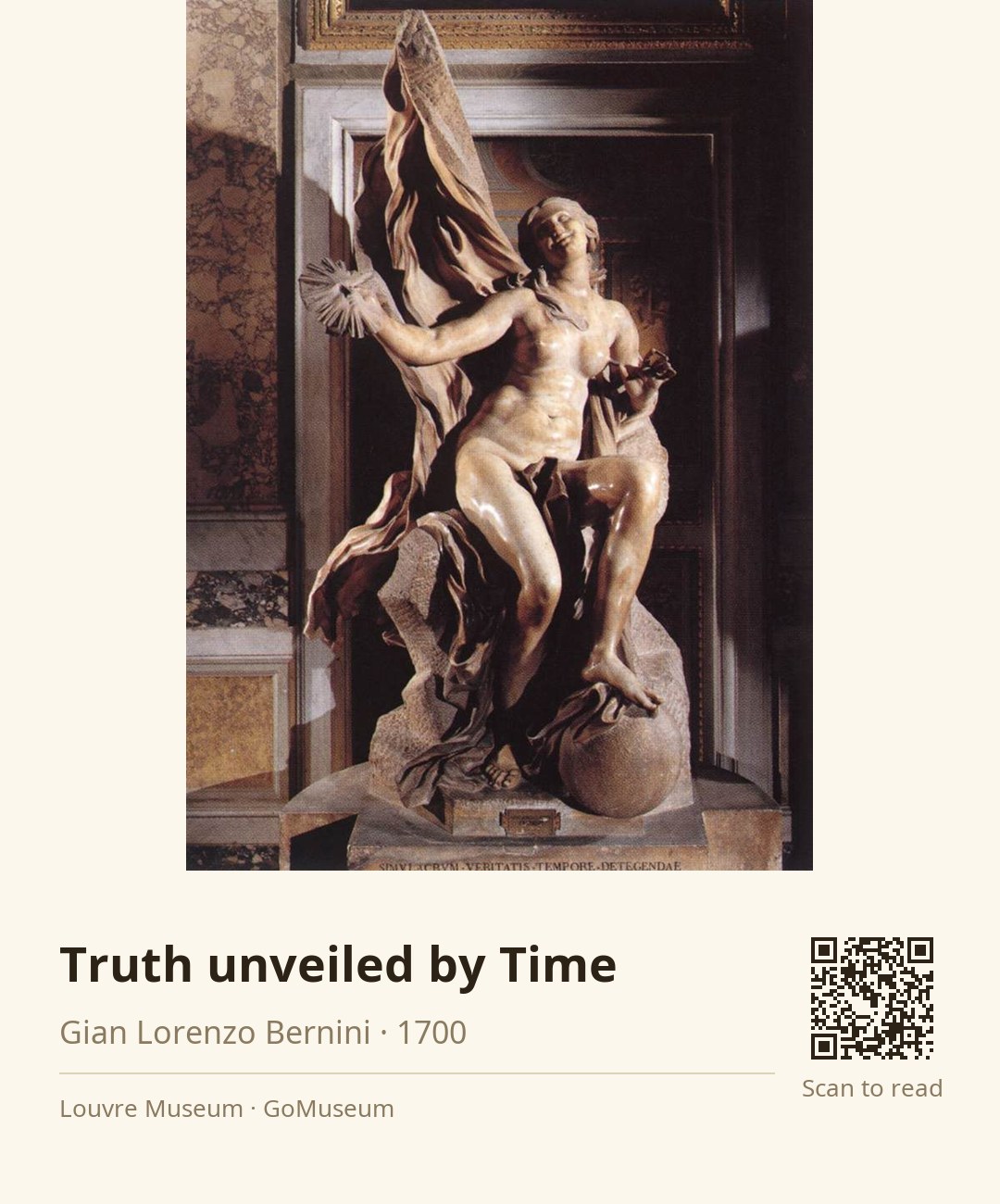
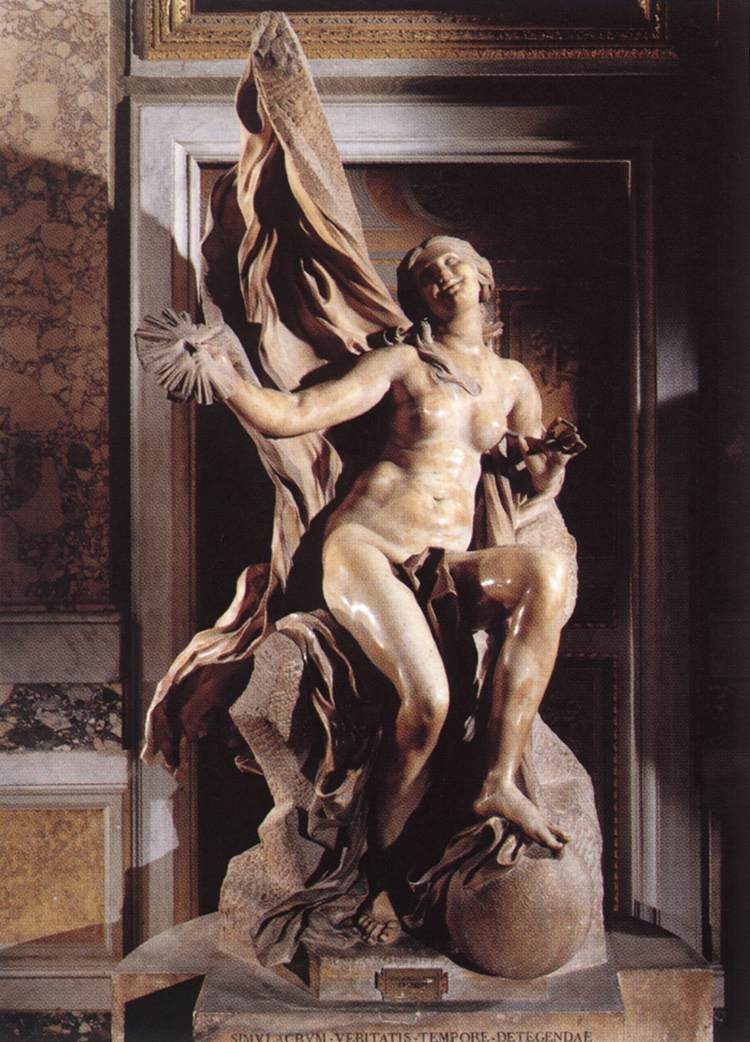
🎧 This work has audio narration — listen in the appTake a moment to really look at "Truth Unveiled by Time" by Gian Lorenzo Bernini. Notice how the figure of Truth, a young woman, seems to emerge from the marble itself, her flowing drapery almost alive, as if it could flutter in a breeze. Her serene expression and the way she holds the Sun in her right hand suggest a deep, radiant confidence.
This sculpture is more than just a beautiful piece of art; it’s Bernini’s response to a turbulent time in his life. After losing favor with the papacy, he poured his emotions into this work, symbolizing his belief that truth would ultimately prevail. The unfinished figure of Time above her, which was never completed, adds a layer of poignancy, hinting at the artist’s struggle and the unfinished nature of his own journey.
Bernini, often hailed as the master of Baroque sculpture, created this piece between 1645 and 1652, during a period of personal and professional upheaval. His confidence in the eventual recognition of his work shines through here, capturing a moment of hope amidst uncertainty.
As you stand before this sculpture, consider: what does truth mean to you, and how does time shape our understanding of it?
Gian Lorenzo Bernini, born on December 7, 1598, in Naples, was a preeminent Italian sculptor, architect, and painter, celebrated as a defining figure of Baroque art. Recognized as a prodigy from a young age, his talent was nurtured by his father, a Mannerist sculptor, and quickly garnered the attention of influential patrons, including Pope Paul V, who famously predicted Bernini would be the "Michelangelo of his age."
Bernini's work is characterized by dynamic movement, intricate forms, and a theatrical quality that set the standard for Baroque sculpture. His masterpieces, such as the Ecstasy of Saint Teresa and the Fountain of the Four Rivers, exemplify his ability to blend sculpture with architecture, creating cohesive visual narratives. His architectural contributions include the design of St. Peter's Basilica's grand colonnade, which remains a hallmark of Roman urban planning.
Throughout his life, Bernini was deeply engaged with the Counter-Reformation, using his art to convey the Catholic Church's power and spirituality. His versatility extended to painting and theatrical productions, where he showcased his multifaceted creativity. Bernini's legacy as a transformative artist solidified his place in art history, influencing generations and earning him the title of the first pan-European sculptor. He passed away on November 28, 1680, in Rome, leaving behind a monumental body of work that continues to inspire awe.
As you gaze upon 'Truth Unveiled by Time,' take a closer look at the marble itself. Bernini masterfully carved this white marble, giving it an almost lifelike quality. Notice how the drapery flows around the figure of Truth, suggesting movement and grace. The way the light interacts with the polished surfaces creates a dynamic play of shadows and highlights, enhancing the sculpture's depth. Bernini's technique is so refined that it feels as if the marble could breathe, a testament to his skill in manipulating this unforgiving material.
Bernini began working on 'Truth Unveiled by Time' in 1645, a pivotal moment following the death of his patron, Pope Urban VIII. This period marked a significant shift in Bernini's career, as he was removed from the papal court by the new pope, Innocent X, who favored his rival. Despite this setback, Bernini continued to work, and by 1652, the figure of Truth was largely complete. Interestingly, Bernini intended for the figure of Time to hover above her, but this part of the sculpture was never executed. The piece remained within the Bernini family until 1924 when it was acquired by the Italian government and placed in the Galleria Borghese, where it resides today.
One fascinating tidbit about 'Truth Unveiled by Time' is that Bernini left the sculpture in his will to his family, emphasizing its personal significance. He believed that seeing this work would remind his descendants of the virtue of truth, stating that it is the most beautiful virtue revealed by time. This personal connection adds a layer of intimacy to the piece, showing how deeply Bernini valued the themes he explored.
Bernini envisioned the figure of Time as a hovering presence above Truth, symbolizing the relationship between truth and the passage of time. However, this figure was never completed, leaving the sculpture with an unfinished quality that reflects Bernini's own struggles during its creation.
The creation of 'Truth Unveiled by Time' coincided with a tumultuous period in Bernini's life, marked by the death of his patron, Pope Urban VIII, and his subsequent fall from favor. This emotional backdrop fueled his desire to express hope and vindication through the sculpture, making it a deeply personal work.
Bernini's exceptional skill in carving white marble allows the material to appear almost flesh-like, with flowing drapery that suggests movement and vitality. His technique creates a dynamic interplay of light and shadow, making the sculpture feel alive and breathing.