Recollection of Mortefontaine
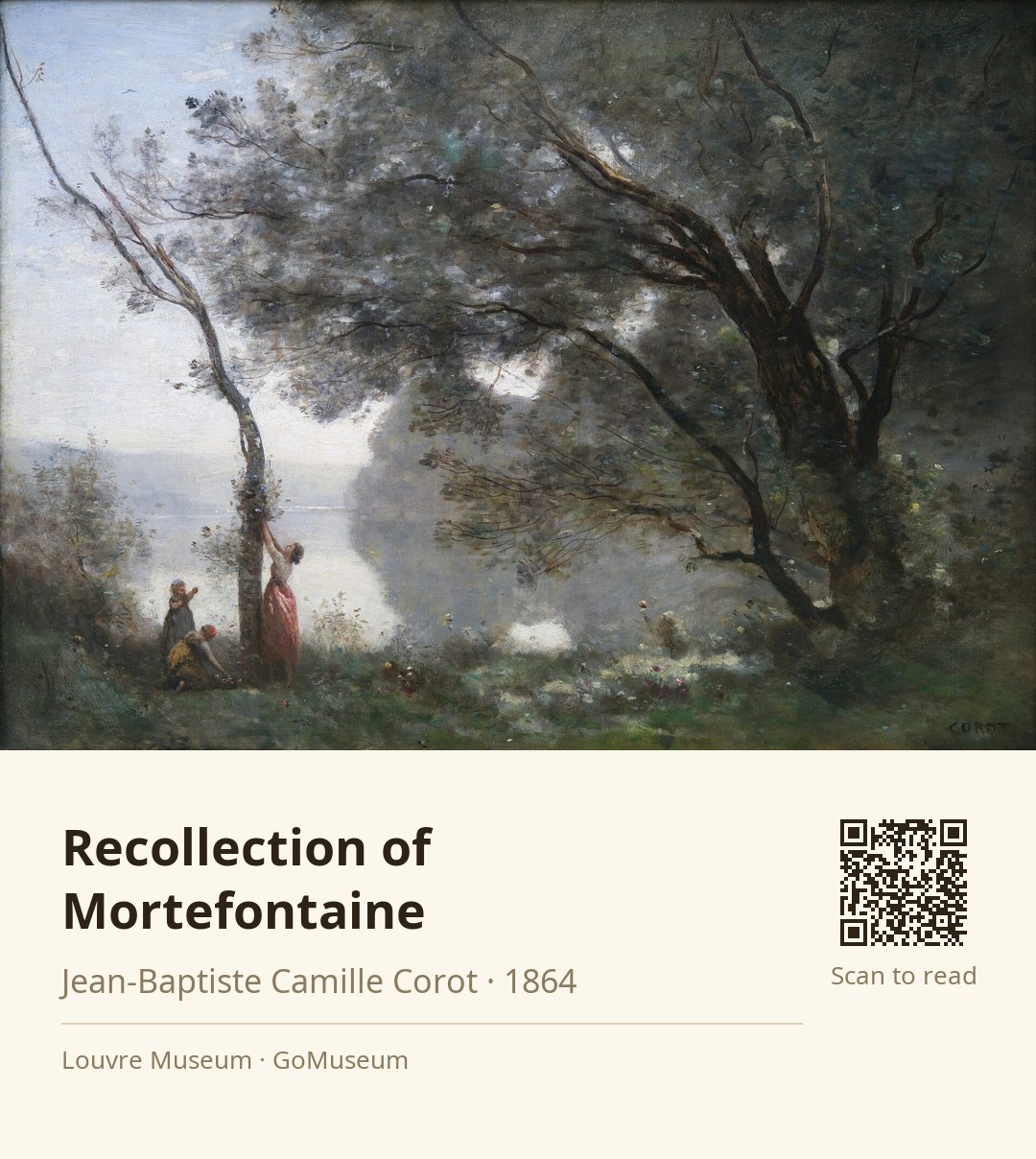
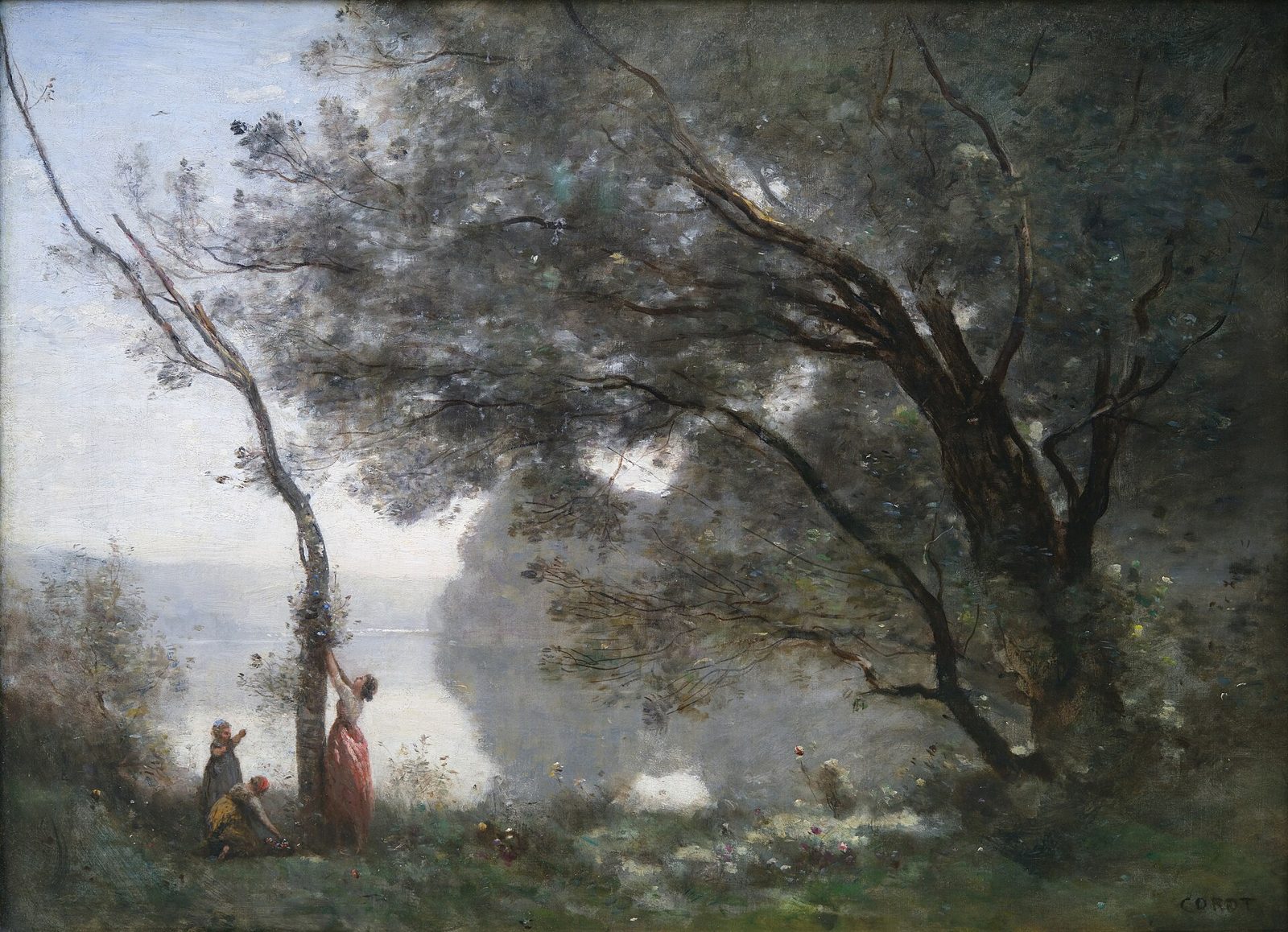
🎧 This work has audio narration — listen in the appTake a moment to soak in the serene beauty of "Recollection of Mortefontaine." Notice how the calm lake reflects the soft, dappled light filtering through the trees. The woman and children seem almost like whispers in the landscape, their forms gently blending into the surroundings. This isn’t just a picturesque scene; it’s a memory, a dreamlike recollection of Corot’s visits to Mortefontaine, where he studied the play of light on water.
What’s fascinating here is how Corot captures not just a moment, but an impression. The brushstrokes are broad and fluid, hinting at the Impressionist style that was just beginning to emerge. This painting is a bridge between the Realism of his early work and the more emotive, atmospheric qualities that would define Impressionism. Corot’s choice to depict indistinct figures adds to the sense of tranquility, inviting you to imagine your own stories within this peaceful setting.
Created in 1864, this piece is considered one of Corot’s masterpieces, showcasing his evolution as an artist. It was acquired by the French state shortly after completion, a testament to its immediate impact. As you stand here, think about the memories that landscapes evoke for you. What feelings or stories does this tranquil scene stir within you?
Jean-Baptiste-Camille Corot, born on July 16, 1796, in Paris, was a pivotal French landscape and portrait painter whose work bridged the Neo-Classical tradition and the emerging Impressionist movement. Coming from a well-off bourgeois family, he was able to pursue art without financial constraints after receiving a yearly allowance following his sister's death in 1822. Initially uninterested in art, Corot's passion ignited during nature walks with a family friend, leading him to study under Achille Etna Michallon, who encouraged outdoor painting.
Corot's early career was marked by a struggle between commercial obligations and his artistic aspirations, but he eventually dedicated himself fully to painting. He became known for his serene landscapes, often capturing the essence of light and atmosphere, which would later influence Impressionists. Despite being regarded as an amateur for much of his life, he gained recognition around 1850 and became a founding figure of the Barbizon School, emphasizing realism in nature. Corot's legacy endures as a bridge between classical ideals and modern artistic expression, making him a significant figure in art history. He passed away on February 22, 1875, leaving behind a vast and influential body of work.
In 1864, Jean-Baptiste Camille Corot completed 'Recollection of Mortefontaine,' a painting that would soon be recognized as one of his masterpieces. Commissioned by the French state through Napoleon III's Civil List, it was acquired directly from Corot, reflecting the immediate acclaim it garnered. After its debut, the painting was displayed at Fontainebleau for 25 years before making its way to the Louvre in 1889, where it remains today. The serene beauty of the piece resonated with viewers, capturing not just a scene but a feeling, a memory of his visits to the tranquil village of Mortefontaine.
Take a closer look at how Corot painted this scene. The brushwork is broad and fluid, creating a sense of movement and life within the stillness of the landscape. Notice how he captures the play of light on the water's surface, using a muted palette that softens the colors and enhances the dreamlike quality of the painting. The composition is structured yet relaxed, with the figures of the woman and children blending seamlessly into their surroundings. This choice not only invites you into the scene but also evokes a sense of nostalgia, as if you’re peering into a cherished memory. Corot's technique hints at the emerging Impressionist style, yet retains a precision that speaks to his Realist roots, making this painting a bridge between two artistic movements.
Created in 1864, this painting showcases Corot's evolution as he began to embrace more poetic, emotional elements in his work. His technique, with its broad strokes and soft focus, foreshadows the Impressionists who would follow. Corot's ability to capture the fleeting effects of light and atmosphere influenced a generation of artists, encouraging them to explore the beauty of nature in new, innovative ways. Remember this: Corot's work is a testament to the power of memory and imagination in art, reminding us that sometimes, what we recollect can be just as impactful as what we see.
This connection to photography is particularly evident in the indistinct features of the figures in 'Recollection of Mortefontaine,' echoing the blurry details often found in early photographic works. This blending of mediums showcases Corot's innovative spirit and his desire to capture the essence of a moment rather than just its details.
Corot struggled academically during his school years, failing to excel in any subject, including drawing, and he initially worked in a commercial apprenticeship that he despised before convincing his father to support his artistic ambitions.
Coming from a well-off bourgeois family, Corot had financial stability that allowed him to pursue painting without the pressure of economic hardship, which was uncommon for many artists of his time.
Corot had a significant collection of early landscape photographs, and his painting style, particularly in 'Recollection of Mortefontaine,' reflects a desire to emulate the soft focus and atmospheric qualities found in these photographs.