Joseph the Carpenter
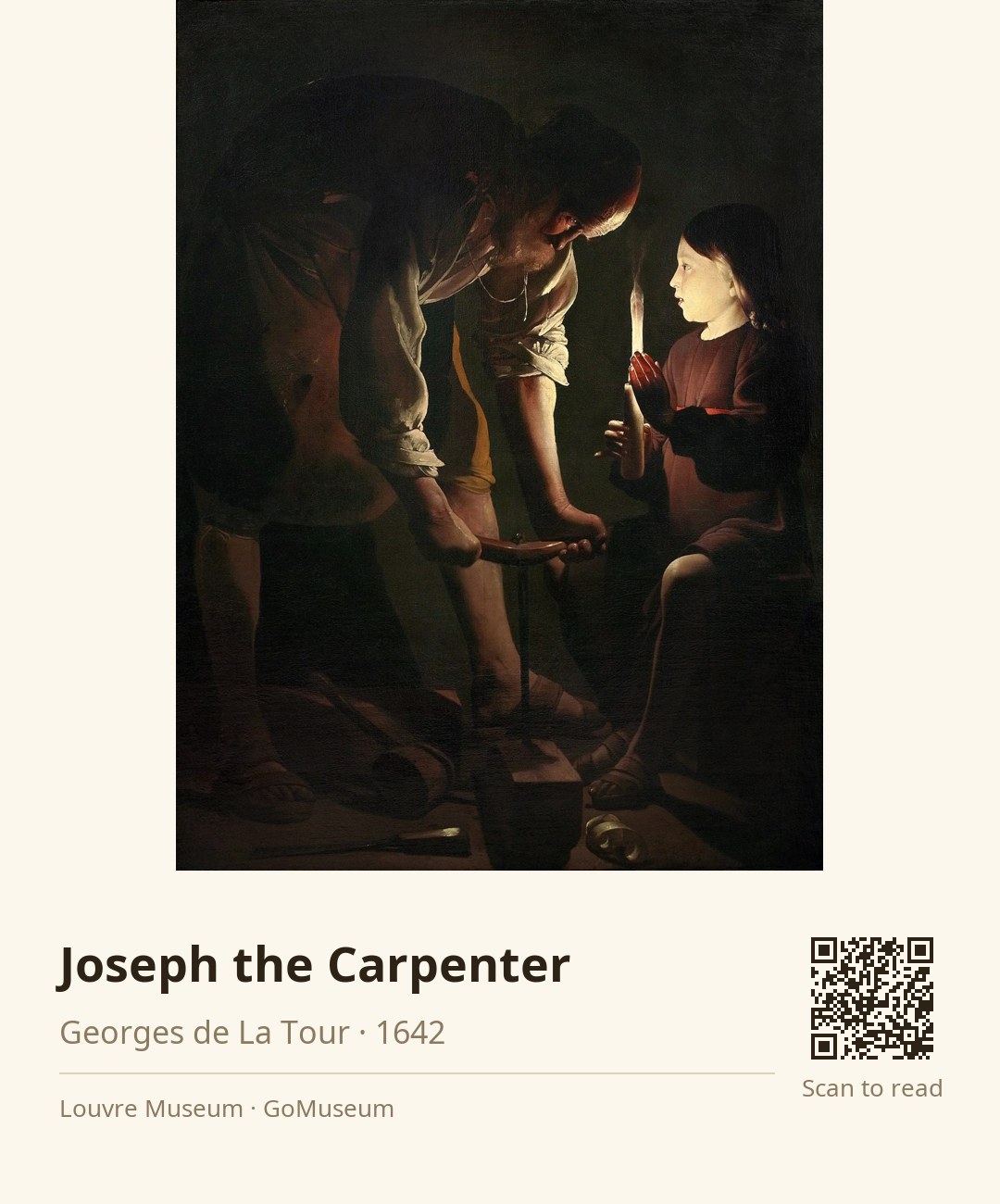
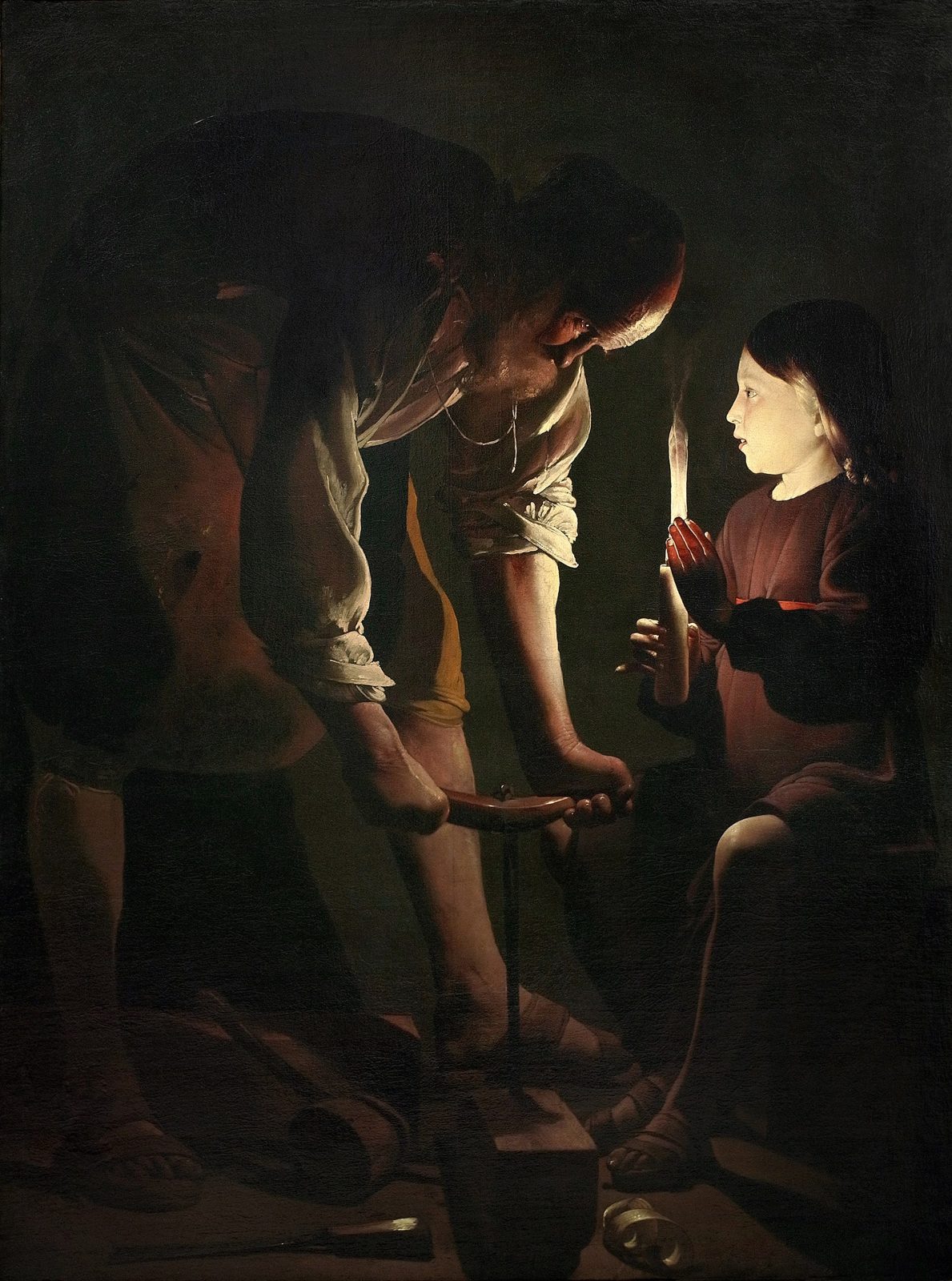
🎧 This work has audio narration — listen in the appTake a moment to really look at "Joseph the Carpenter." Notice how the light spills across the scene, illuminating the young Jesus and casting deep shadows around Saint Joseph. The way the candlelight flickers through Jesus' fingers is almost magical, isn’t it?
Now, focus on that auger Joseph is using. Its shape mirrors the Cross, a subtle nod to the destiny that awaits Jesus. This isn’t just a moment of carpentry; it’s a foreshadowing of sacrifice and obedience. La Tour was a master of chiaroscuro, and here, he uses light not just to create depth, but to convey profound meaning.
Painted in 1642, this piece reflects La Tour's unique style, influenced by the tenebrist tradition, where light and shadow play a crucial role in storytelling. It’s a glimpse into a quiet moment in the life of Jesus, yet it carries the weight of his future.
As you stand here, think about the relationship between Joseph and Jesus. What does it mean to you, to witness this intimate moment of fatherhood and faith? How does this scene resonate with your own experiences of guidance and destiny?
Georges de La Tour was a French Baroque painter born on March 13, 1593, in Vic-sur-Seille. He spent most of his life in the Duchy of Lorraine, where he became known for his religious paintings characterized by dramatic chiaroscuro and candlelit scenes. Influenced by Caravaggio and the Dutch Caravaggisti, La Tour's work reflects a unique blend of Nordic, Italian, and French artistic traditions. His keen observation of everyday life and mastery of light and shadow set him apart as an original successor to Caravaggio.
Married to Diane Le Nerf in 1617, La Tour established a successful studio in Lunéville, gaining recognition as "Painter to the King" in 1638. Despite his acclaim during his lifetime, he fell into obscurity after his death in 1652, largely forgotten until his rediscovery in the early 20th century by art historian Hermann Voss. La Tour's influence extended beyond painting, inspiring writers such as André Malraux and René Char. His legacy endures as a pivotal figure in art history, celebrated for his innovative approach to light and composition in religious art.
This captivating painting, 'Joseph the Carpenter,' was created by the French Baroque artist Georges de La Tour around 1642. Commissioned likely for the Carmelite convent in Metz, it reflects La Tour's mastery of chiaroscuro and religious themes. After the convent's closure in 1791, the painting was hidden away in Ars-sur-Moselle, only to be rediscovered in 1938 by art historian Percy Moore Turner in a château. Initially offered to the National Gallery, it found its home in the Louvre in 1948, marking a significant moment in the painting's journey through time. The work's reception has evolved, with its intricate play of light and shadow now celebrated as a hallmark of La Tour's style, reminiscent of Caravaggio's influence. Remember, this piece not only showcases a tender moment between Jesus and Joseph but also carries a rich history of concealment and rediscovery.
La Tour's technique in 'Joseph the Carpenter' is a masterclass in chiaroscuro, where he skillfully manipulates light and shadow to create a sense of depth and emotion. The painting is executed on fine linen canvas, with a rich brown palette that gives it a warm, almost monochromatic feel. Notice how the light source, emanating from the candle held by the young Jesus, bathes the figures in a soft glow, illuminating their faces while casting dramatic shadows that enhance the scene's intimacy. The composition is carefully structured; Joseph's bent posture and the diagonal lines formed by the auger and the wood on the floor draw your eye toward the central figures. This arrangement not only guides your gaze but also symbolizes the connection between the earthly and the divine, foreshadowing Jesus' future.
La Tour's unique approach to light and shadow, particularly in how it interacts with the figures of Joseph and the young Jesus, invites viewers to reflect on themes of patience and destiny. This painting, along with others in his oeuvre, helped to establish a new visual language in religious narratives, moving away from the dramatic flair of Caravaggio to a more introspective, serene representation. Its legacy can be seen in the works of later artists who sought to capture the human experience within sacred contexts, making La Tour a crucial figure in the Baroque movement and beyond.
After its completion, 'Joseph the Carpenter' was likely commissioned for the Discalced Carmelite convent in Metz. Following the French Revolution, the painting was hidden to protect it from confiscation and was later rediscovered in a castle in England in 1938.