 Image: Raphael
Madonna with the Blue Diadem
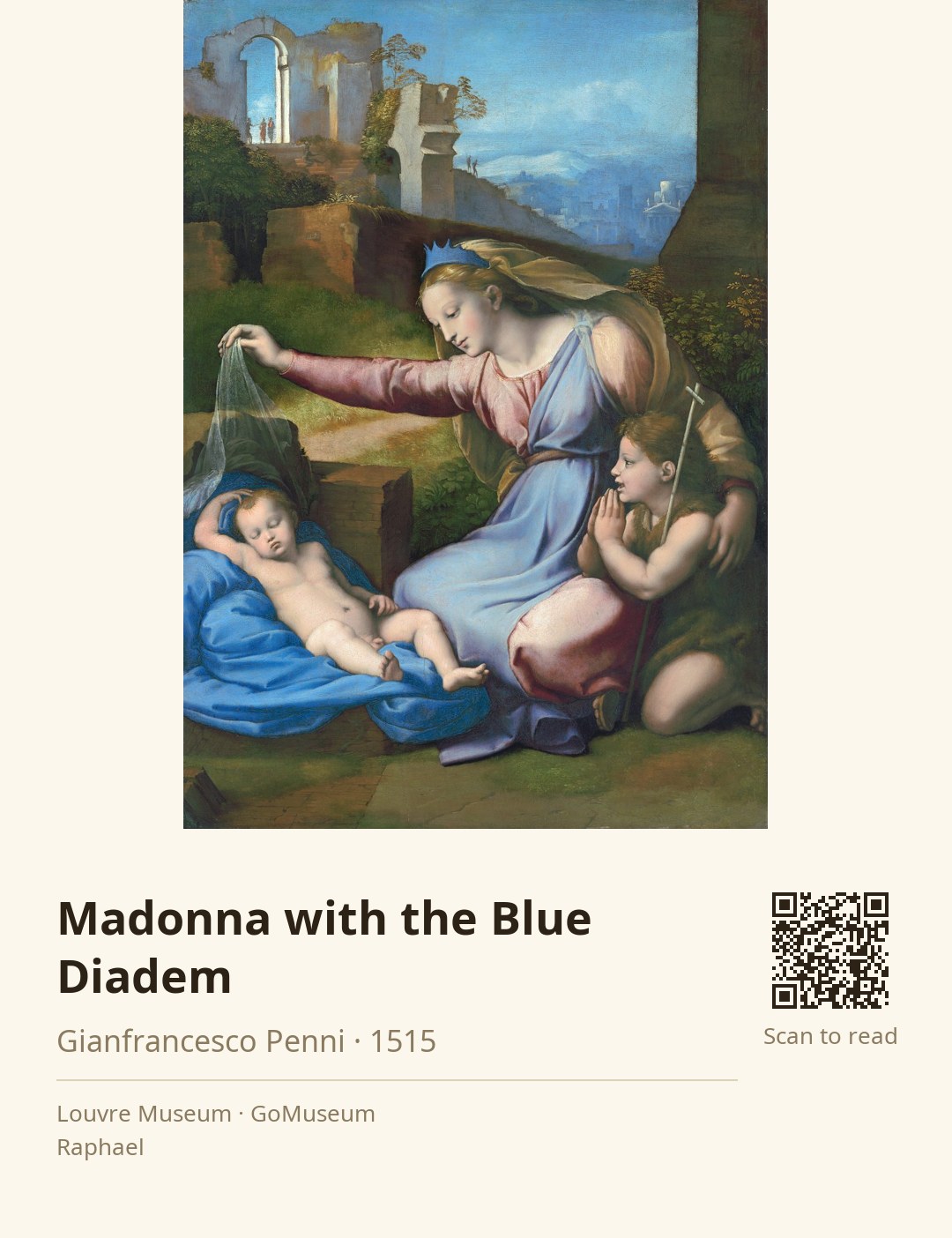
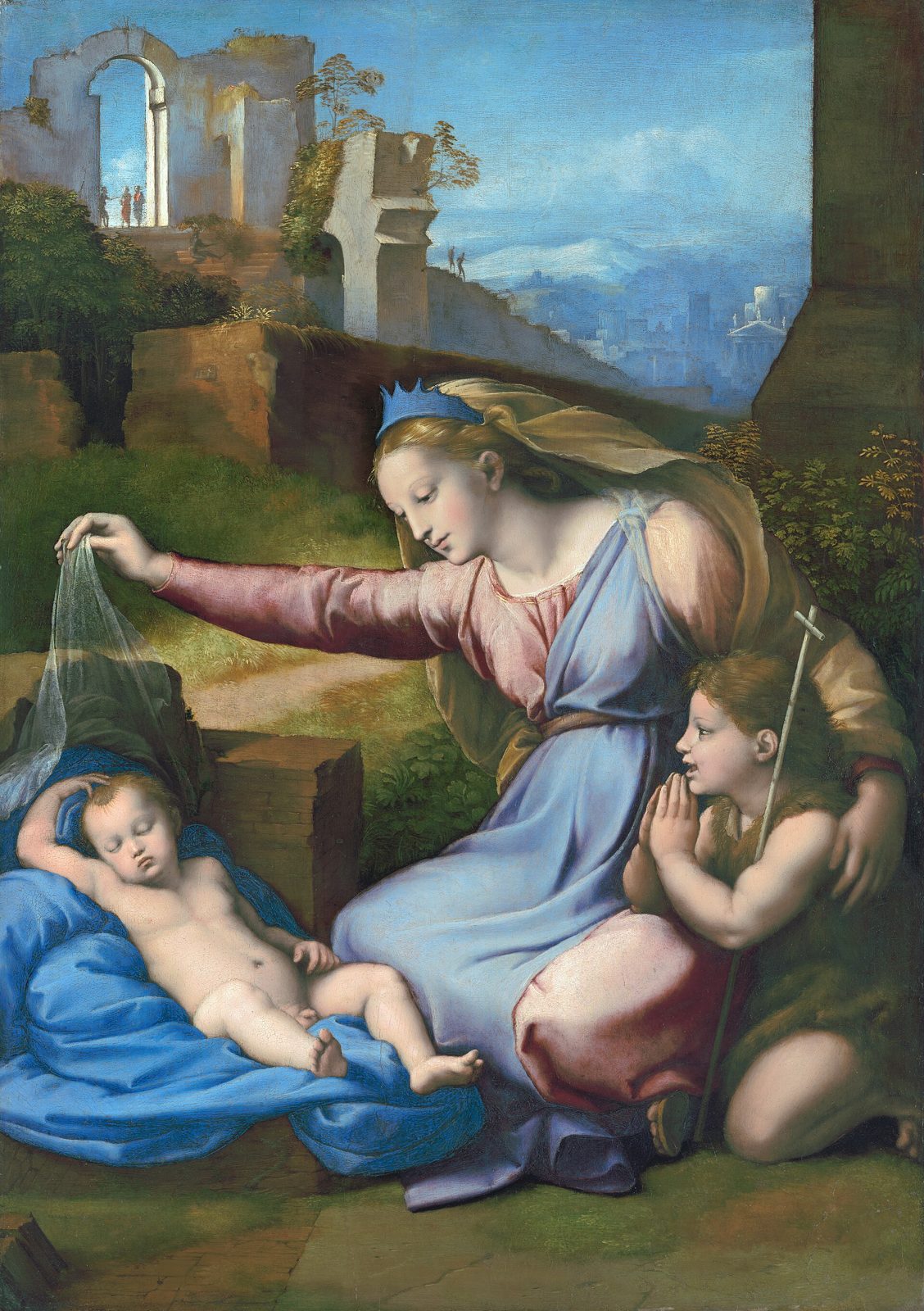
🎧 This work has audio narration — listen in the appTake a moment to gaze at the serene expression of the Virgin Mary in "Madonna with the Blue Diadem." Notice how her delicate hand lifts the veil, revealing the peaceful face of the sleeping Christ child. This gesture isn’t just a simple act; it symbolizes the profound connection between the sacred and the everyday, bridging moments of joy and sorrow.
The blue diadem she wears is not merely decorative; it represents her royal status as the Queen of Heaven, while the veil itself evokes themes of protection and mystery, hinting at the trials that lie ahead for her son. The calmness of the child contrasts sharply with the attentive gaze of young John the Baptist beside her, who seems to embody both reverence and anticipation.
As you stand here, consider what this moment captures: a fleeting glimpse of divine love and the weight of destiny. What feelings does this scene evoke in you?
Gianfrancesco Penni, known as il Fattore, was an Italian painter born in Florence between 1488 and 1496. Coming from a family of weavers, he entered Raphael's workshop at a young age, contributing to significant projects like the Vatican Palace and Villa Farnesina frescoes. His talent led some, including Heinrich Wölfflin, to attribute the execution of the Raphael Cartoons primarily to him, although this view has evolved over time. Following Raphael's untimely death, Penni collaborated with Giulio Romano, completing works such as the Hall of Constantine and the Assumption and Coronation of the Virgin. In 1526, he left Rome for Mantua, where he faced challenges in gaining acceptance but continued to work on frescoes at the Palazzo Te. His journey ultimately took him to Naples, where he died in 1528. Penni's legacy includes influencing future artists, with pupils like Leonardo da Pistoia. His contributions place him within the rich tapestry of Renaissance art, bridging the transition from Raphael's vision to the evolving styles of the period.
Painted around 1515, this piece was a collaborative effort between Raphael and his pupil Gianfrancesco Penni. Its history is marked by intrigue; legend has it that the panel was once split in two and used to cover casks in Pescia. After its rediscovery, it was expertly rejoined, but the tale doesn’t end there. By the late 16th century, it was part of the Chateauneuf Collection in Paris, and by 1620, it belonged to the Marquis de la Vallière. The painting changed hands several times, ultimately entering the French Royal Collection in 1743, making it the last Raphael piece to do so.
As you look closer, notice the exquisite brushwork that brings this scene to life. The delicate lifting of the veil by the Virgin Mary is not just a gesture; it's a masterclass in composition. The way the light plays across her features and the soft contours of the Christ child creates a porcelain-like finish that feels almost ethereal. The colors are bright and vivid, yet there's a subtlety in how they blend, giving depth to the figures. The ruins in the background, remnants of the Sacchetti Villa, add a dramatic contrast to the serene foreground, grounding the divine moment in a tangible reality. The careful arrangement of the figures—Mary, the child, and young John—creates a triangular composition that draws your eye and heart into the sacred intimacy of the scene.
Born into a family of weavers in Florence, Penni entered Raphael's workshop at a young age, which allowed him to develop his skills alongside one of the most celebrated artists of the Renaissance, shaping his future contributions to art.
After Raphael's premature death, Penni collaborated with Giulio Romano on several significant projects, including the Hall of Constantine, indicating his continued influence in the art world and his ability to adapt and thrive in new artistic environments.