 Image: Shonagon · Aoineko · Aoineko · Rama · Rama
Raherka and Meresankh
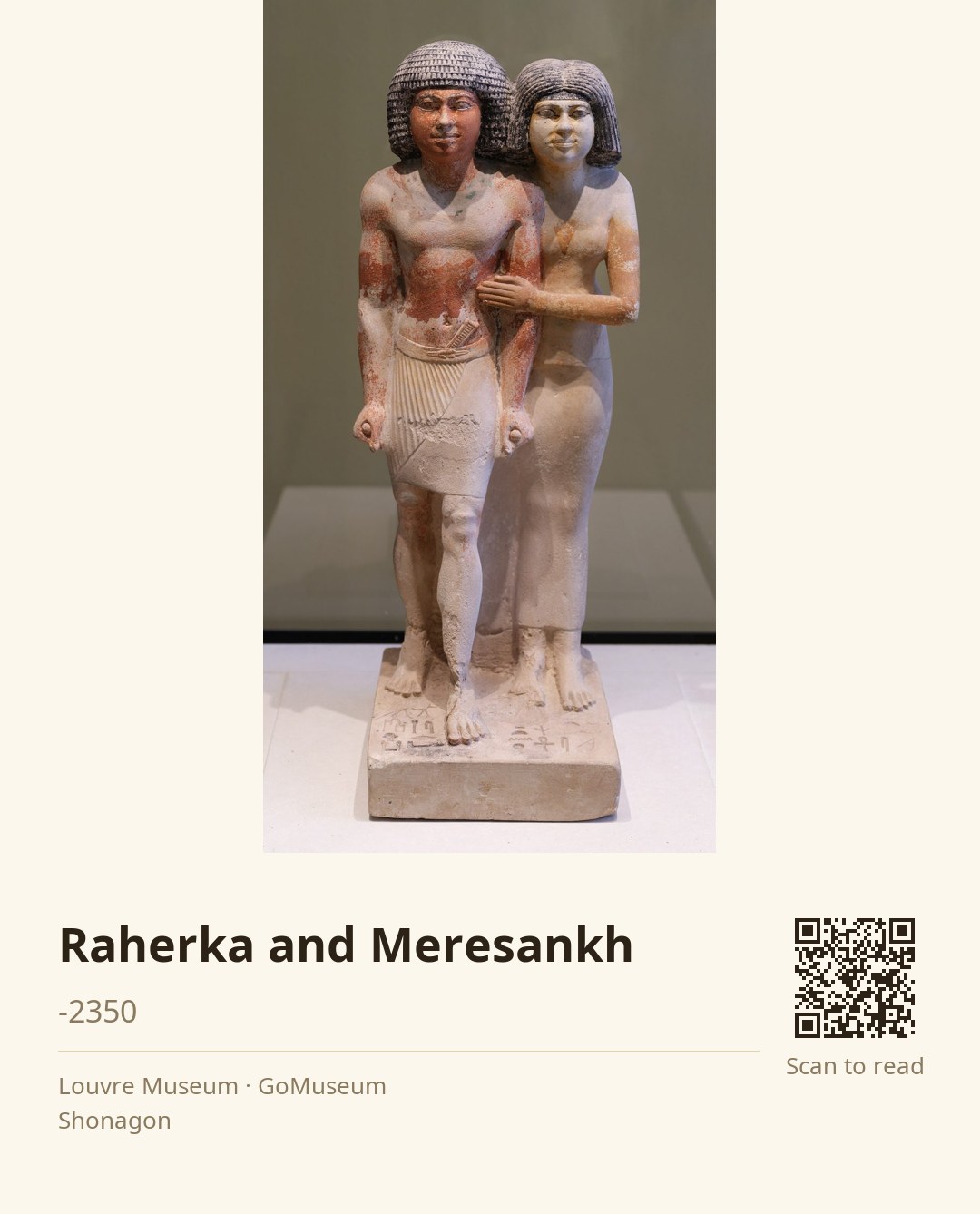
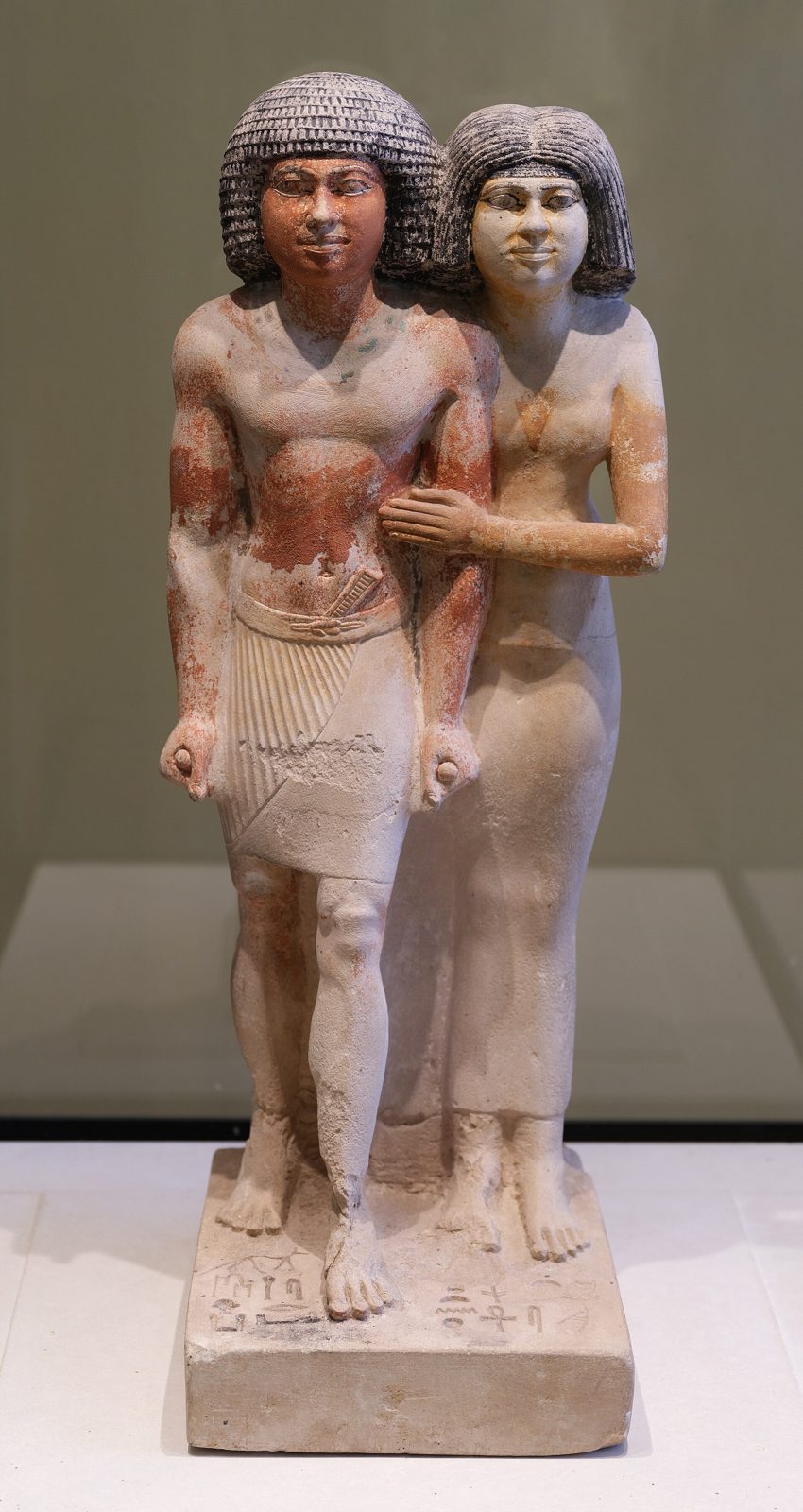
🎧 This work has audio narration — listen in the appTake a moment to really look at this statue of Raherka and Meresankh. Notice how they stand together, side by side, with Meresankh gently embracing her husband. This isn’t just a display of affection; it’s a powerful symbol of their partnership in life and the afterlife.
Now, focus on the details: Raherka’s muscular form, painted in the traditional red, and Meresankh’s yellow-toned skin, which was customary for women of their time. The black-painted wigs and eyeliners add a striking contrast, bringing them to life in a way that transcends centuries. These choices in color and pose were not random; they reflect their status and the ideals of beauty in ancient Egypt.
Raherka was an inspector of scribes, a position of significant authority, while Meresankh, known as the "King's acquaintance," had access to the royal palace. Their titles suggest a life intertwined with power and privilege, and this statue was likely created to ensure their legacy endured beyond death.
Discovered in 1902 in a tomb near Giza, this piece is a remarkable example of 4th or 5th Dynasty portraiture, capturing not just their likenesses but their essence.
As you stand here, think about the love and respect they shared. What do you think their lives were like, and how do you feel that connection across the ages?
The statue of Raherka and Meresankh was unearthed in 1902 by Montague Ballard in a tomb near Giza, specifically from tomb D 37 in the Steindorff cemetery. This discovery was significant, as it provided a glimpse into the lives of an elite couple from the 4th or 5th Dynasty of ancient Egypt. Raherka, an inspector of scribes, and Meresankh, known as the 'King's acquaintance,' held notable positions that allowed them access to royal circles. Their statue, now housed in the Louvre, stands at 52.8 centimeters tall and is a stunning example of the artistry of the time, showcasing their muscular forms and the traditional color palette used to signify gender and status. The couple's warm embrace in the statue reflects not only their affection but also their partnership in both life and death, a theme prevalent in ancient Egyptian culture.
Did you know that the statue of Raherka and Meresankh was discovered in 1902 by Montague Ballard in a tomb at Giza? What’s fascinating is that this couple was not just a random pair; Raherka was an inspector of scribes, a position of considerable power in ancient Egypt. His wife, Meresankh, held the title of 'King's acquaintance,' which granted her access to the royal palace. Imagine the stories they could tell about life in the shadow of the pyramids!
The statue of Raherka and Meresankh is often compared to that of the dwarf Seneb and his family, particularly in how both depict the wife embracing her husband, which reflects the cultural importance of partnership and affection in ancient Egyptian society.