 Image: Mbzt · Internet Archive Book Images · Unknown authorUnknown author · no idea - see source
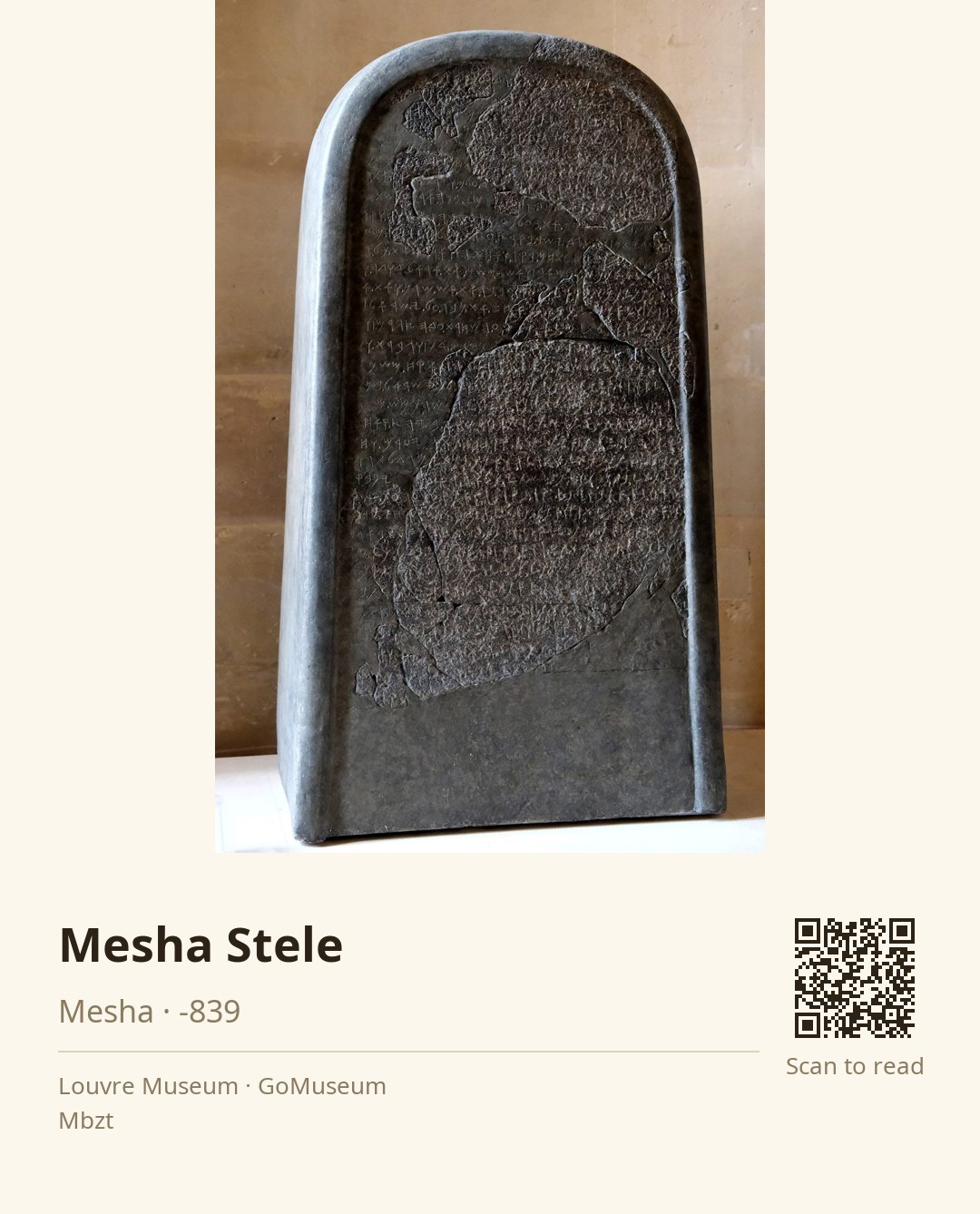
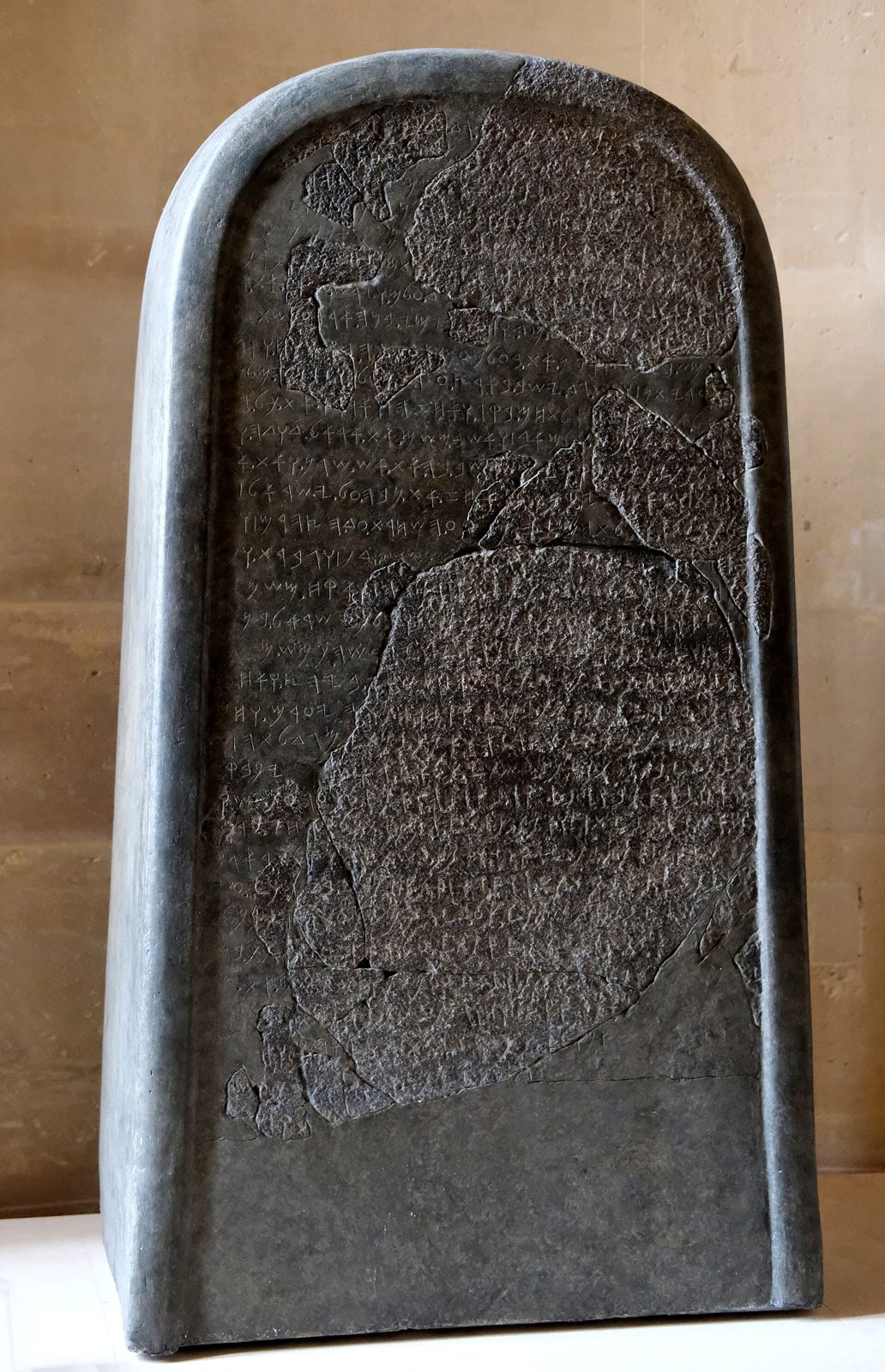
Take a moment to really absorb the Mesha Stele before you. This ancient basalt slab, standing about a meter tall, isn’t just a stone; it’s a powerful voice from the past, echoing the triumphs and struggles of a king named Mesha, who ruled the kingdom of Moab over 2,800 years ago. Notice the intricate lines of the inscription, etched in a script that connects us to the Moabite language, a close relative of ancient Hebrew. Each of those 34 lines tells a story—Mesha’s story—of rebellion against the Kingdom of Israel and the divine favor he believed he received from his god, Chemosh.
Why does this matter? Well, the Mesha Stele is more than a historical artifact; it’s a crucial piece of evidence for understanding the political dynamics of the ancient Near East. It provides one of the earliest references to the Israelite God, YHWH, and serves as a counterpoint to biblical narratives, offering a glimpse into how different cultures viewed their histories and deities. It’s a tangible link to a moment when the boundaries of kingdoms were fiercely contested, and the voices of rulers were carved into stone for all time.
Discovered in 1868 in what is now Jordan, the stele was initially intact, but it met a tragic fate when local tribes, fearing foreign ownership, shattered it into pieces. Luckily, an impression had been made before its destruction, allowing scholars to piece together its significance.
As you stand here, think about the weight of this stone. It’s not just a relic; it’s a reminder of the power struggles that shaped civilizations.
King Mesha, a prominent figure of 9th century BC Moab, is best known for the Mesha Stele, a monumental inscription that marked his reign and celebrated his achievements. As the son of a king, likely named Chemosh-yat, Mesha's leadership was characterized by his determination to liberate Moab from Israelite control, a feat he claimed in his stele. This artifact not only serves as a testament to his rule but also provides a unique perspective on the historical conflicts between Moab and Israel, contrasting with biblical accounts.
Mesha's character is reflected in his boldness and devotion to his god, Chemosh, as he reportedly sacrificed his own son during a siege, a dramatic act that he believed would secure his people's victory. This act of desperation and faith illustrates the complexities of his leadership and the turbulent times he navigated. His legacy is preserved in both the Mesha Stele and the Hebrew Bible, where his rebellion against Israel is chronicled, albeit with differing interpretations of its outcome.
In art history, Mesha stands as a significant figure, embodying the intersection of politics, religion, and culture in ancient Near Eastern societies. His stele remains a crucial artifact for understanding the Moabite perspective and the broader historical narrative of the region during a time of conflict and change.
The Mesha Stele, also known as the Moabite Stone, was discovered in August 1868 by Frederick Augustus Klein, an Anglican missionary, at the ancient site of Dibon, in present-day Jordan. Klein was guided to the stele by a local tribal chief's son, Sattam Al-Fayez. This moment was pivotal, as it marked the first major epigraphic Canaanite inscription found in the Southern Levant. Initially, the stele was intact, but in a twist of fate, it was shattered into fragments by the Bani Hamida tribe in 1869. This act was a defiant response to Ottoman pressure to hand over the stone for foreign ownership. Fortunately, a 'squeeze'—a papier-mâché impression—had been made before its destruction, allowing scholars like Charles Simon Clermont-Ganneau to piece together its fragments later. The stele has been housed in the Louvre Museum since 1873, and since 2014, Jordan has been advocating for its return, highlighting its cultural significance.
One surprising detail about the Mesha Stele is the dramatic story behind the 'squeeze' that was made before the stele's destruction. An Arab named Yacoub Caravacca was sent to obtain this impression, but he faced danger while doing so. Local Bedouins attacked him, and in a desperate act to save the squeeze, one of his horsemen tore it into seven pieces while escaping. This precarious moment ensured that even after the stele was shattered, its inscription could still be reconstructed, preserving its historical voice for future generations.
The 'squeeze' was a crucial preservation effort, as it allowed scholars to reconstruct the stele's inscription after it was shattered. This impression was made under dangerous circumstances, highlighting the lengths to which individuals went to safeguard historical artifacts during times of conflict.
Sattam Al-Fayez was the son of the tribal chief of the Bani Sakher, and he guided Frederick Augustus Klein to the Mesha Stele's location. His involvement illustrates the local knowledge and connections that were vital for the discovery of such significant artifacts.
After its discovery, the Mesha Stele was tragically shattered by the Bani Hamida tribe in an act of defiance against Ottoman pressure. Despite this destruction, the earlier 'squeeze' allowed for its reconstruction, and it was eventually transported to the Louvre Museum in Paris, where it has been housed since 1873.