 Image: Unknown artistUnknown artist · Mbzt · Gary Todd
Manishtushu Obelisk
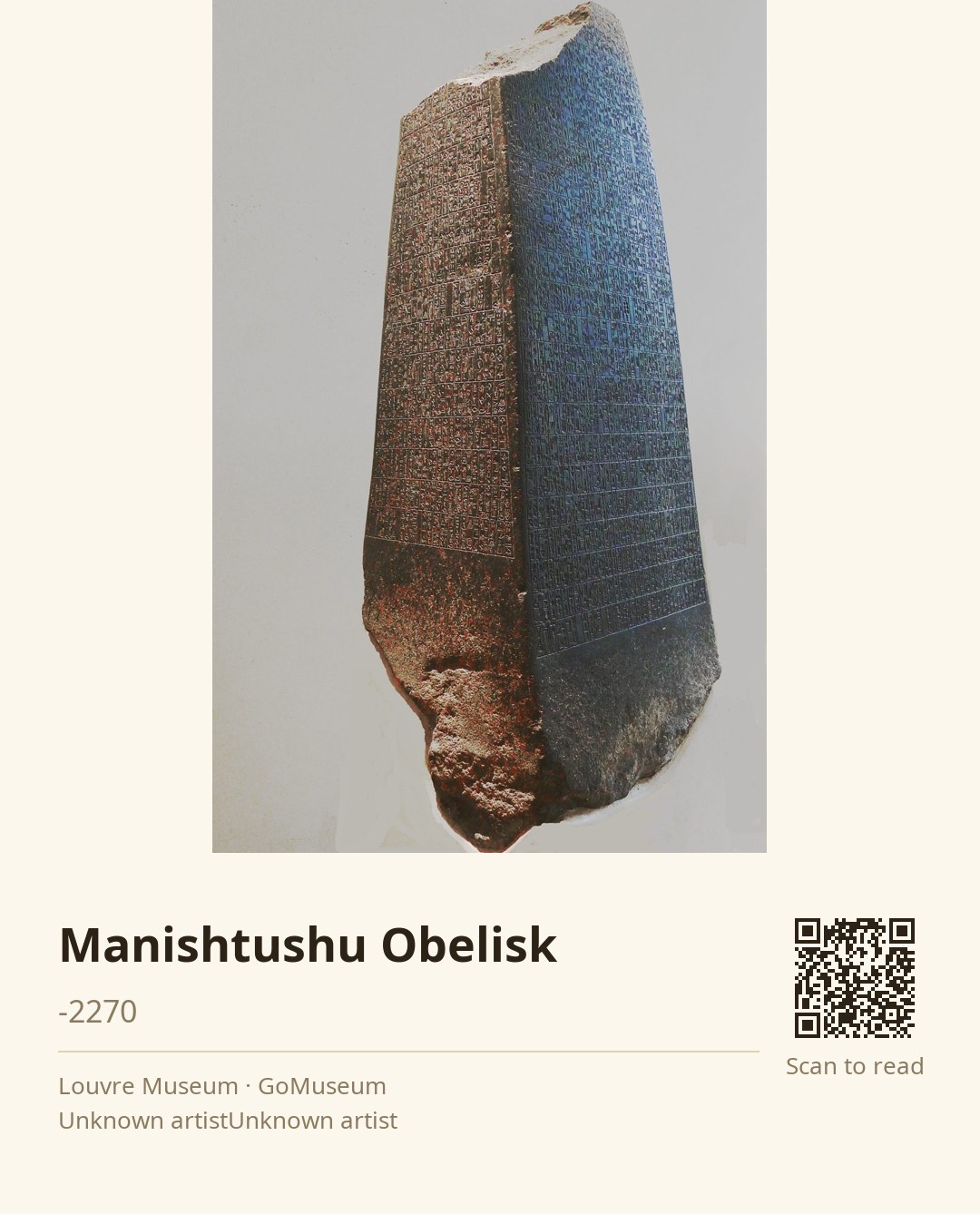
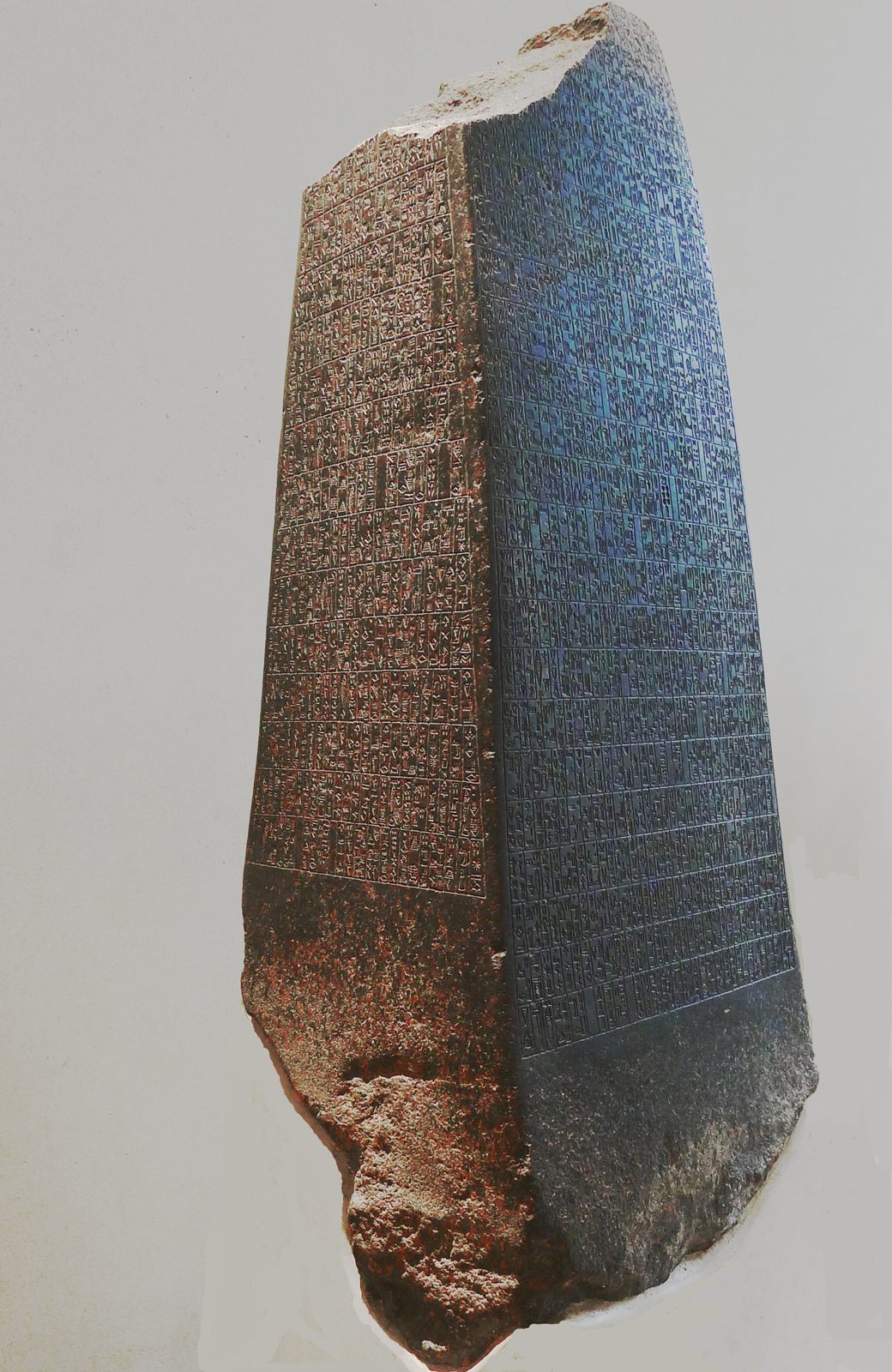
🎧 This work has audio narration — listen in the appTake a moment to really look at the Manishtushu Obelisk. Notice how its four sides are adorned with intricate inscriptions, carved into the dark diorite. These details aren’t just decorative; they tell a story of power and conquest from over 4,000 years ago. Each line of text is a proclamation from Manishtushu, the third king of the Akkadian Empire, declaring his victories and divine favor.
Well, these inscriptions are some of the earliest examples of royal propaganda, showcasing how leaders used art to solidify their legacy and assert their dominance. Manishtushu wasn’t just a king; he was a master of narrative, using this obelisk to communicate his might to future generations.
Created around 2270 BC, this obelisk stands as a testament to the ambitions of the Akkadian Empire, founded by his father, Sargon the Great. It’s fascinating to think about how this stone traveled through time, from its original setting to being taken to Susa as a trophy of war.
As you stand here, consider this: What stories do you think future generations will tell about our leaders today?
This monumental artifact was not just a piece of art; it was a declaration of power, inscribed with messages of conquest and divine favor. After Manishtushu's reign, which lasted about 15 years, he was succeeded by his son Naram-Sin. It was later taken to Susa as a trophy of war by the Elamite king Shutruk-Nahhunte in the 12th century BC. Discovered in the late 19th century by the archaeologist Jacques de Morgan, it now resides in the Louvre, where it continues to tell its ancient tale. The obelisk has undergone various interpretations and studies over the years, revealing the complexities of its inscriptions and the historical context of its creation.
This reflects the intense importance placed on legacy and memory in ancient Mesopotamian culture. The inscriptions assert that the achievements recorded are not mere fabrications but are to be taken as truth, showcasing the lengths to which rulers would go to ensure their narratives endured through time.
The obelisk's transportation to Susa as a trophy of war by Shutruk-Nahhunte transformed it into a symbol of conquest and cultural exchange, illustrating how artifacts can shift in meaning based on their context and ownership.