Mademoiselle Rose
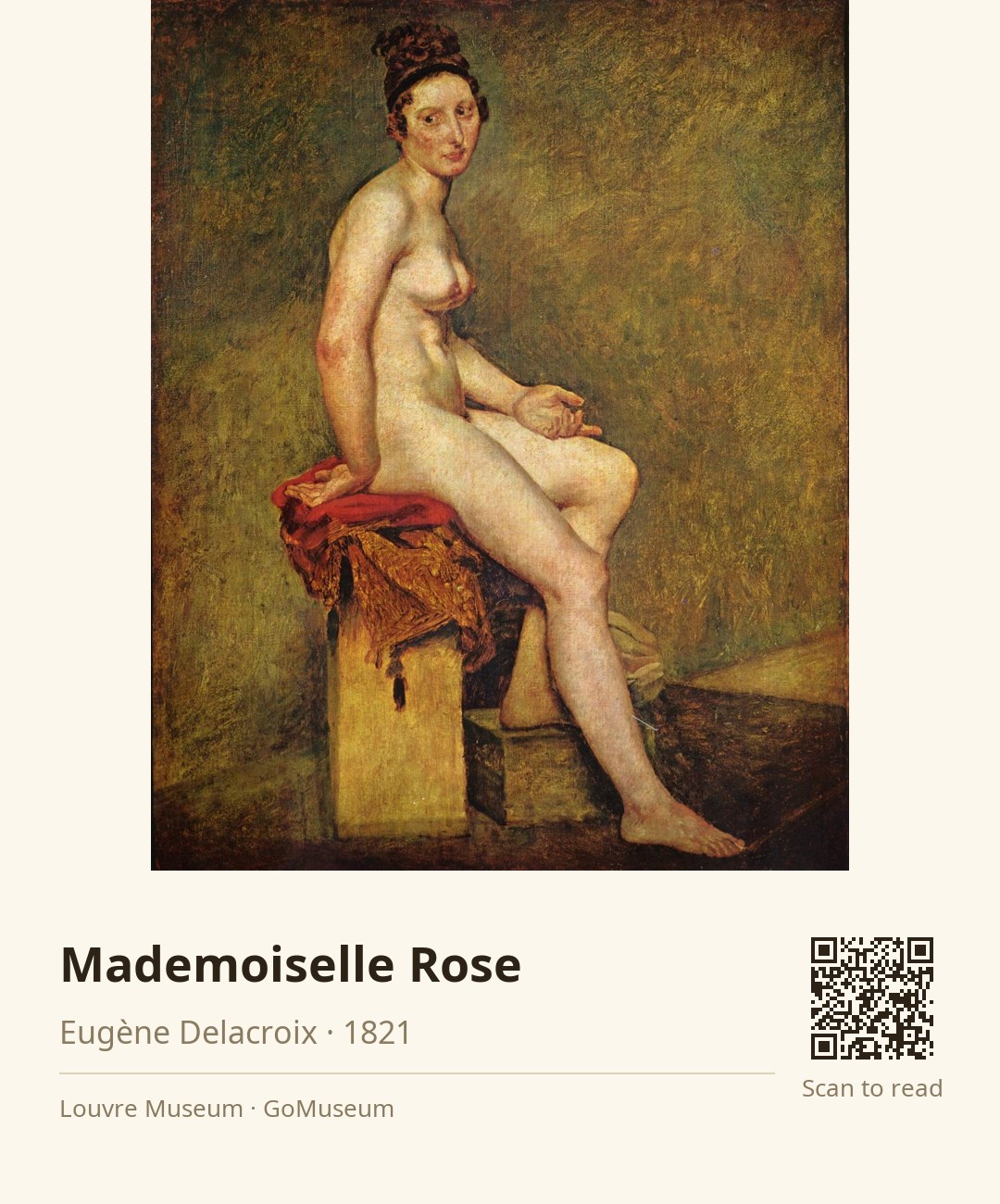
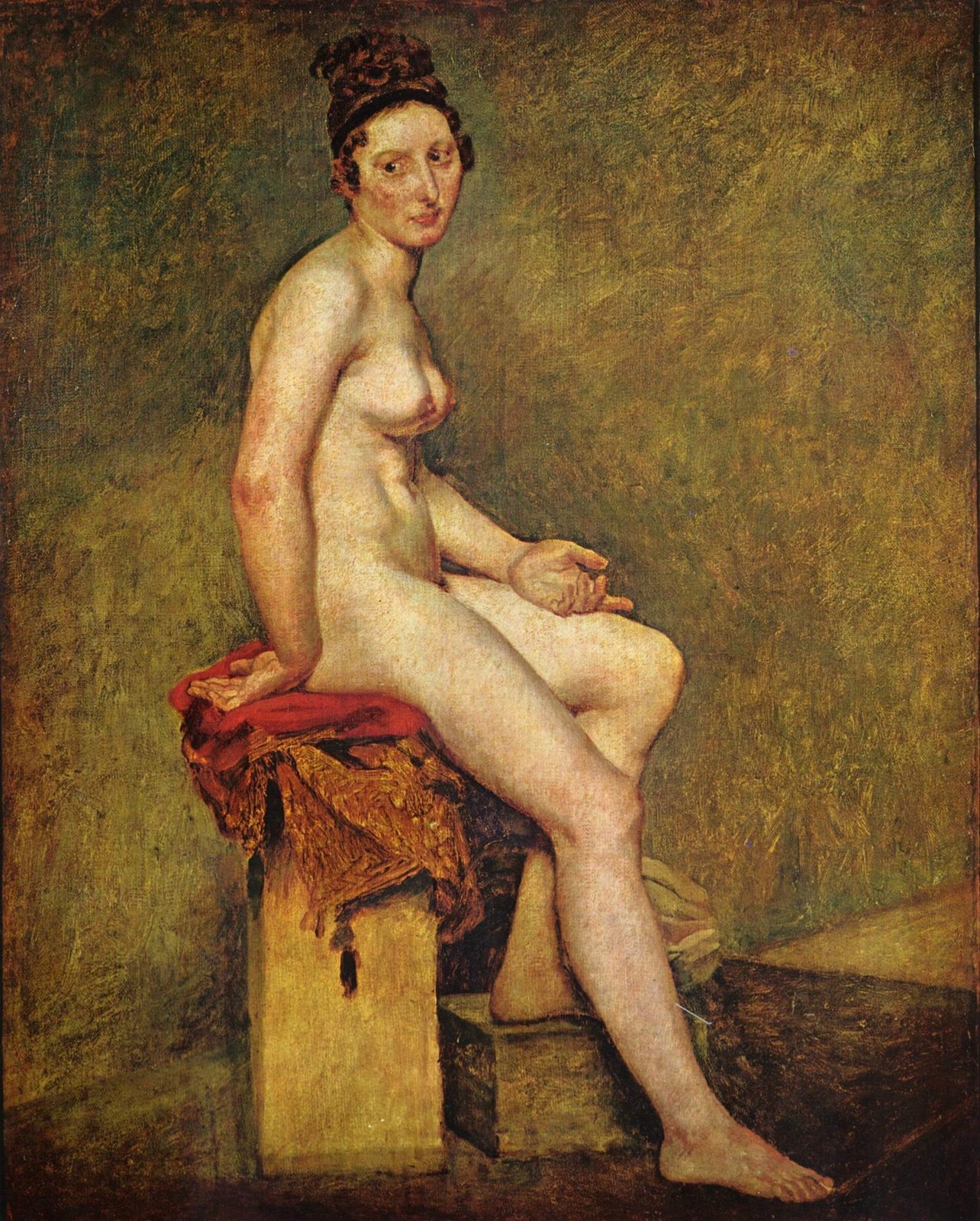
🎧 This work has audio narration — listen in the appTake a moment to really look at "Mademoiselle Rose." Notice how the light dances across the model's skin, highlighting the delicate curves and contours of her body. Her left foot rests on a wooden block, and her head is turned towards us, giving her an almost inviting presence.
These details matter because they reveal Delacroix's mastery of light and form, capturing not just the physicality of the model but also a sense of vulnerability and humanity. This painting is more than just a study of the female form; it embodies the Romantic spirit of the early 19th century, where emotion and individual experience take center stage.
Created in 1821, this work reflects a transitional moment in Delacroix's career, as he began to move away from the rigid constraints of Neoclassicism towards a more expressive and dynamic style influenced by the likes of Rubens.
As you stand here, think about the emotions that this piece evokes. What do you feel when you look at her? Does her gaze connect with you, or does it feel like a moment frozen in time?
Eugène Delacroix, born on April 26, 1798, in Charenton-Saint-Maurice, emerged as a pivotal figure in the French Romantic movement. He diverged from the Neoclassical ideals of his contemporaries, such as Ingres, drawing inspiration from the vibrant colors and dynamic forms of Rubens and the Venetian Renaissance. His works, characterized by dramatic themes and a passion for the exotic, often reflected his travels in North Africa and his fascination with the sublime forces of nature, influenced by literary figures like Lord Byron.
Delacroix's career was marked by both acclaim and controversy; his early painting, "The Barque of Dante," stirred public debate but was ultimately recognized by the state. His later masterpieces, including "Liberty Leading the People," showcased his ability to blend historical and contemporary narratives, solidifying his status as a master of expressive brushwork and color theory. His innovative techniques laid the groundwork for Impressionism and inspired the Symbolist movement.
Despite personal struggles, including early orphanhood and financial hardships, Delacroix's legacy endures. He is celebrated not only for his paintings but also for his lithographs and writings, which reveal his artistic philosophy. As one of the last old masters, his influence resonates through art history, marking him as a cornerstone of Romanticism and a precursor to modern artistic movements. Delacroix passed away on August 13, 1863, leaving a profound impact on the art world.
Eugène Delacroix's 'Mademoiselle Rose,' painted around 1821, emerged during a pivotal time in his artistic journey. This piece was created before the artist's significant exposure to English painting, which would later influence his style. The model, identified as Mademoiselle Rose, was a well-known figure in the Parisian art scene, often posing for various artists, including Delacroix and Richard Parkes Bonington. Interestingly, Delacroix's correspondence reveals a playful yet candid relationship with his model, hinting at the complexities of their interactions. The painting was first exhibited at the Salon in 1824, where it was met with a mix of admiration and critique, reflecting the tensions of the Romantic movement against the backdrop of Neoclassicism. Today, it resides in the Louvre, a testament to its enduring legacy and the evolution of Delacroix's work during this transformative period.
As you gaze at 'Mademoiselle Rose,' consider the way Delacroix employs light and texture to breathe life into his subject. The brushwork is both bold and delicate, with layers of pigment applied in a granular impasto technique that creates a rich, tactile surface. Notice how the light interacts with the model's skin, casting soft shadows that enhance her form and evoke a sense of vulnerability. The composition, while seemingly straightforward, is carefully structured; the model's pose, slightly turned, invites you into her world, creating an intimate connection. Delacroix's choice of a neutral background allows the viewer to focus solely on the figure, emphasizing her humanity over mere aesthetics. This painting is not just a study of the female form; it captures a moment of emotional depth, a hallmark of Romanticism.
This painting, with its raw emotionality and naturalistic portrayal of the female form, influenced a generation of artists who followed. Delacroix's expressive brushwork and focus on color and movement laid the groundwork for the Impressionists, while his exploration of human emotion resonated deeply within the Symbolist movement. By capturing the essence of Romanticism, he not only changed the way nudes were depicted but also challenged the rigid conventions of his time, making this piece a cornerstone in the evolution of modern art.
One intriguing anecdote about 'Mademoiselle Rose' is that Delacroix's playful correspondence with his friend Pierret reveals a humorous side to the artist. In a letter, he jokingly lamented about Mademoiselle Rose's financial struggles, saying that her 'bottom' had gotten the better of her due to a lack of money. This light-hearted banter offers a glimpse into the artist's personality and the informal relationships he maintained with his models, adding a layer of humanity to the creation of this iconic work.