Portrait of a Clad Warrior
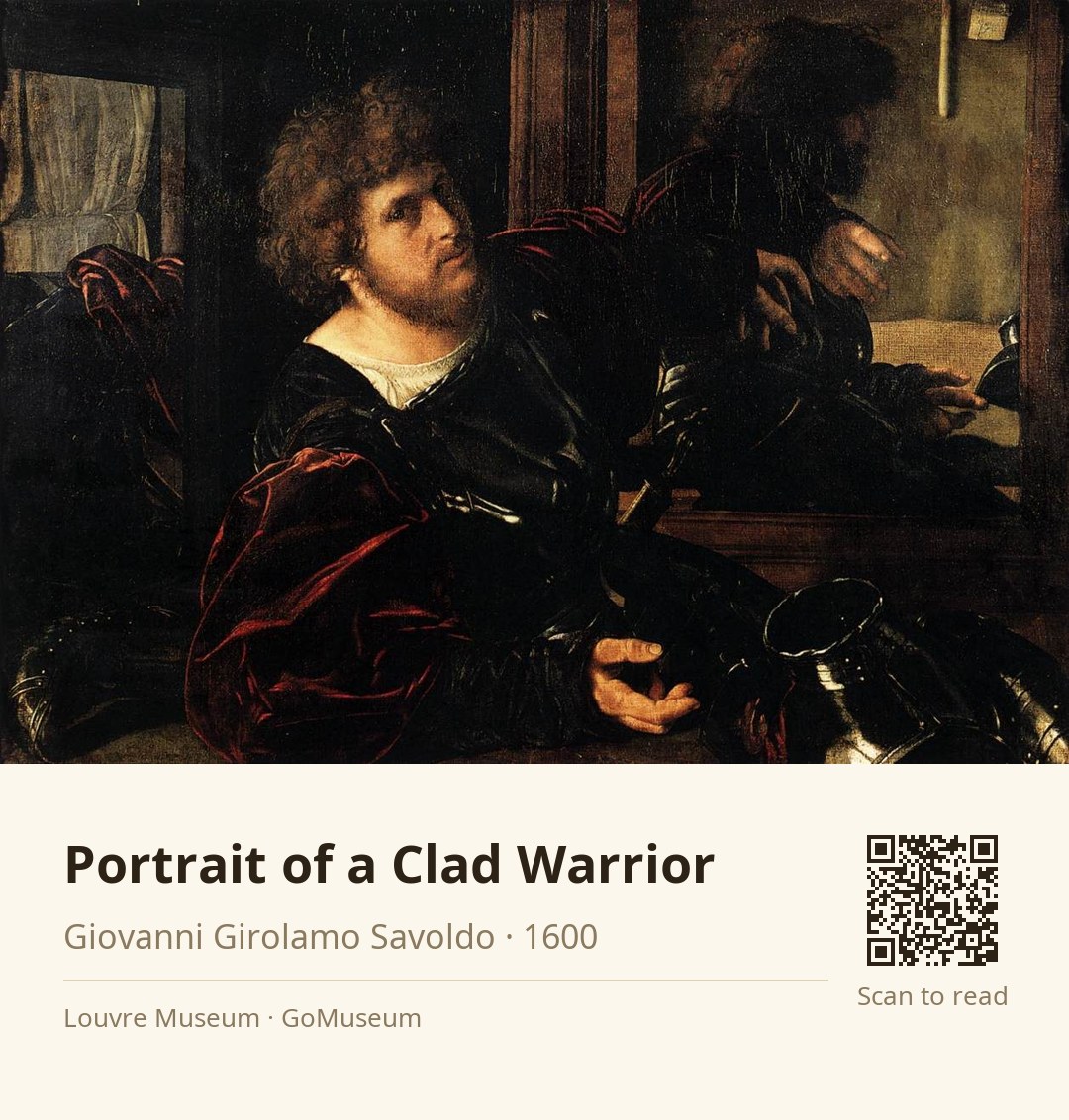
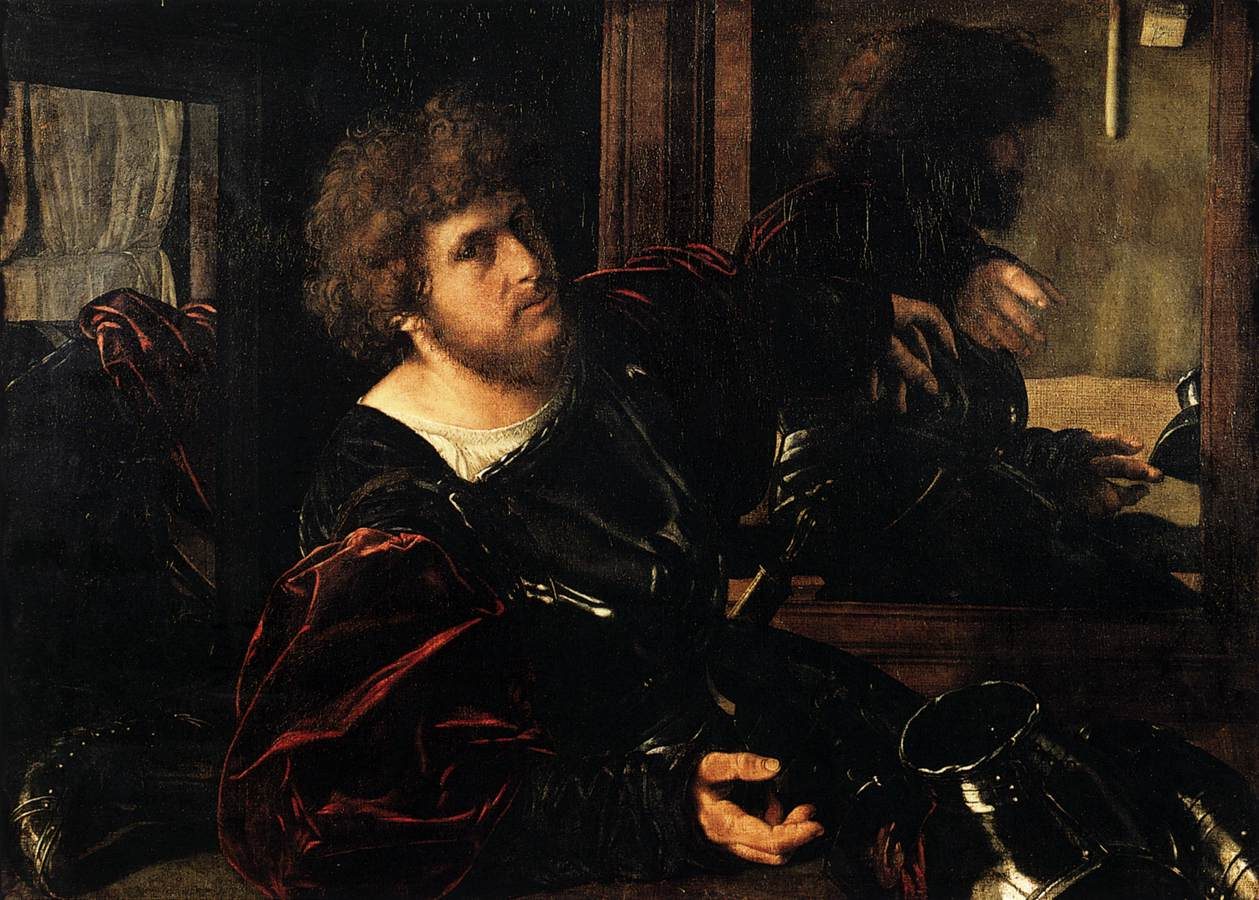
🎧 This work has audio narration — listen in the appTake a moment to really look at the "Portrait of a Clad Warrior." Notice how the figure leans forward, almost inviting you into his world. That outstretched arm and the way he tilts his head create a dynamic tension, as if he’s about to speak or reveal a secret.
Now, focus on the reflections in the mirrors. You can see him from multiple angles, which was a bold move for Savoldo. This technique isn’t just for show; it challenges the viewer to engage with the painting on a deeper level. It’s a clever nod to the ongoing debate of the time about the merits of painting versus sculpture, suggesting that painting can capture life in ways that sculpture cannot.
This isn’t just a warrior; it’s a study of how light interacts with different surfaces, a hallmark of Savoldo’s style.
So, as you stand here, think about what this warrior might be guarding or what stories he might hold. What do you think he sees in those mirrors?
Giovanni Girolamo Savoldo, active from the early 1500s until after 1548, was an Italian painter of the High Renaissance, primarily associated with Venice but originally from Brescia. Known for his masterful use of color and chiaroscuro, Savoldo's works often depict religious themes with a focus on sober realism. His portraits are particularly notable for their narrative depth, often enhanced by rich accessories and settings.
Savoldo's artistic journey began in Parma and Florence, where he was influenced by the emerging modern style of the time, drawing inspiration from the likes of Titian and Flemish painters. His notable works include the "Temptation of Saint Anthony" and "Mary Magdalene," which showcase his ability to create evocative nocturnal scenes, prefiguring the later innovations of Caravaggio.
Despite being highly regarded during his lifetime, Savoldo's legacy faded after his death, with many of his works misattributed to more famous contemporaries. It wasn't until the 19th century that interest in his oeuvre revived, leading to a reevaluation of his contributions to the art world. Today, Savoldo is recognized as a significant figure in the transition from the Renaissance to the Baroque, celebrated for his unique blend of Venetian and Lombard influences.
Initially thought to depict Gaston of Foix, a French military leader, this identification lacks solid documentary evidence, leading many to speculate that it might actually be a self-portrait of Savoldo himself. Savoldo's work was well-regarded during his lifetime, with several commissions and copies made by other artists. However, after his death, he faded from public consciousness, only to be rediscovered in the 19th century, when art historians began to appreciate his unique contributions to the High Renaissance. This painting, with its striking reflections and dynamic composition, serves as a testament to Savoldo's skill and ambition in the art world of his time.
As you examine the 'Portrait of a Clad Warrior,' pay close attention to Savoldo's masterful brushwork and use of light. The way he captures the metallic sheen of the armor creates a vibrant contrast against the deep shadows, drawing your eye to the figure's outstretched arm. Notice how the composition is structured around a deep diagonal line, guiding your gaze from the warrior's face to the reflections in the mirrors. This technique not only emphasizes the figure's physical presence but also engages you in a dialogue about perspective and perception. The interplay of light and color is particularly striking; the rich red of the velvet sleeves pops against the darker tones, creating a sense of depth and drama. Savoldo's choice to depict multiple angles of the figure simultaneously challenges traditional portraiture and invites you to explore the complexities of identity and representation.
One fascinating aspect of Savoldo's 'Portrait of a Clad Warrior' is the debate surrounding its subject. While many have long believed it to be a portrait of the French military leader Gaston of Foix, there's actually no concrete evidence to support this claim. This uncertainty adds a layer of intrigue to the painting, inviting you to ponder who this armored figure really is and what stories he might hold.
Savoldo employed a technique that showcases the figure from multiple angles simultaneously, a bold choice that reflects the influence of Giorgione and engages the viewer in a dialogue about perspective.
Although Savoldo was well-regarded during his lifetime, he faded from public consciousness after his death and was often overshadowed by more famous artists, only to be rediscovered in the 19th century when art historians began to appreciate his contributions.
Savoldo's mastery of light and shadow, particularly in nocturnal scenes, is believed to have influenced later artists, including Caravaggio, who adopted similar techniques in their own works.