 Image: Shonagon
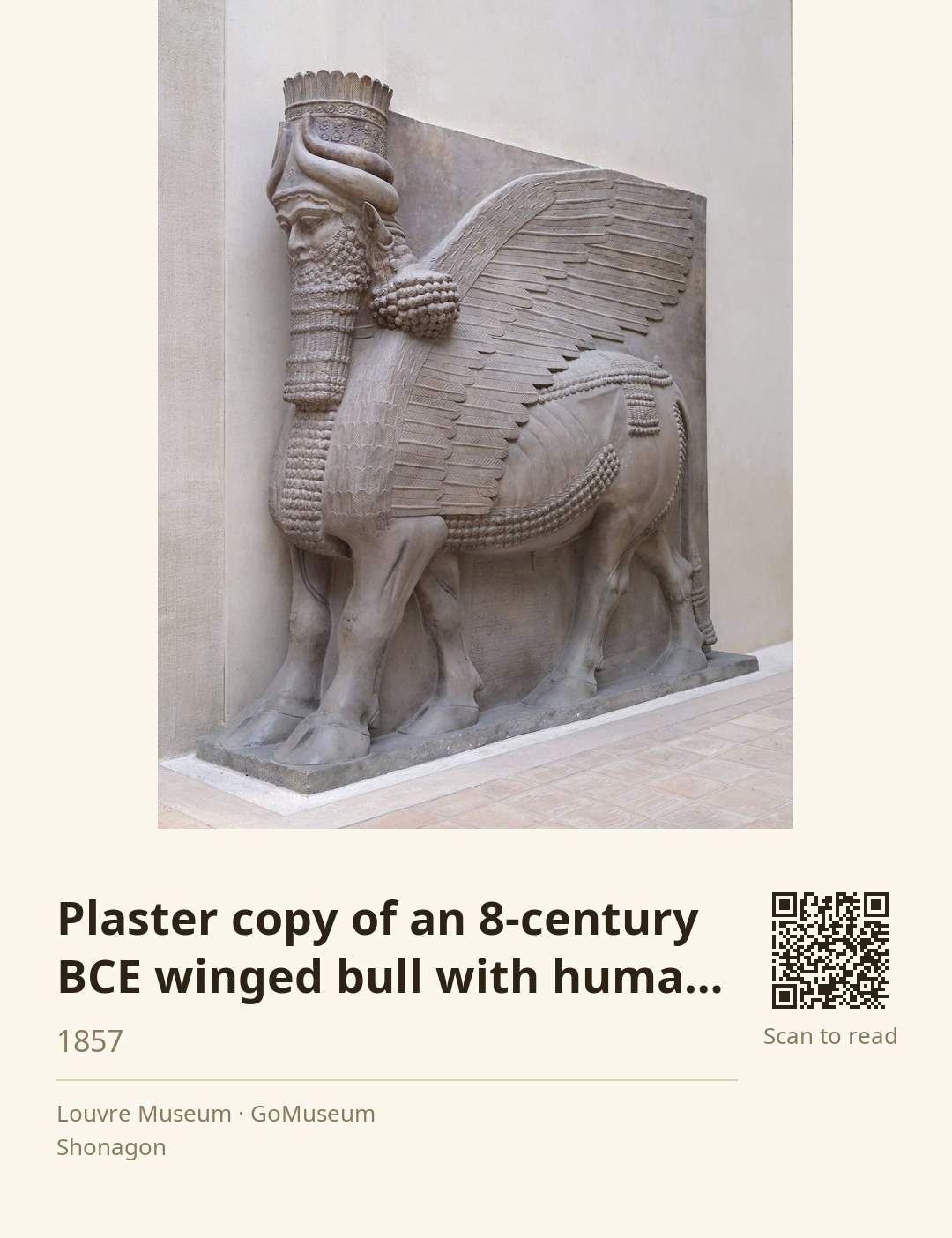
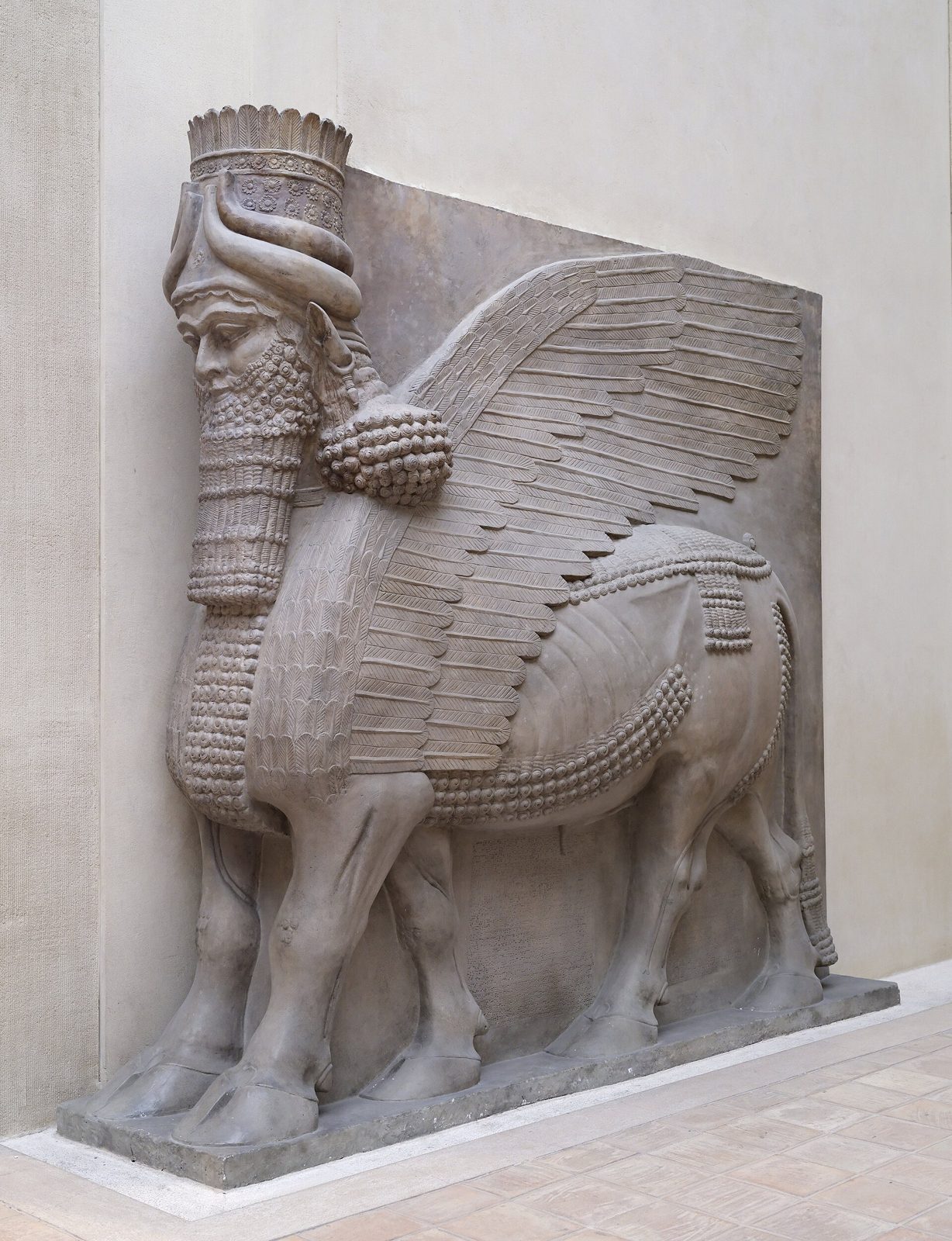
Plaster copy of an 8-century BCE winged bull with human head
🎧 This work has audio narration — listen in the appThe imposing figure of the Lamassu, a mythological creature with a human head and the body of a bull, commands attention with its intricate details. The human head, crowned with a cylindrical headdress and a flowing beard, contrasts strikingly with the powerful, muscular body that suggests both strength and grace. The wings, adorned with feather-like carvings, extend majestically, enhancing the creature's grandeur.
This plaster copy, created in 1857, captures the essence of the original stone relief from the 8th century BCE, which adorned the Khorsabad Palace in ancient Assyria. The high level of detail in the textures of the body and the decorative patterns on the headdress reflect the artistry of the time, showcasing the skill of the ancient artisans. The Lamassu served not only as a guardian figure but also as a symbol of protection and power, standing watch over the entrances of palaces and temples.
This plaster copy of the Lamassu was created in 1857, a time when interest in ancient civilizations was surging, particularly among European scholars and collectors. The original Lamassu, carved in the 8th century BCE, adorned the Khorsabad Palace, built by King Sargon II in what is now northern Iraq. The palace was a symbol of Assyrian power and sophistication, showcasing the empire's architectural and artistic achievements. When the original reliefs were excavated in the mid-19th century, they sparked a fascination with Assyrian art, leading to their display in museums across Europe. The plaster copy you see here was likely made for educational purposes, allowing people to appreciate the grandeur of the original without needing to travel to the Middle East. Over the years, the Lamassu has been celebrated not just as a guardian figure but as a testament to the artistry of ancient Assyria, influencing both contemporary artists and historians alike.
The Assyrians believed that these figures could ward off evil spirits, making them essential guardians at the entrances of important buildings. This belief in the protective power of the Lamassu reflects the deep spiritual and cultural significance that these creatures held in ancient Assyrian society.