 Image: Workshop at the court of Medina Azahara
pyxis of al-Mughira
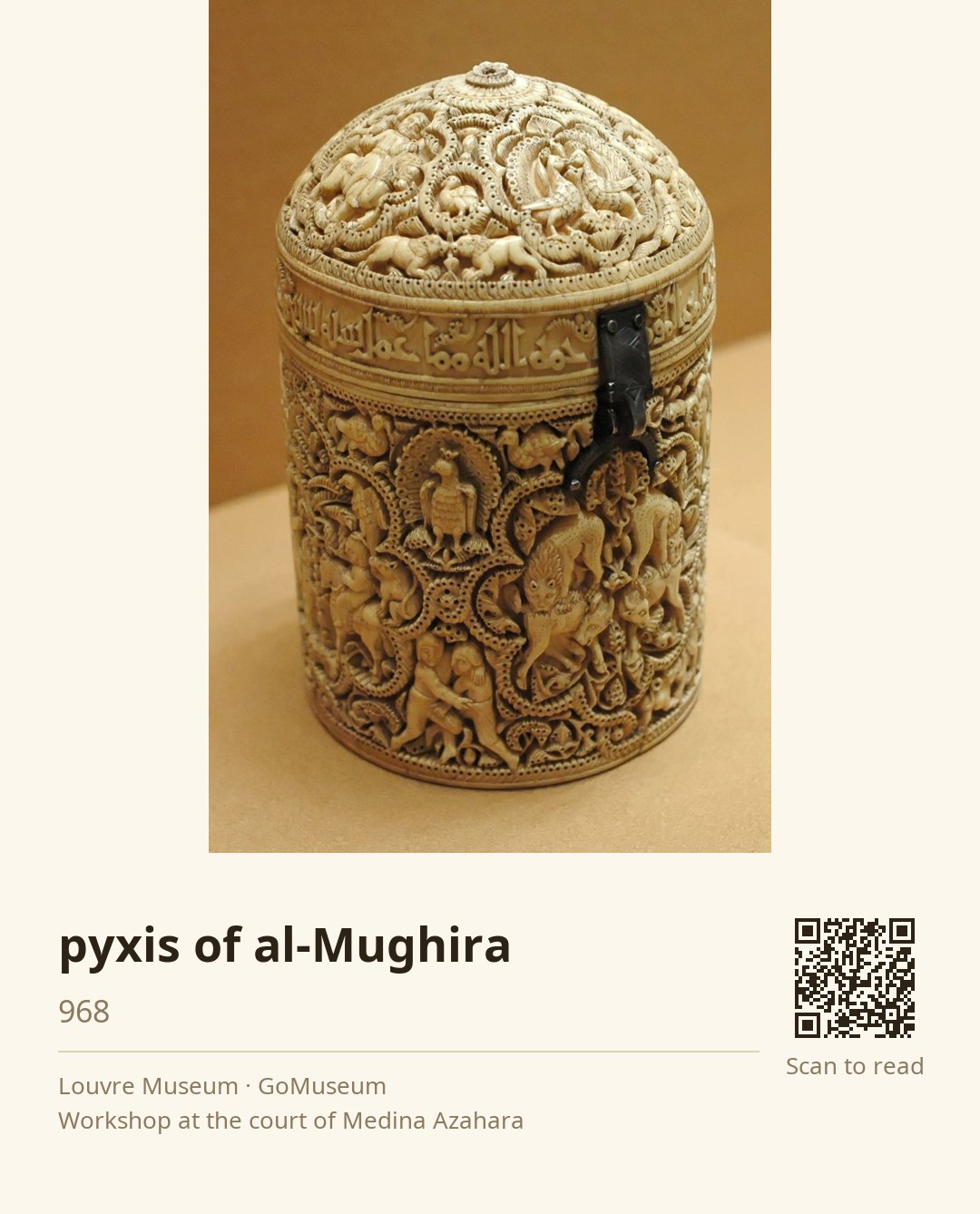
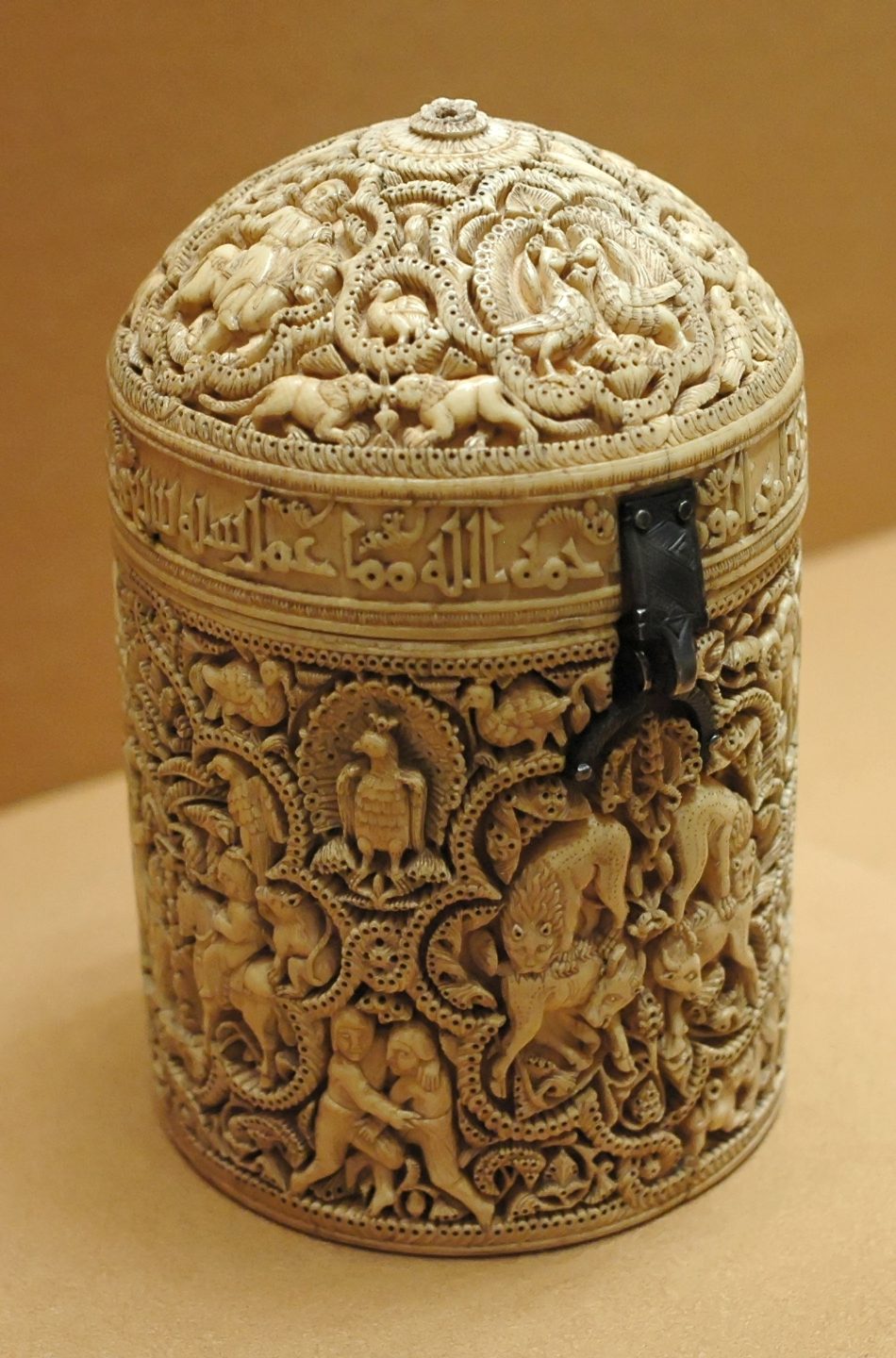
🎧 This work has audio narration — listen in the appTake a moment to really look at the pyxis of al-Mughira. Notice the intricate carvings that wrap around this small ivory container, each detail whispering stories from a time long past. Pay special attention to the four medallions—each one a snapshot of life and power in the Umayyad court.
Crafted in 968 CE in the workshops of Madinat al-Zahra, this pyxis was likely a coming-of-age gift for the prince, a tangible piece of his heritage. It’s fascinating to think about how such a small object could carry the hopes and aspirations of a dynasty.
As you stand here, consider what treasures might have once filled this container. What would you keep safe in a box like this? What stories would you want to carry with you?
The pyxis of al-Mughira was crafted in 968 CE in the workshops of Madinat al-Zahra, near modern-day Cordoba, Spain. This exquisite ivory container was likely commissioned as a coming-of-age gift for Prince al-Mughira, the youngest son of Caliph 'Abd al-Rahman III. The pyxis is adorned with intricate carvings and an inscription that blesses al-Mughira, marking it as a significant piece of royal heritage. Following the decline of the Umayyad dynasty, the pyxis eventually found its way to the Louvre in Paris, where it has been housed since its acquisition in 1898. The journey of this object through time speaks volumes about the shifting tides of power and the importance placed on such luxurious items in royal culture.
The pyxis of al-Mughira is not just a beautiful object; it's a window into the complex world of medieval Islamic politics and culture. Crafted in 968, this exquisite ivory container reflects the artistic mastery of the Spanish Umayyad period, influencing generations of artisans. Its intricate carvings and medallions tell stories of power, legitimacy, and cultural identity. This piece has inspired countless artists and historians, showcasing how art can encapsulate political narratives and personal legacies, making it a significant artifact in the study of Islamic art history.
One intriguing detail about the pyxis of al-Mughira is the uncertainty surrounding its original purpose. While pyxides were typically used to hold precious items like jewelry or perfumes, this particular piece shows no signs of any substance having ever been inside. The absence of residue raises questions about whether it was ever used as intended or if it served a purely decorative or ceremonial role, adding an air of mystery to its historical significance.
The pyxis is made from elephant ivory, which was imported from North Africa, highlighting the luxury and wealth of the Umayyad court. Additionally, it is believed that the pyxis may have originally been inlaid with gold and silver, though only traces of jade remain, suggesting a lost opulence.
The pyxis was crafted during a time of political tension within the Umayyad dynasty, as factions were vying for power following the deaths of key leaders. This context likely influenced the themes depicted in the medallions, which reflect both the aspirations and challenges faced by al-Mughira as he came of age.
Despite being a luxury item typically used to hold precious substances, the pyxis shows no signs of ever containing anything, raising questions about whether it was used for its intended purpose or if it served a purely ceremonial role.