A Young Man Being Introduced to the Seven Liberal Arts
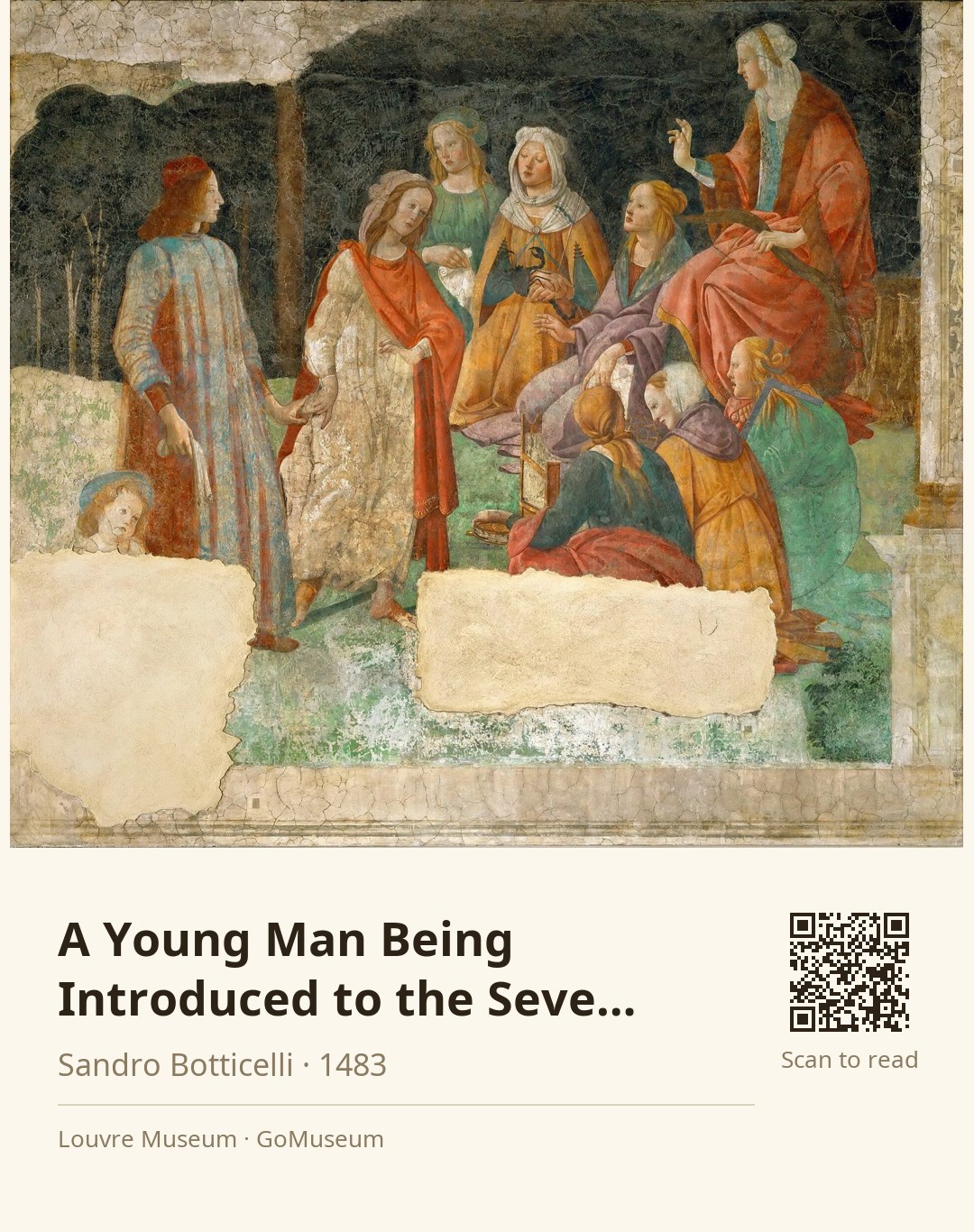
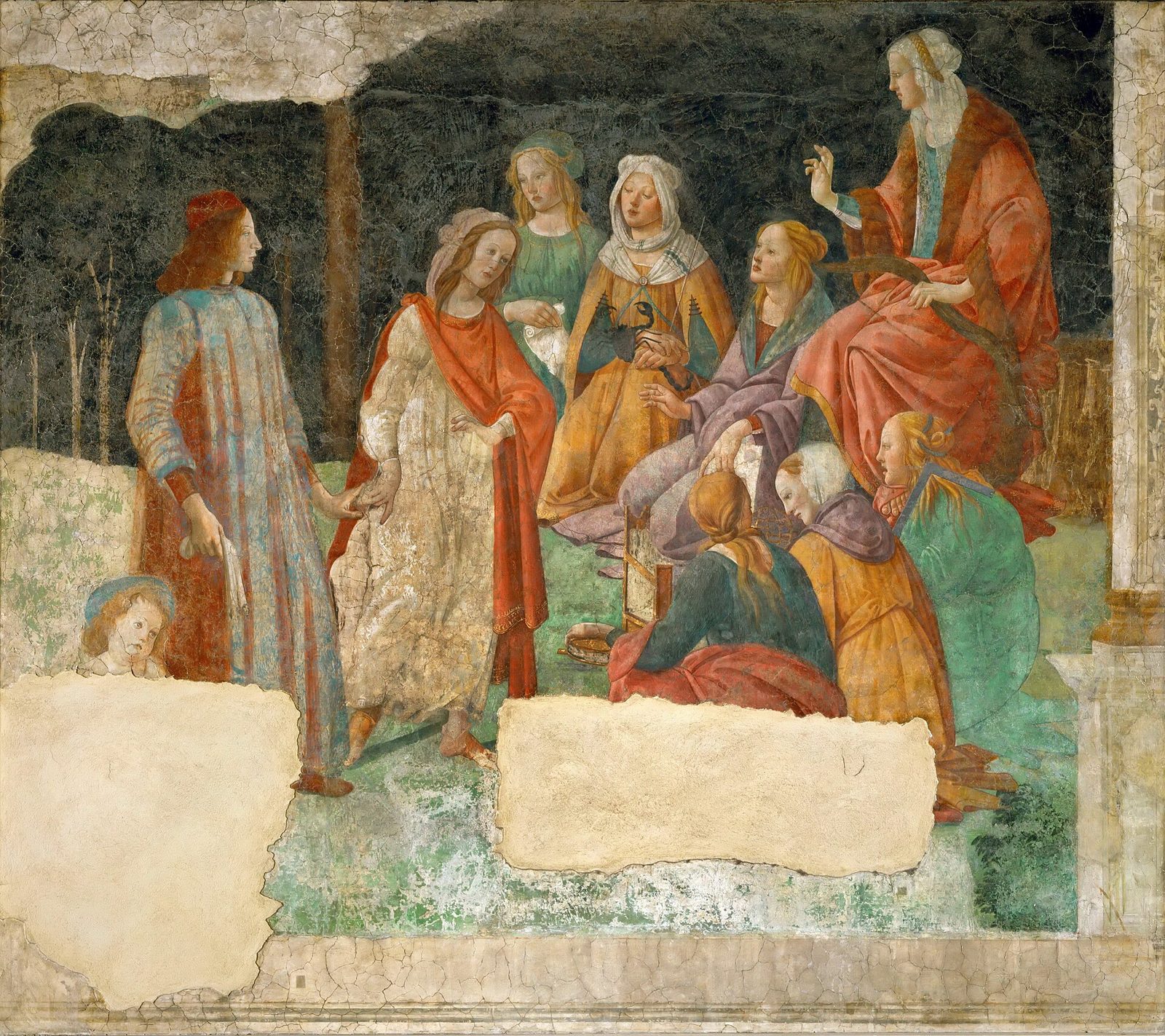
🎧 This work has audio narration — listen in the appAs you stand before "A Young Man Being Introduced to the Seven Liberal Arts" by Sandro Botticelli, take a moment to really absorb the scene. Notice how the young man, likely Lorenzo Tornabuoni, is being guided by the personification of Grammar into a circle of allegorical figures. Each figure represents one of the Seven Liberal Arts, and they’re not just standing there; they’re engaging with him. Look closely at Arithmetic, extending her hand in a warm greeting.
This moment captures not just an introduction to education but symbolizes the ideals of the Renaissance, where knowledge was seen as a pathway to freedom and personal growth. The arts depicted here—Rhetoric, Logic, Geometry, and more—were considered essential for a well-rounded education, especially for someone of Lorenzo's status in the Medici family.
Painted around 1483, this work adorned the Villa Lemmi, a testament to the cultural aspirations of the time. Botticelli, known for his graceful figures and harmonious compositions, invites us into a world where learning is celebrated and revered.
As you take in the details, think about your own journey of learning. What arts or subjects have shaped your understanding of the world?
Filippino Lippi, born around 1457 in Prato, Tuscany, was an influential Italian Renaissance painter, the illegitimate son of the renowned artist Fra Filippo Lippi. His upbringing was marked by the artistic environment of his father's workshop, where he began his training. After his father's death, Filippino continued to hone his skills under Sandro Botticelli, contributing to a blend of styles that defined his early works.
As a painter, Filippino specialized in religious themes, often depicting elongated figures and intricate details that conveyed a sense of the surreal. His style evolved significantly after a formative period in Rome, where he absorbed classical influences and developed a unique approach characterized by vibrant, imaginative compositions. His notable works include the frescoes in the Brancacci Chapel and the altarpiece for the Strozzi Chapel, which reflect the political and religious tensions of his time.
Filippino's contributions to art history are significant; he is recognized for bridging the Early and High Renaissance styles, paving the way for the expressive tendencies that would lead to Mannerism. His innovative techniques, including visible brushwork, influenced later artists and positioned him as a pivotal figure in the evolution of Renaissance art. He passed away in Florence on April 18, 1504, leaving behind a legacy that continues to resonate in the art world.
This painting, titled 'A Young Man Being Introduced to the Seven Liberal Arts,' was created by Sandro Botticelli around 1483, likely commissioned for a wedding celebration. It adorned the Villa Lemmi, a country villa owned by Giovanni Tornabuoni, who was the uncle of Lorenzo de' Medici. The artwork was intended to honor the marriage of Giovanni's son, Lorenzo, to Giovanna of the Albizzi family in 1486. However, it wasn't until 1873 that the painting was rediscovered beneath layers of whitewash during renovations at the villa. After its removal, it eventually made its way to the Musée du Louvre in Paris in 1882. The painting, along with its companion piece, reflects the cultural aspirations of the Medici family and the educational ideals of the Renaissance, emphasizing the importance of knowledge and the liberal arts for the elite of Florence.
As you gaze at this painting, take note of Botticelli's masterful brushwork. The figures are rendered with a delicate touch, their outlines crisp yet fluid, creating a sense of elegance and harmony. The composition is structured around a circular arrangement, drawing your eye to the central figure of the young man, who is being welcomed into the world of knowledge. The use of light is particularly striking; it bathes the figures in a soft glow, enhancing their ethereal quality. Each allegorical figure is distinct, yet they all seem to engage with the young man, inviting him into their realm. The colors are vibrant yet harmonious, with a palette that reflects the idealized beauty of the Renaissance. The careful attention to detail in the drapery of the garments and the attributes of each figure showcases Botticelli's skill in portraying texture and form, making the scene feel alive and dynamic.
This painting not only showcases the allegorical representation of education but also marks a shift in how art could convey complex ideas about knowledge and virtue. By depicting the young Lorenzo Tornabuoni being welcomed into the circle of the Seven Liberal Arts, Botticelli emphasizes the value of a well-rounded education, which was crucial for the elite of Florence. Remember, this isn't just a painting; it's a celebration of learning and the ideals of a free society.
Imagine the excitement of uncovering Botticelli's work after so many years, like finding a long-lost treasure in your attic. It was a significant moment that brought this masterpiece back into the light, allowing us to appreciate its beauty and the story it tells about education and the arts during the Renaissance.
The painting was rediscovered in 1873 when renovations at Villa Lemmi revealed it beneath layers of whitewash, a common practice that obscured many artworks in the past.