Ferdinand Guillemardet
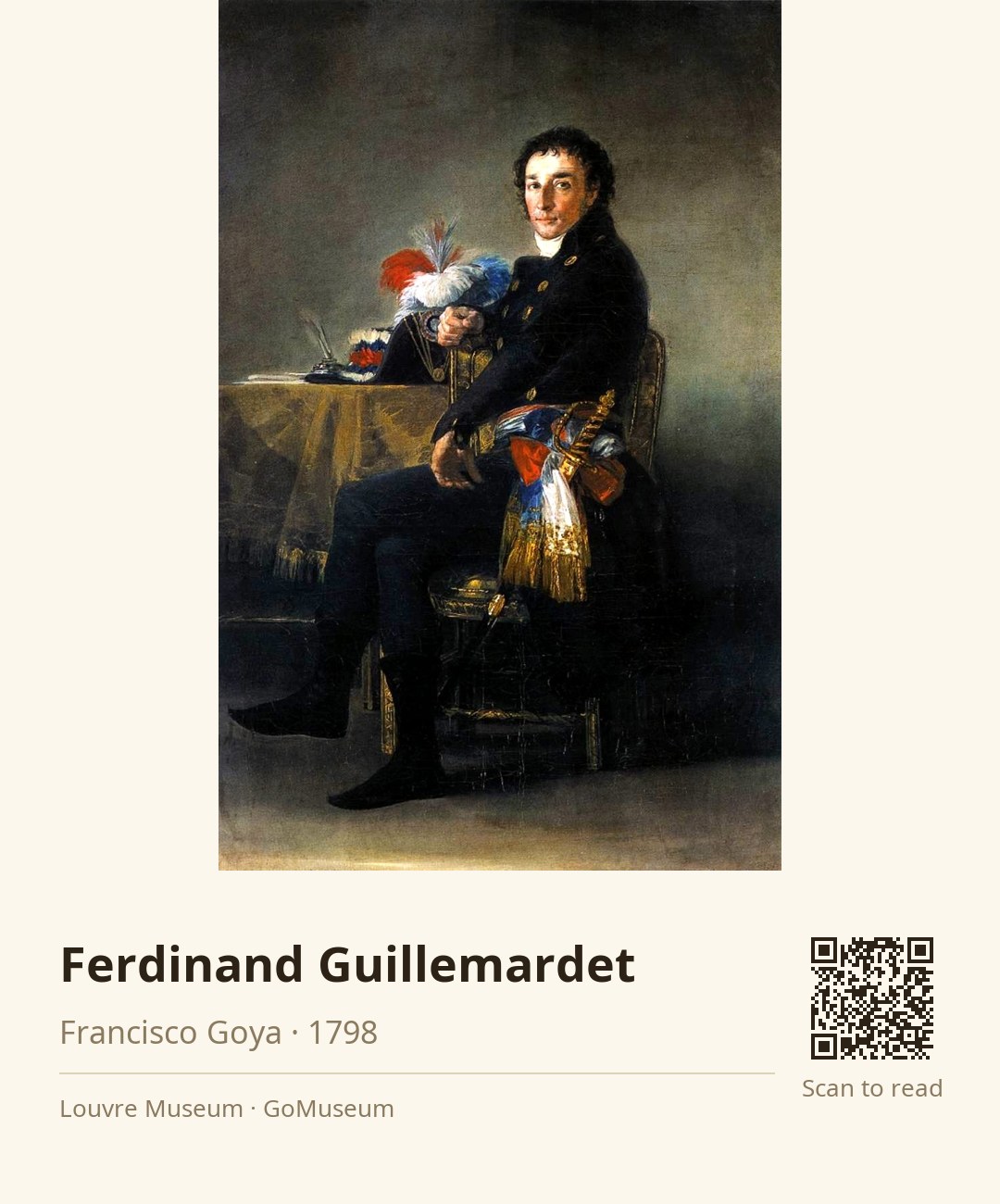
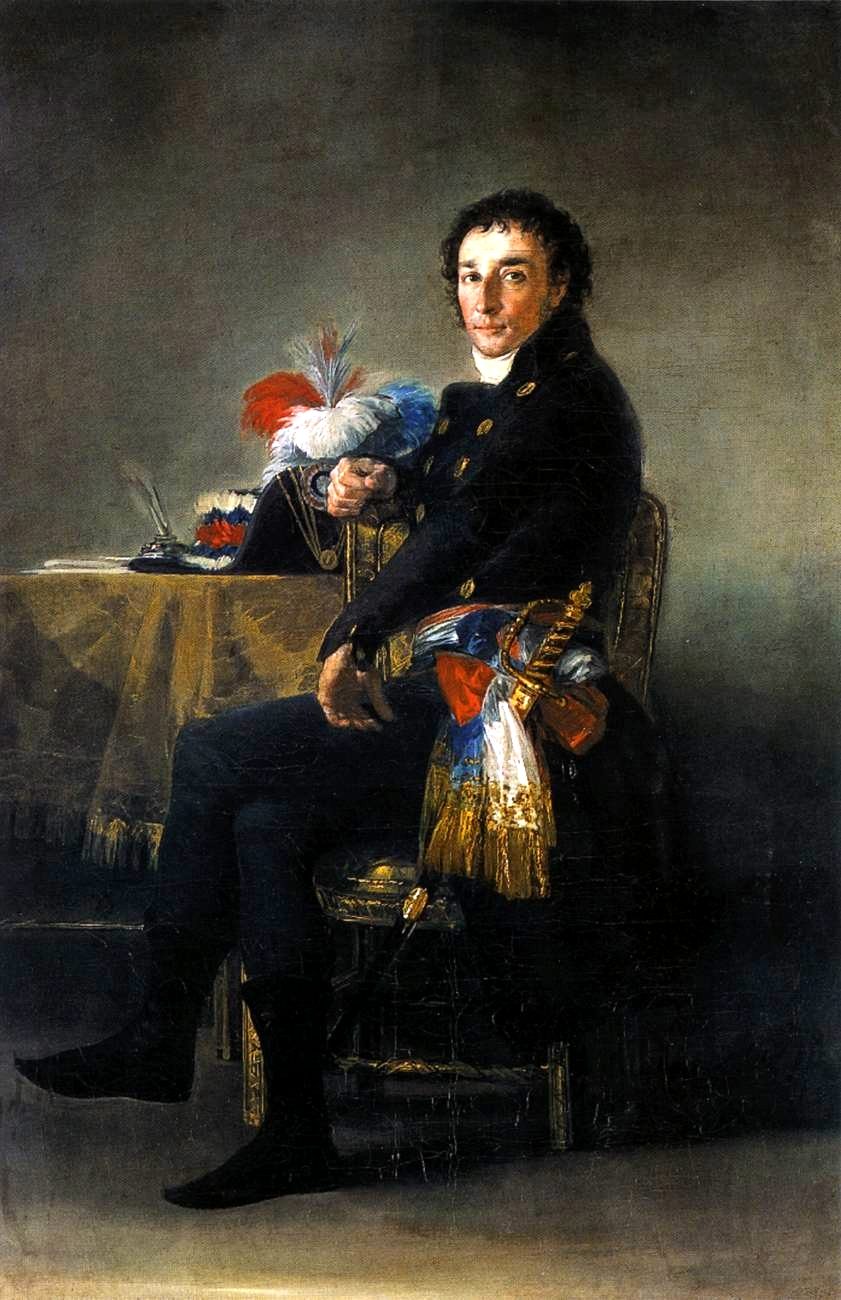
🎧 This work has audio narration — listen in the appTake a moment to really look at Goya’s portrait of Ferdinand Guillemardet. Notice how Guillemardet’s gaze seems to pierce right through you, confident and intelligent. His relaxed posture, with legs crossed and body angled, feels almost casual, yet it’s meticulously crafted to convey authority without stiffness.
These details matter because they reveal Goya’s skill in capturing not just likeness, but the essence of his subject. Guillemardet, the French ambassador to Spain, embodies the power of the young French Republic, and Goya’s choice of vibrant colors—those striking blues, reds, and whites of the French flag—further emphasizes this.
Created in 1798, this painting was one of Goya’s favorites, reflecting a time of political tension and transformation in Europe. It’s intriguing to think about why Goya chose to portray Guillemardet in such a relaxed yet powerful manner. Was it a nod to the shifting alliances of the time, or perhaps a personal connection through his patrons?
As you stand here, consider what this portrait tells you about the interplay of power, politics, and art. What do you think Goya was trying to communicate through this confident representation?
Francisco José de Goya y Lucientes, born on March 30, 1746, in Fuendetodos, Spain, emerged as a pivotal figure in the transition from the Old Masters to modern art. Goya's early life was marked by a middle-class upbringing, and he began his artistic education at the age of 14. His career flourished as he became a court painter, producing portraits of Spanish nobility and engaging with Rococo styles. However, a severe illness in 1793 left him deaf, profoundly impacting his artistic vision, leading to darker themes in his work.
Goya's later pieces, including the haunting "Disasters of War" series and the "Black Paintings," reflect his disillusionment with society and the tumult of his times, particularly during the Napoleonic Wars. His art often explored themes of madness, corruption, and the human condition, positioning him as a precursor to modern artistic movements. Goya's legacy endures as he is celebrated for his innovative techniques and profound emotional depth, influencing generations of artists and earning his place as a cornerstone of Western art history. He passed away in Bordeaux on April 16, 1828, leaving behind a body of work that continues to resonate.
The portrait was first exhibited at the Real Academia de Bellas Artes de San Fernando in July 1799, where it garnered attention for its relaxed yet authoritative portrayal of the ambassador. Following its exhibition, Guillemardet took the painting back to France, and it eventually found its way to the Louvre, thanks to his son Félix, who bequeathed it in 1865. This journey reflects the intricate connections between art, politics, and personal relationships during a tumultuous era.
Before his ambassadorship, Guillemardet was a deputy of the Convention and played a significant role in the French Revolution, notably issuing an edict that transformed Church buildings into civil meeting centers.
The vibrant colors of blue, red, and white in Guillemardet's attire not only represent the French flag but also symbolize the power and confidence of the young French Republic he represented, reflecting the political climate of the time.