Portrait of Antonio de Covarrubias
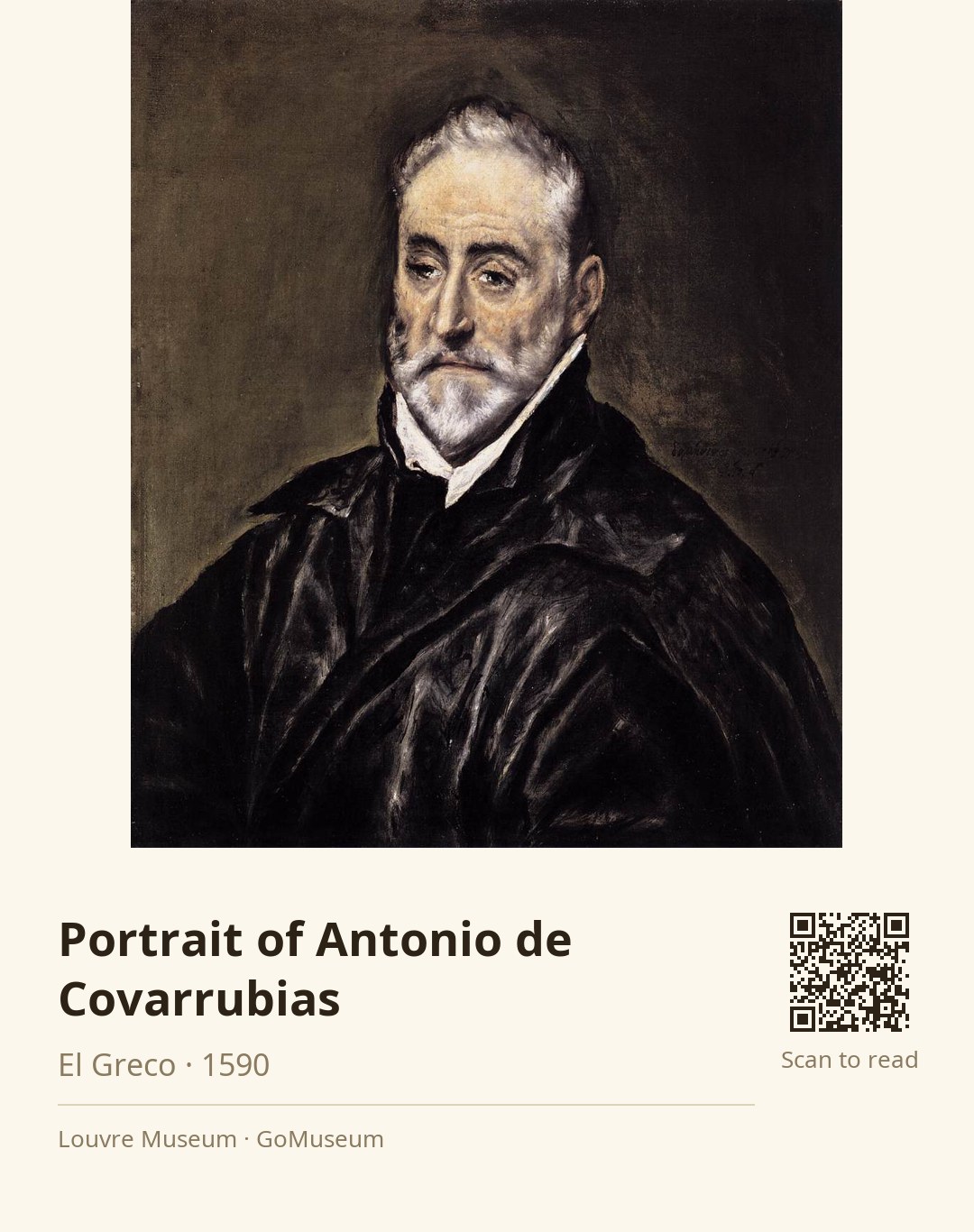
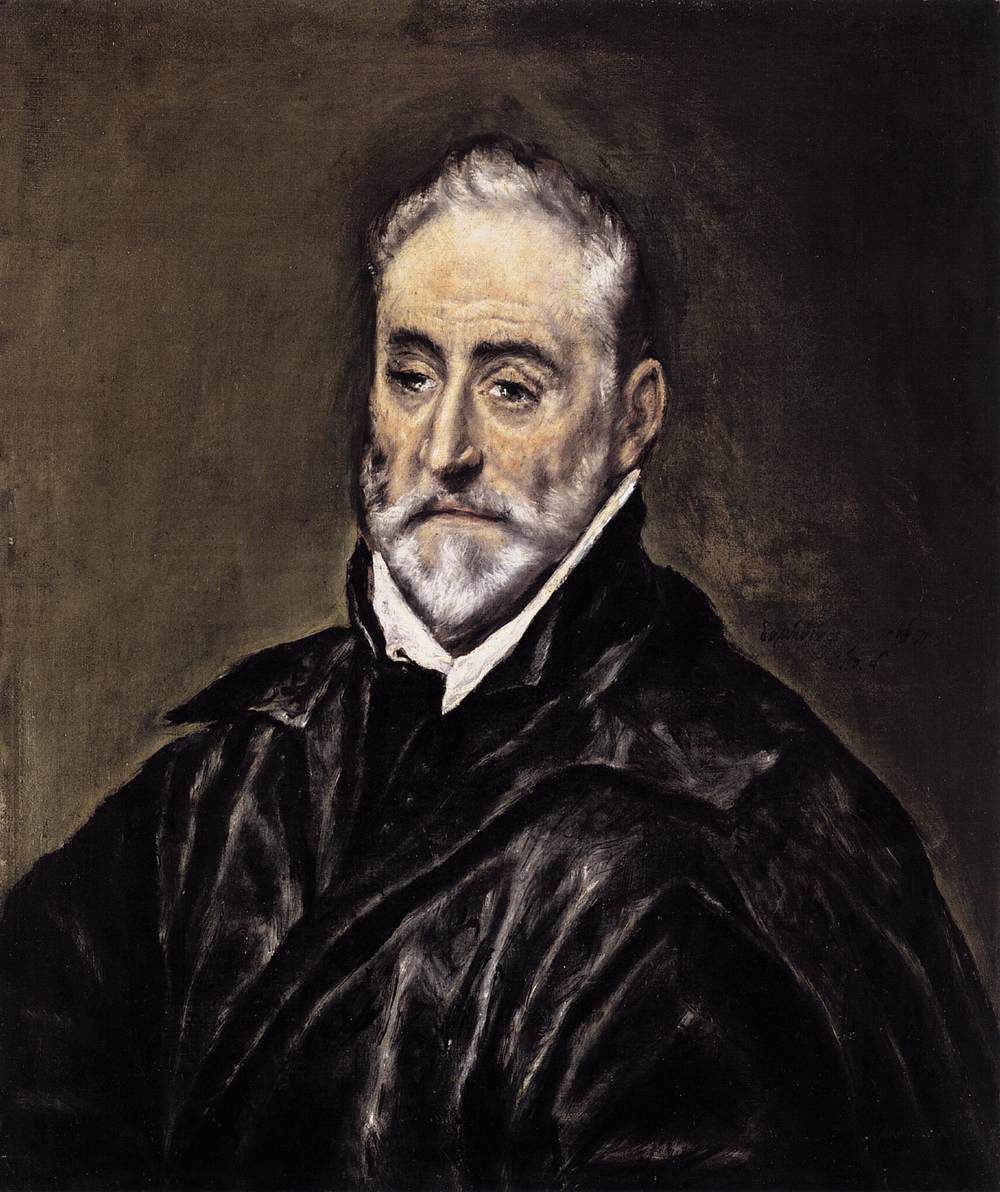
🎧 This work has audio narration — listen in the appTake a moment to really look at the face of Antonio de Covarrubias in this striking portrait by El Greco. Notice the way his eyes seem to follow you, filled with a depth that suggests wisdom and contemplation. And check out the way his collar is painted—it's almost as if you can feel the texture of the fabric, crisp and meticulously detailed.
These details matter because they reveal El Greco's mastery of capturing not just a likeness, but the very essence of his subject. Covarrubias was not just any jurist; he was a prominent figure in Toledo, a friend of the artist, and a man of considerable influence in his time. The intensity in his gaze reflects the weight of his intellect and the responsibilities he bore.
As you stand here, think about what stories Covarrubias might have shared with El Greco. What do you think was on his mind when this portrait was created?
Doménikos Theotokópoulos, known as El Greco, was born on October 1, 1541, in Crete, then part of the Venetian Republic. He trained as an icon painter in the Cretan school, mastering Byzantine traditions before moving to Venice at 26, where he absorbed Mannerist influences. By 1577, he settled in Toledo, Spain, where he created some of his most renowned works, including "View of Toledo" and "The Opening of the Fifth Seal." His unique style, characterized by elongated figures and vivid colors, initially puzzled contemporaries but later garnered acclaim, positioning him as a precursor to Expressionism and Cubism. Despite being overlooked for centuries, El Greco's innovative approach profoundly influenced artists like Picasso and Goya. His legacy endures, marking him as a pivotal figure in art history, celebrated for his originality and emotional depth. El Greco's life reflected a blend of cultures, embodying the spirit of the Spanish Renaissance while remaining distinctively Greek.
El Greco's 'Portrait of Antonio de Covarrubias' was painted around 1595 to 1600, during a vibrant period in Toledo, Spain. Covarrubias, a prominent jurist and a close friend of El Greco, was a significant figure in the legal landscape of his time, serving as a professor at the University of Salamanca and a member of the Council of Castile. This portrait showcases their friendship and Covarrubias's influence. The painting is now housed in the Louvre, Paris, following a 1941 exchange with Spanish museums. Interestingly, another portrait of Covarrubias by El Greco can be found in the El Greco Museum in Toledo, highlighting the artist's deep connection to his subject. The neutral background of the painting reflects the influence of Titian and the Venetian school, marking a blend of styles that El Greco was known for during his time in Spain.
As you gaze at this portrait, pay attention to El Greco's masterful brushwork. The way he layers the paint creates a texture that almost invites you to reach out and touch it. Notice how the light plays across Covarrubias's face, illuminating his features with a soft glow that adds depth to his expression. The color palette is rich yet restrained, with subtle variations that evoke a sense of realism. El Greco's composition is striking; the figure is placed slightly off-center, drawing your eye directly to Covarrubias's penetrating gaze. This technique not only enhances the three-dimensionality of the figure but also creates an intimate connection between the subject and the viewer. The overall effect is one of both grandeur and intimacy, a hallmark of El Greco's unique style.
This work showcases El Greco's unique blend of Mannerism and Byzantine influences, setting a new standard for emotional depth and spiritual resonance in portraiture. Covarrubias, a prominent jurist and personal friend of the artist, is depicted with a sense of gravitas that transcends mere likeness. El Greco's ability to capture the essence of his subjects with elongated forms and vivid colors opened doors to new expressive possibilities in art, making him a precursor to modern movements like Expressionism and Cubism. Remember, this portrait is not just about a man; it's about the profound impact El Greco had on the trajectory of Western art.
Did you know that El Greco had a personal connection to the subject of this portrait? Antonio de Covarrubias y Leiva wasn’t just any jurist; he was a close friend of El Greco. Imagine the conversations they must have had about art, philosophy, and the world around them! This friendship adds a layer of intimacy to the portrait, making it not just a depiction of a man, but a reflection of their shared lives and ideas.
During his time in Italy, El Greco was exposed to Mannerism and the Venetian Renaissance, which enriched his style, allowing him to blend Byzantine traditions with Western techniques, ultimately shaping his unique artistic voice.