Betrothal portrait of Anne of Cleves
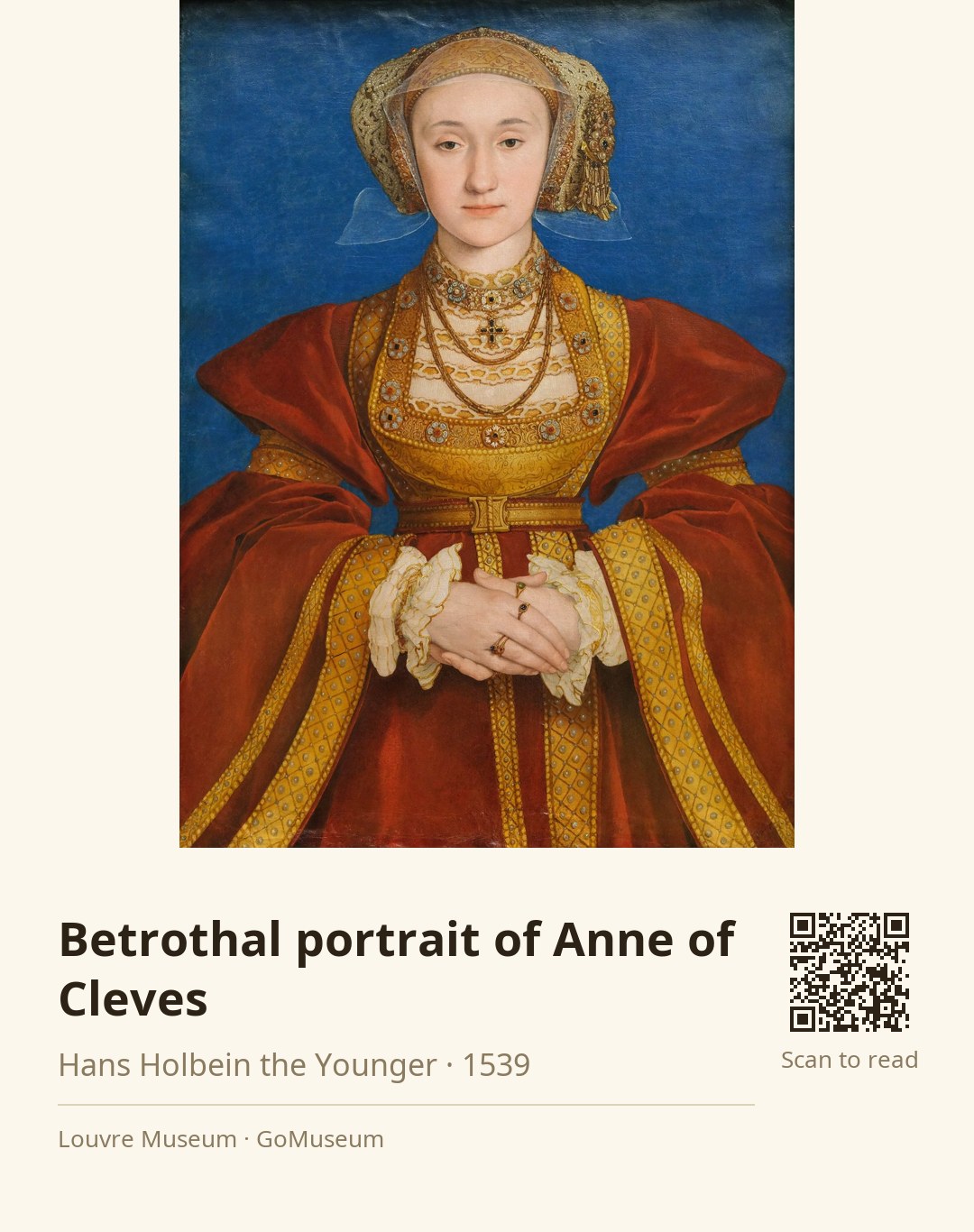
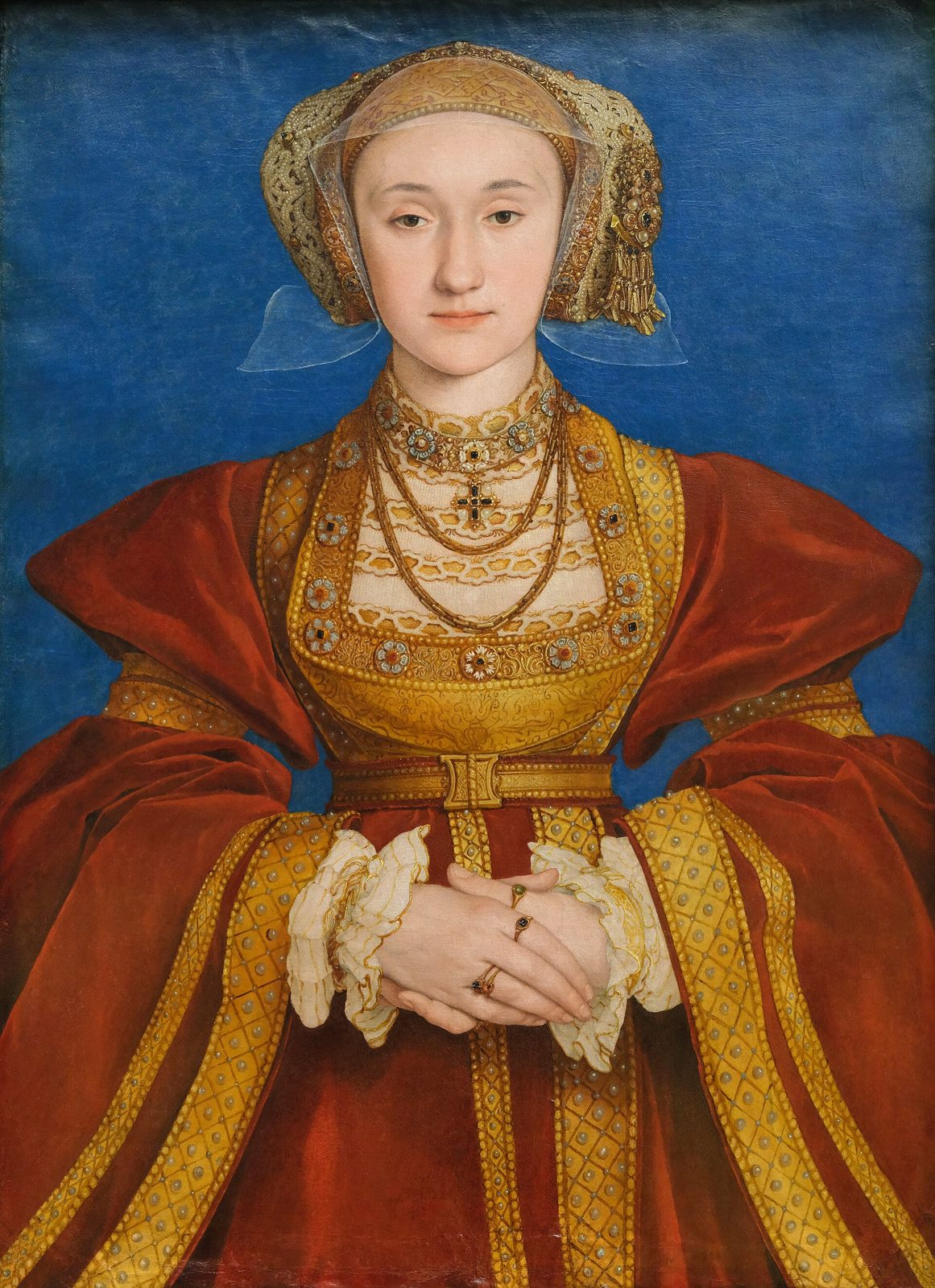
🎧 This work has audio narration — listen in the appTake a moment to really look at Anne of Cleves in this striking portrait by Hans Holbein the Younger. Notice how she stands confidently, her hands clasped in front of her, dressed in rich red and gold against a deep blue background.
Now, focus on the intricate details of her headdress. Holbein was a master at embedding meaning in his work, and this piece is no exception. The jewel, with its dual faces, suggests a partnership, perhaps hinting at the complexities of their relationship.
Created in 1539, this portrait was commissioned as part of Henry’s search for a new wife after the death of Jane Seymour. Holbein’s portraits were crucial in shaping the image of the royal family and their alliances.
As you stand here, think about the weight of this moment in history. How do you think Anne felt, knowing her likeness would be used to influence a king’s choice? What stories do you imagine lie behind her poised expression?
Hans Holbein the Younger, born around 1497 in Augsburg, was a pivotal figure in Northern Renaissance art, renowned for his extraordinary portraiture. Initially trained in his father's workshop, he moved to Basel, where he honed his skills in religious art and humanist themes. His early works, including portraits of notable figures like Erasmus, showcased his keen observational prowess and wit.
In 1526, Holbein relocated to England, quickly gaining favor among the humanist elite, including Thomas More. His return to England in 1532 marked the height of his career, as he became the official court painter for Henry VIII. Holbein's portraits, such as "The Ambassadors," are celebrated for their realism and intricate symbolism, often embedding deeper meanings within the likenesses of his subjects.
Despite his acclaim, Holbein did not establish a school, making him a unique figure in art history. His work influenced subsequent generations, and he is remembered for his precision and the emotional depth of his portraits. Holbein's legacy endures, as his art continues to captivate scholars and enthusiasts alike, reflecting the complexities of human character and the era's cultural shifts. He passed away in 1543, leaving behind a rich body of work that remains influential today.
This striking portrait of Anne of Cleves was created in 1539 by the renowned artist Hans Holbein the Younger, commissioned by none other than King Henry VIII himself. At the time, Henry was on the hunt for a new wife following the death of Jane Seymour. Interestingly, the painting's journey didn't end there. It was acquired by Louis XIV in 1671 and has been housed in the Louvre since the museum's opening.
Holbein's technique in this portrait is nothing short of masterful. The vertical format draws your eye upward, emphasizing Anne's poised stature. Notice the way he handles the rich reds and golds of her attire against that deep blue background — it’s a deliberate choice that not only highlights her status but also creates a striking visual contrast that captures attention. The brushwork feels both precise and fluid, allowing for intricate details in her headdress and the jewel at its center. This jewel, featuring dual faces, is painted with such care that it almost seems to pulse with significance. Holbein's use of light is equally compelling; it dances across the fabric, giving it a lifelike quality that makes you feel as though Anne might step out of the frame at any moment. The composition is balanced yet dynamic, inviting you to explore every detail while keeping your focus on her confident expression.
This painting not only reflects the intricate details of Anne's attire, but it also captures the essence of a moment in history when royal marriages were steeped in political significance. Holbein's ability to convey character and status through meticulous brushwork influenced generations of portrait artists, setting a high standard for realism and psychological depth in portraiture. His work remains a touchstone for understanding the complexities of identity and power in the Tudor court, making it a crucial piece in the narrative of art history.
Here's a curious tidbit: While this portrait is often seen as a betrothal gift from Henry VIII to Anne of Cleves, some art historians, like Cécile Scailliérez, suggest it might have been painted after their marriage in 1540. Why the confusion? Well, look closely at Anne's headdress—there's a striking jewel at its center, flanked by two faces, hinting at a deeper connection. This could symbolize their union, making you wonder if Holbein was subtly commenting on the nature of their relationship.
Holbein was influenced by his training in Basel and exposure to Italian Renaissance techniques, which allowed him to blend Northern European realism with the more expressive styles of Italy, evident in the intricate details and lifelike quality of Anne's portrait.
After being commissioned by Henry VIII, the painting was acquired by Louis XIV in 1671 and has been housed in the Louvre since the museum's opening, showcasing its enduring significance and appeal through the centuries.