Saint Apollonia
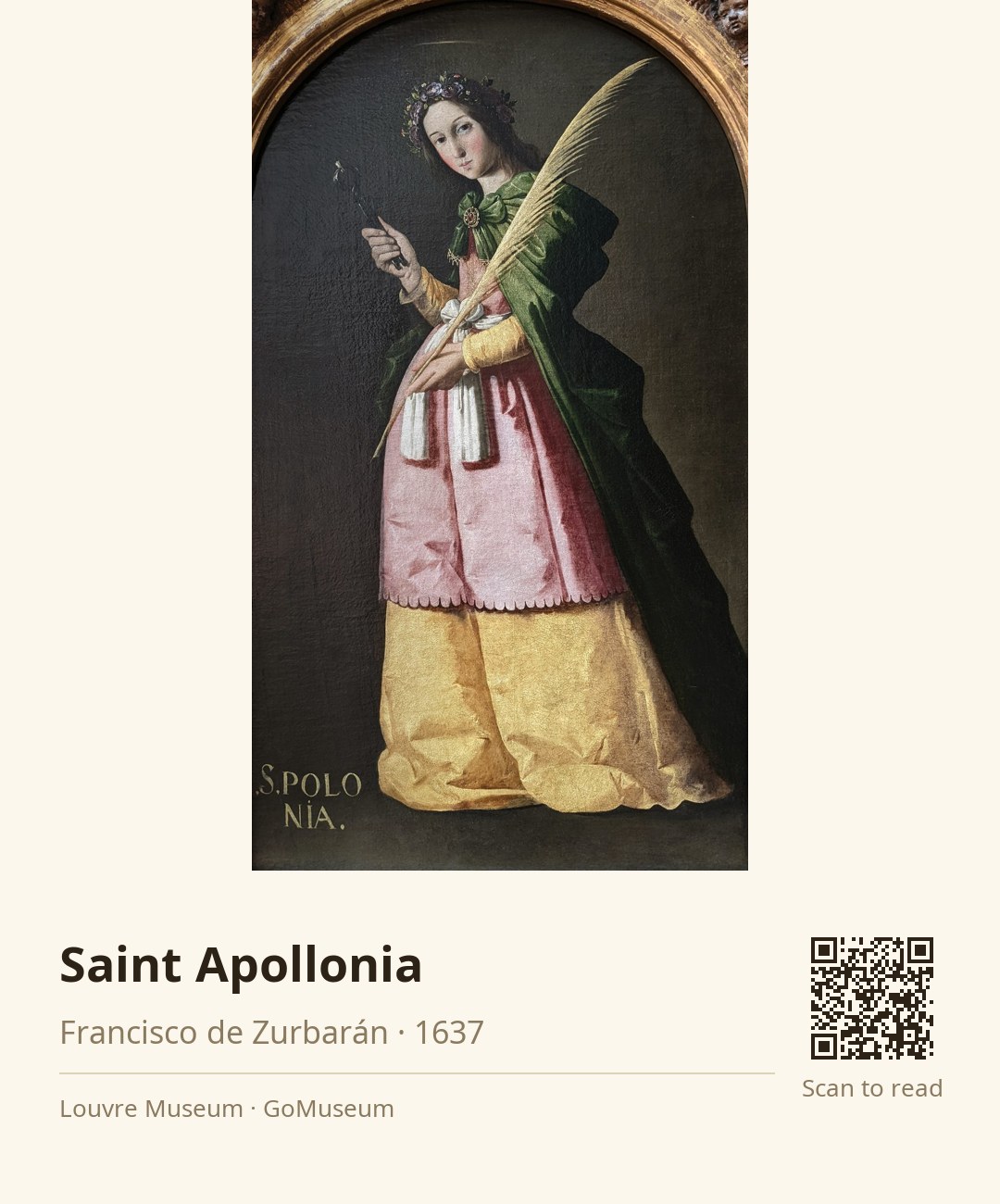
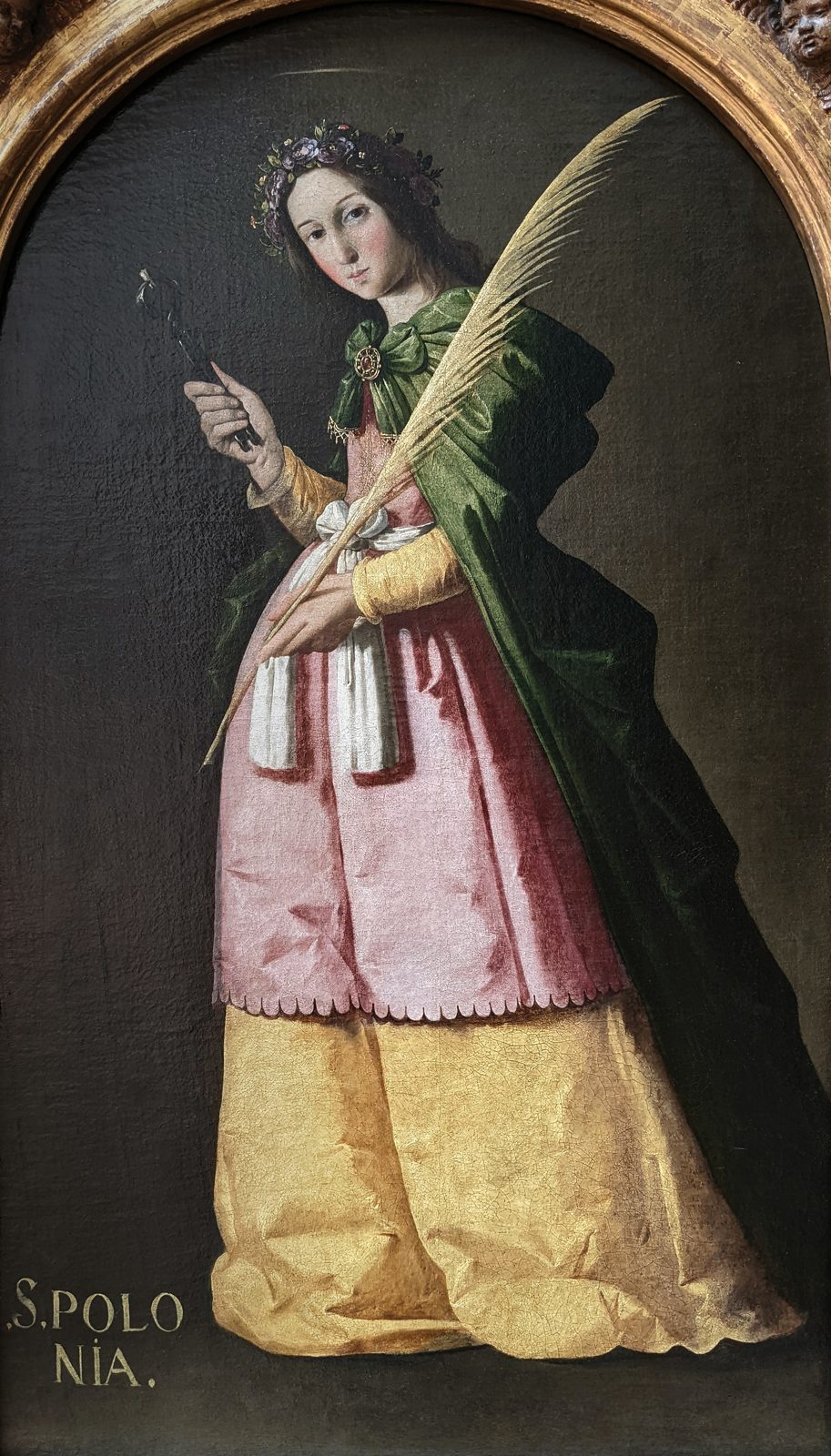
🎧 This work has audio narration — listen in the appTake a moment to really look at Saint Apollonia. Notice how she stands, her gaze both curious and defiant, as if she’s inviting you into her world. Look closely at the palm branch in her hand, a symbol of martyrdom, and the pincers she holds aloft, the very tool of her suffering.
These details are not just for show; they tell a powerful story. Apollonia, the patron saint of dentists, endured a gruesome martyrdom involving the extraction of her teeth. By depicting her in contemporary clothing, Francisco de Zurbarán bridges the gap between the sacred and the everyday, making her struggle feel immediate and relatable.
Painted in 1636, this work reflects Zurbarán's mastery during a time when he was deeply engaged in creating art for religious settings in Seville.
As you stand here, think about what it means to bear your own burdens. How does Apollonia’s story resonate with you today?
Francisco de Zurbarán, born in 1598 in Fuente de Cantos, was a prominent Spanish Baroque painter known for his religious works and still-lifes. His early talent for imitating objects led him to apprentice in Seville, where he developed a distinctive style characterized by dramatic chiaroscuro, earning him the nickname "Spanish Caravaggio." Zurbarán's compositions often depicted solitary figures in contemplative poses, reflecting a deep mysticism that resonated with the Counter-Reformation's spiritual themes.
His career flourished after securing significant commissions, including a contract for 21 paintings for a Dominican monastery, which established his reputation. He moved to Seville in 1629, where he became a leading artist, creating works for influential patrons and religious institutions. Despite a decline in popularity later in life, his art remained notable for its austere beauty and meticulous detail, particularly in the rendering of white draperies.
Zurbarán's legacy is marked by his unique ability to convey profound emotion through simplicity, distinguishing him from contemporaries like Velázquez. His influence extended beyond Spain, with many works exported to South America. He died in 1664, leaving behind a legacy that continues to be celebrated in art history for its spiritual depth and technical mastery.
This particular piece was likely commissioned for the high altar of the church of San José, part of a series that included other saints. It was acquired by the Louvre in 1867 from Marshal Soult's collection, showcasing its journey through time. The painting reflects a shift in how saints were depicted, moving away from classical drapery to contemporary clothing, making the sacred feel more relatable. This approach was part of a broader trend among 17th-century artists, including Zurbarán, who sought to connect the divine with the everyday lives of the faithful.
By doing so, he created a bridge between the viewer and the saint, making her story feel immediate and relevant. This approach was somewhat controversial, as it challenged the traditional representations of saints in classical attire, but it ultimately contributed to a more relatable and accessible form of religious art.
Zurbarán's choice to dress Saint Apollonia in contemporary clothing was a deliberate technique to create a connection between the sacred and the everyday, reflecting a shift in artistic representation during the 17th century.
Zurbarán's own life experiences, including the loss of his first wife and the challenges of his career, may have deepened his exploration of themes like suffering and martyrdom, allowing him to portray figures like Saint Apollonia with profound emotional depth.