Death of the Virgin
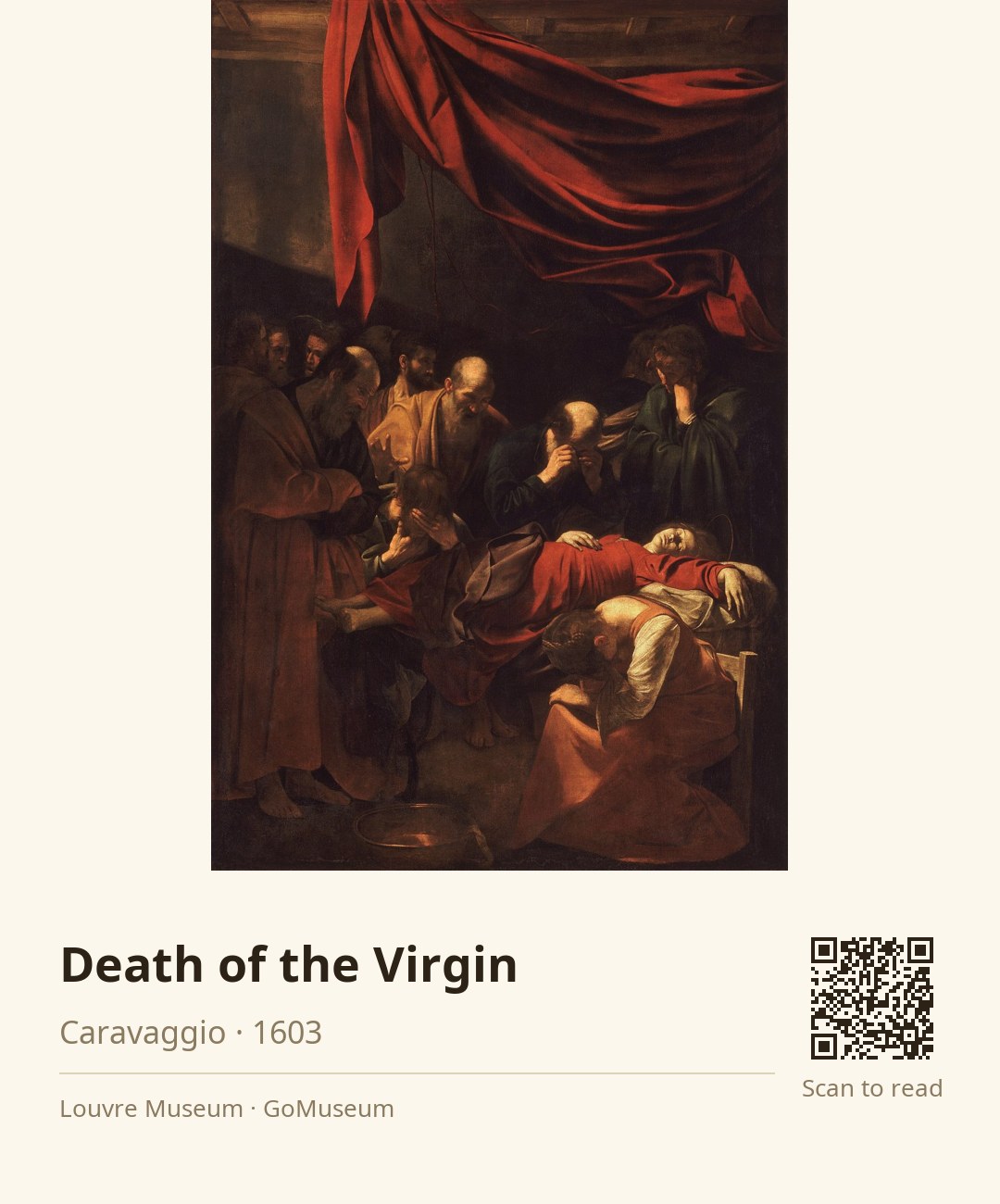
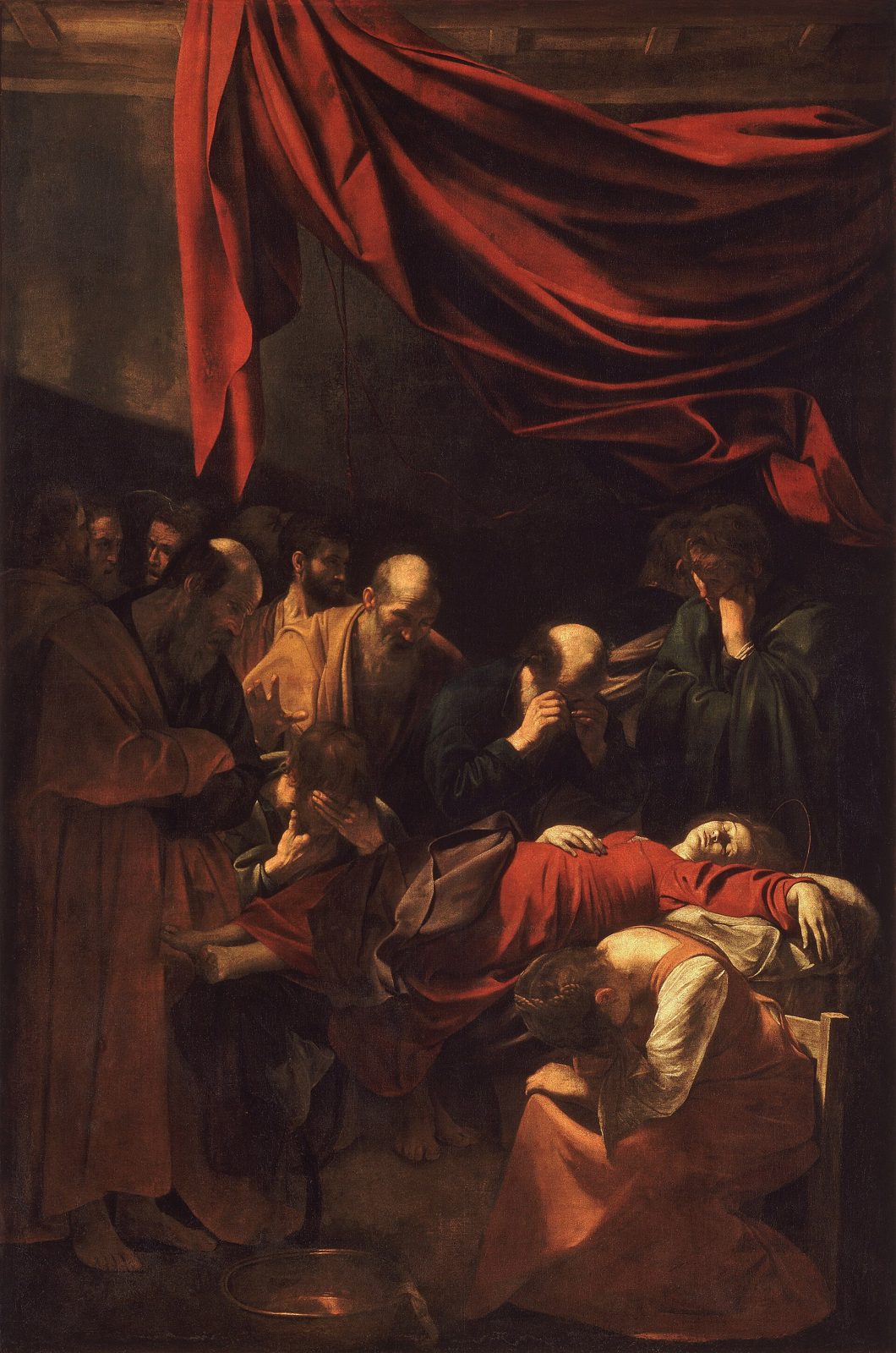
🎧 This work has audio narration — listen in the appTake a moment to really look at Caravaggio's "Death of the Virgin." Notice how Mary is depicted: her body reclines heavily, draped in a simple red dress, her head lolling to one side. The stark realism of her swollen feet and lifeless form pulls you into a raw moment of mortality. This isn’t the glorified Virgin we often see; instead, Caravaggio strips away the usual iconography, presenting a woman who has passed away, devoid of the usual reverence.
Why does this matter? Caravaggio's approach was revolutionary for his time. By portraying Mary in such an unembellished manner, he challenges the viewer to confront the reality of death rather than the idealized versions of holiness. This painting was so controversial that it was rejected by the church that commissioned it, deemed unfit for a sacred space. It’s a powerful reminder of how art can provoke and unsettle, pushing boundaries of what is acceptable.
His dramatic style, characterized by intense light and shadow, would go on to influence countless artists.
As you stand here, consider: what emotions does this portrayal evoke in you? How does Caravaggio's stark realism change your perception of the Virgin Mary?
Michelangelo Merisi da Caravaggio, born in Milan in 1571, became one of the most influential figures in Baroque art. His early life was marked by tragedy and hardship, losing family members to the plague and growing up in poverty after his mother’s death. Caravaggio trained as a painter in Milan, where he developed a keen eye for realism, influenced by the naturalism of Lombard art and the dramatic compositions of the Counter-Reformation.
Moving to Rome in the early 1590s, Caravaggio's career flourished as he gained recognition for his innovative use of chiaroscuro, known as tenebrism, which brought a striking emotional depth to his subjects. His paintings often depicted intense moments of struggle and suffering, reflecting both physical and psychological states. However, his tumultuous personal life, marked by violence and legal troubles, led to his exile from Rome after killing a man in a brawl.
Despite his troubled existence, Caravaggio continued to produce powerful works in Naples, Malta, and Sicily until his untimely death in 1610. His legacy, initially overshadowed by his notorious reputation, was rediscovered in the 20th century, cementing his status as a precursor to modern painting. His influence is evident in the works of many artists, and he remains a pivotal figure in the history of Western art.
Caravaggio's 'Death of the Virgin' was commissioned by Laerzio Cherubini, a papal lawyer, for a chapel in the Carmelite church of Santa Maria della Scala in Trastevere, Rome. This was during a time when Caravaggio was already a prominent figure in the Roman art scene, having established his reputation over fifteen years. However, the painting, completed around 1605-06, sparked controversy due to its raw and unidealized portrayal of the Virgin Mary. The church deemed it unfit for sacred space, leading to its rejection. This decision was influenced by critics like Giulio Mancini, who suggested that Caravaggio modeled the Virgin after a prostitute, possibly his mistress. Following its rejection, the painting was purchased by the Duke of Mantua, Vincenzo Gonzaga, on the recommendation of Peter Paul Rubens, who praised it as one of Caravaggio's finest works. It was briefly exhibited in 1607 before becoming part of the royal collection in England and later France, ultimately finding its home in the Louvre. Interestingly, Caravaggio had fled Rome after a violent altercation, never to return publicly, making this painting one of his last major works in the city.
In 'Death of the Virgin,' Caravaggio employs a striking use of light and shadow, known as chiaroscuro, to create a dramatic and lifelike presence. The Virgin's body is illuminated with a stark, almost theatrical light, which not only highlights her lifeless form but also accentuates the emotional weight of the scene. Notice how the figures surrounding her are arranged in a compact mass, their postures guiding your gaze toward her. The absence of facial expressions in these mourners adds to the painting's somber tone, as their grief is conveyed through their body language rather than overt emotion. The deep reds and muted tones of the clothing contrast sharply with the pale skin of the Virgin, emphasizing her death. This choice strips away the usual iconography associated with holiness, presenting a raw and unembellished view of mortality. The overall composition feels almost sculptural, with the figures nearly life-sized, creating an intimate yet monumental experience for the viewer.
By portraying the Virgin Mary in such a raw and unidealized manner, he broke away from the traditional, glorified representations of saints. This painting not only sparked controversy—leading to its rejection by the church—but it also set a new standard for realism in art. Artists who followed, known as Caravaggisti, embraced his dramatic use of chiaroscuro and emotional depth, influencing the likes of Rubens and Rembrandt. The legacy of this piece lies in its challenge to the norms of sacred art, pushing boundaries that would resonate through the Baroque period and beyond, ultimately shaping the course of Western painting.
One surprising tidbit about Caravaggio's 'Death of the Virgin' is that it was initially rejected by the church that commissioned it! This bold choice led to a scandal that resulted in the painting being replaced by another artist's work. Imagine the uproar in the church when they first laid eyes on it!
Caravaggio's tumultuous personal life, marked by violence and scandal, likely influenced the raw emotion and realism in 'Death of the Virgin.' His experiences with mortality and conflict may have shaped his portrayal of death, making it more visceral and relatable.
After its rejection, 'Death of the Virgin' was purchased by Duke Vincenzo Gonzaga of Mantua, who recognized its artistic merit. It later became part of the royal collection in England before being acquired by Louis XIV for the French Royal Collection, eventually finding its home in the Louvre.