The Music Lesson
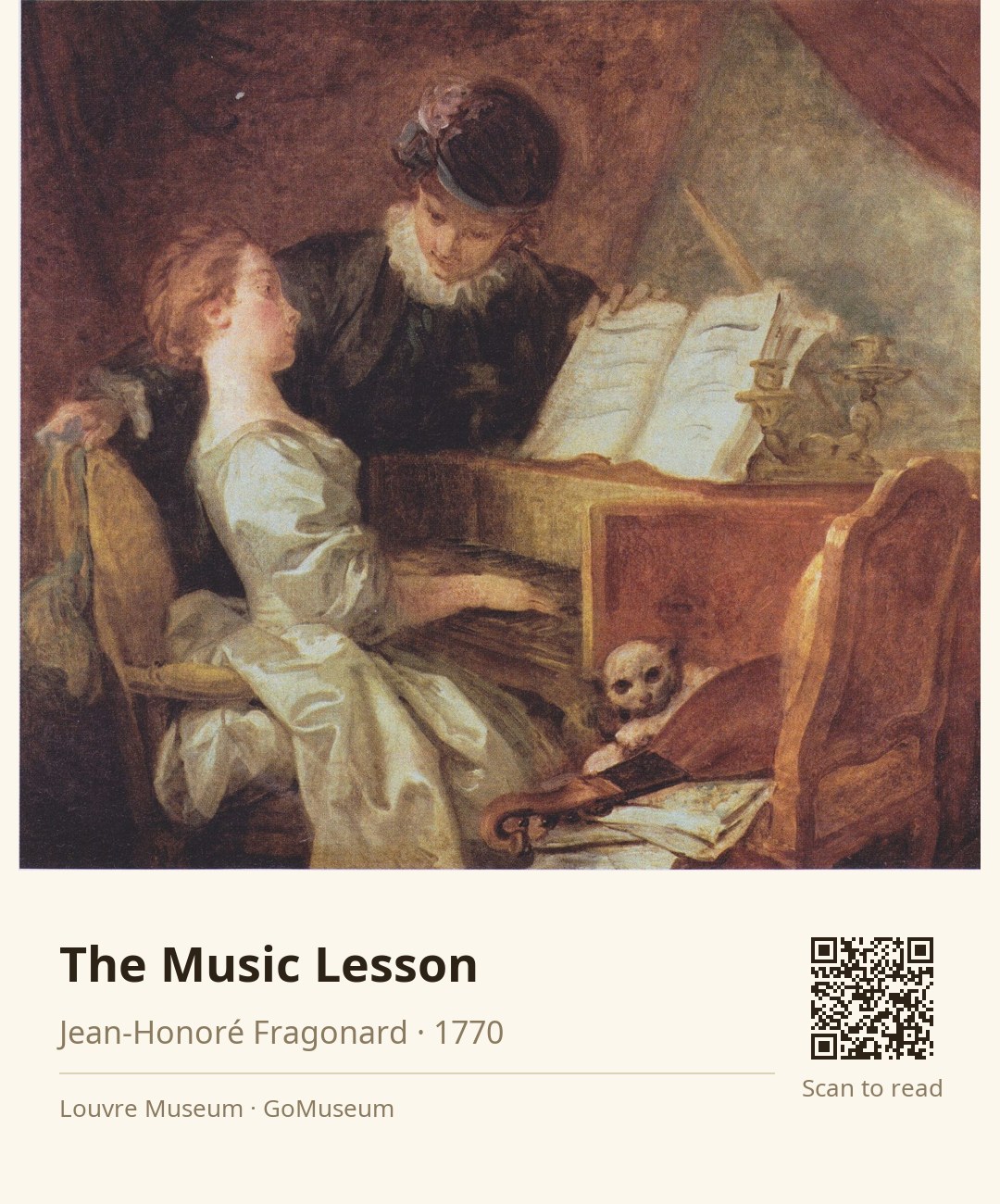
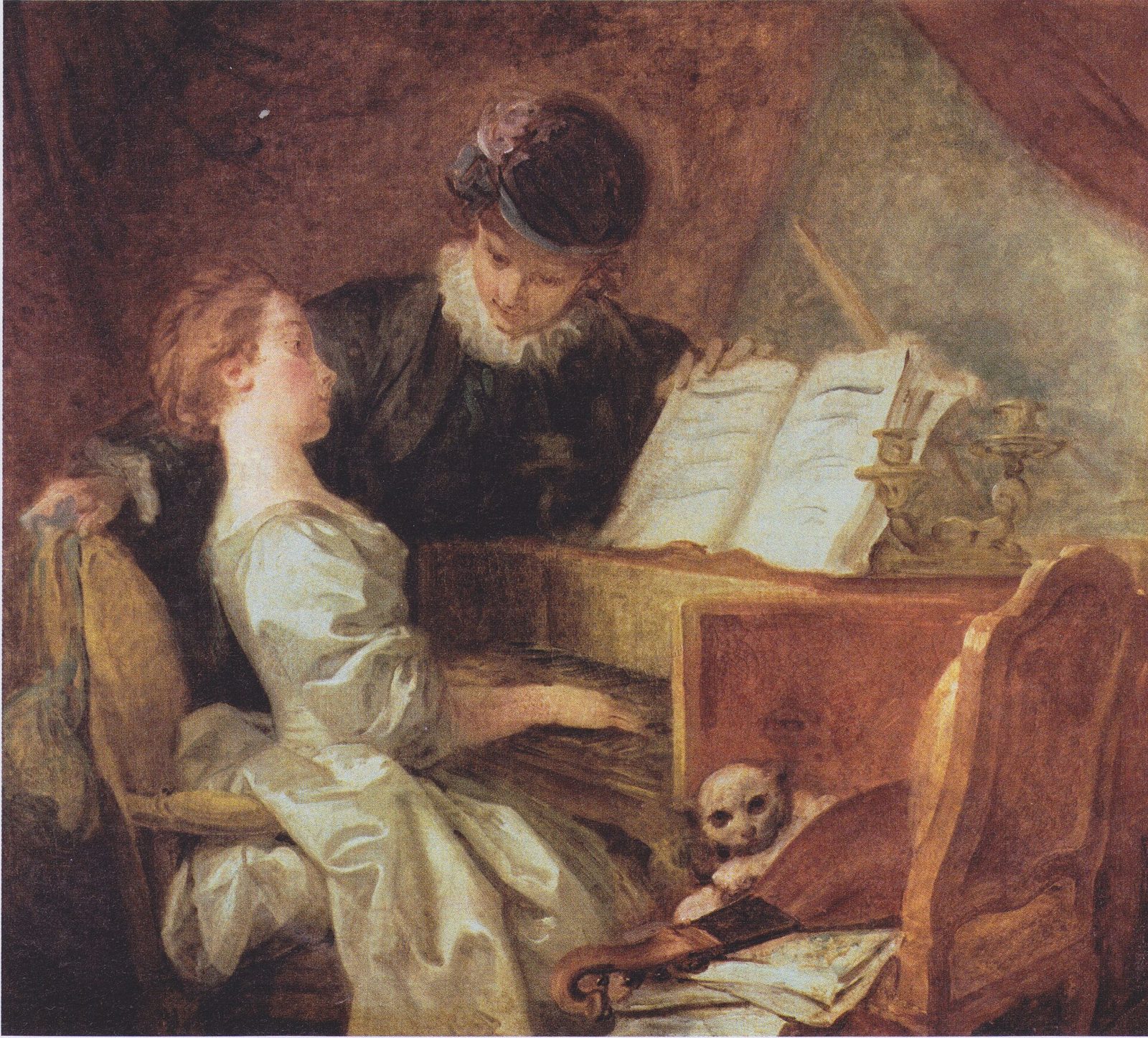
🎧 This work has audio narration — listen in the appTake a moment to really soak in the scene in front of you. Fragonard’s “The Music Lesson” is not just about music; it’s a flirtation, a dance of glances between a teacher and his pupil. Notice how the young teacher leans in, his gaze drawn to her neckline, while she seems blissfully unaware, lost in the moment.
These details matter because they reveal the playful, romantic spirit of the Rococo era, where art often celebrated love and intimacy. Fragonard captures a fleeting moment of connection, inviting us to witness this charming interaction.
Created around 1770, this painting is part of a tradition that often depicted music lessons as allegories for the senses, but Fragonard transforms it into something more personal and dreamy. His brushwork is fluid, almost as if he’s composing a melody with paint.
As you stand here, think about the emotions that music evokes. What do you think the young woman is feeling in this moment? Is she aware of the attention she’s receiving, or is she simply lost in the beauty of the music? Let that question linger as you take in the rest of this enchanting piece.
Jean-Honoré Fragonard, born on April 5, 1732, in Grasse, France, was a prominent French painter and printmaker known for his exuberant Rococo style. The only child of a glover, he moved to Paris at six, where his artistic talent was nurtured under the guidance of François Boucher. Fragonard won the prestigious Prix de Rome in 1752, allowing him to study in Italy, where he developed a love for romantic landscapes and the works of masters like Tiepolo.
His career flourished in the 1760s, creating intimate and often erotic genre paintings that captivated the court of Louis XV. Notable works include "The Swing" and "The Bolt," characterized by vibrant colors and fluid brushwork. Despite his success, Fragonard struggled with official commissions, preferring the freedom of private patronage. He married Marie-Anne Gérard in 1769, and their family included several artists.
The French Revolution disrupted his career, leading him to retreat to Grasse, where he continued to paint. Although largely forgotten after his death on August 22, 1806, Fragonard's influence resurfaced in the 19th century, particularly impacting Impressionists like Renoir and Morisot. Today, he is celebrated as a master of French painting, embodying the spirit of the Rococo era.
Fragonard's 'The Music Lesson' was created around 1770 and is now housed in the Louvre, a gift from Hippolyte Walferdin in 1849. This painting emerged during a vibrant period of Rococo art, where themes of love and intimacy flourished. The subject of music lessons had been popularized in the Dutch Golden Age, notably by Vermeer, but Fragonard took it in a new direction. His work was part of a broader trend that transformed allegorical representations into personal, romantic narratives. Initially, the reception of Fragonard's works was mixed; he faced challenges in gaining recognition for his ambitious projects. However, his playful depictions of love eventually resonated with the tastes of the French aristocracy, making him a sought-after artist in his time.
As you gaze at 'The Music Lesson,' pay attention to Fragonard's masterful brushwork. The fluidity of his strokes creates a sense of movement, almost as if the scene is alive with the sounds of music. Notice how he uses light to draw your eye to the figures, illuminating the teacher's gaze and the young woman's expression. The color palette is soft yet vibrant, with warm tones that evoke a dreamy atmosphere. Fragonard's composition is intimate; the figures are closely positioned, enhancing the feeling of connection between them. This closeness invites you to lean in, as if you're part of their secret moment. The way he captures the textures of their clothing and the delicate details of the room adds depth, making the scene feel tangible and inviting.
It's actually a playful nod to the romantic escapades of the time. The young music teacher, with his gaze lingering on his pupil, captures a moment filled with flirtation and charm. This painting is part of a larger tradition where artists like Vermeer explored similar themes, but Fragonard adds a distinctly Rococo twist, turning a lesson into a scene of dreamy love.
Fragonard faced a mixed reception for his ambitious projects, struggling to gain recognition initially. However, his playful depictions of love eventually aligned with the tastes of the French aristocracy, leading to his rise as a sought-after artist.
Fragonard was influenced by notable artists like François Boucher and Jean Siméon Chardin during his formative years, which helped him develop a unique style that blended the fluid brushwork of the Rococo with a personal touch.
Fragonard's family included several artists; his wife, Marie-Anne Gérard, was a miniaturist, and his daughter, Rosalie, often served as a model for his works. Additionally, his sister-in-law, Marguerite Gérard, became his student and assistant.