The Presentation in the Temple
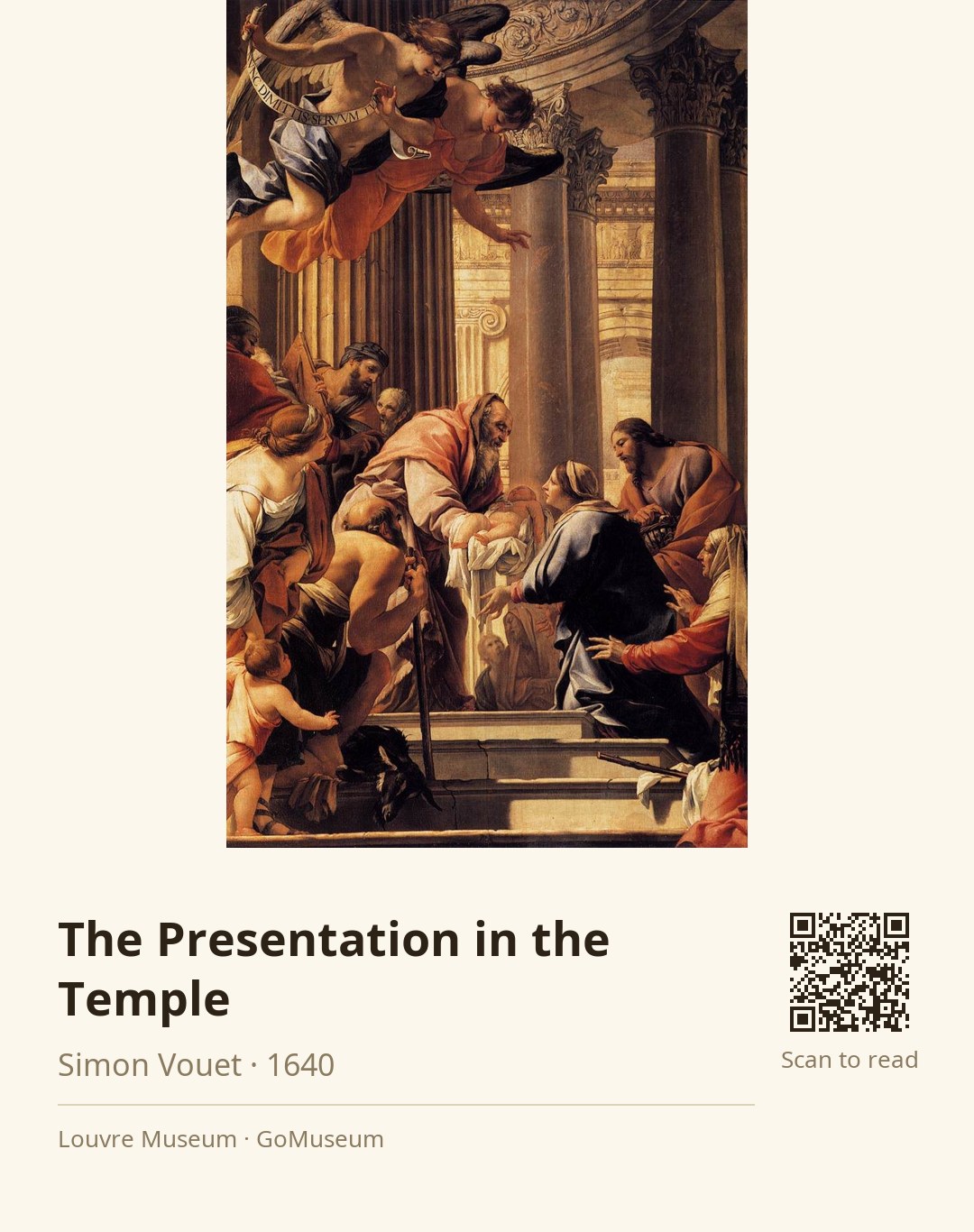
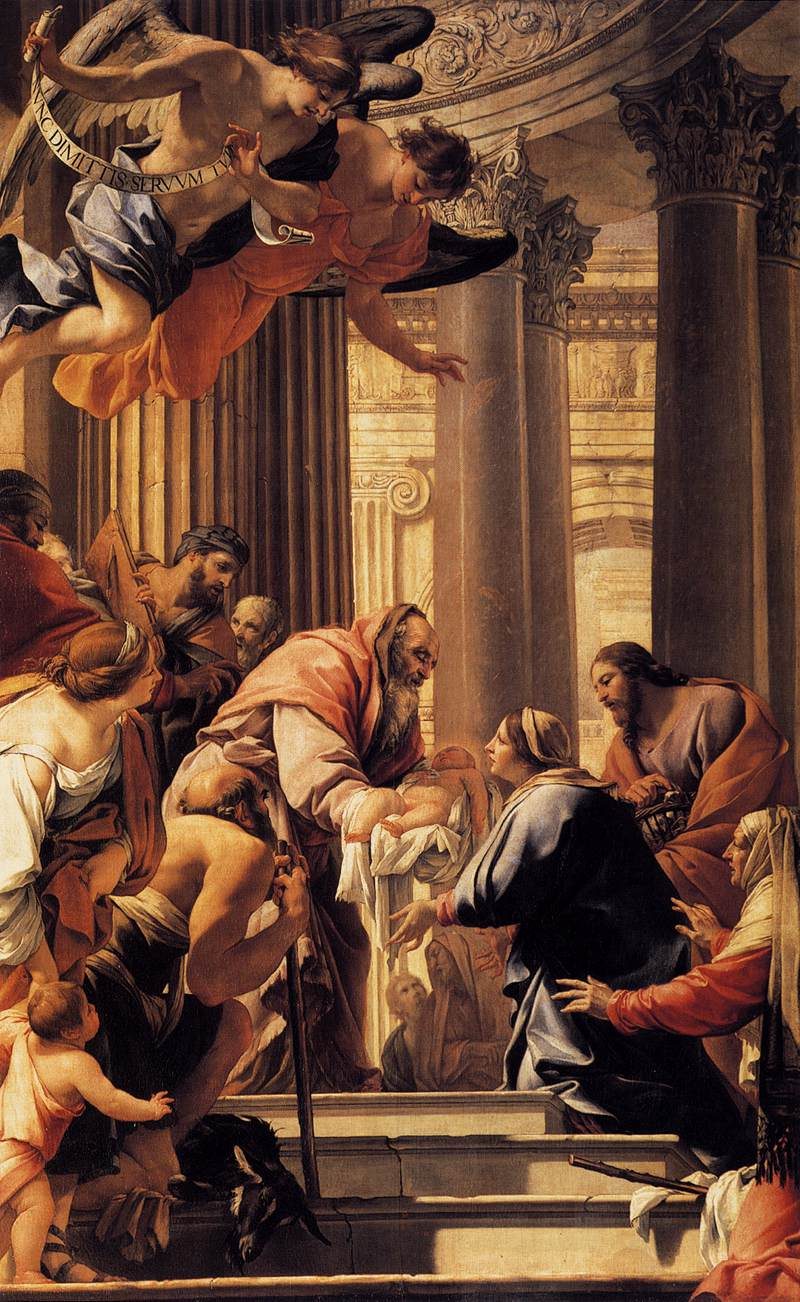
🎧 This work has audio narration — listen in the appTake a moment to really absorb the scene before you in Simon Vouet’s “The Presentation in the Temple.” Notice how the light seems to cascade down, illuminating the central figure of the child Jesus held by Mary. Look closely at the way Vouet has painted the expressions on the faces surrounding them—especially the elderly Simeon, whose eyes reflect a profound sense of reverence and prophecy.
These details matter because they capture a pivotal moment in Christian tradition, where Simeon recognizes Jesus as the Messiah, fulfilling a promise he had received. The artist’s use of light and shadow not only enhances the emotional intensity but also guides your gaze directly to the child, emphasizing His significance in the narrative.
Commissioned by Cardinal Richelieu in 1640 for the Jesuit church of Saint-Paul-Saint-Louis, this painting showcases Vouet's mastery of the Baroque style, which he honed during his time in Italy. His return to France marked a turning point, as he introduced this vibrant style to a country that was still catching up artistically.
As you stand here, consider what this moment of recognition means to you. How do you see the themes of faith and revelation reflected in your own life?
Simon Vouet was a prominent French painter born on January 9, 1590, in Paris. He was the son of a painter and began his artistic journey with portraiture, traveling to England and the Ottoman Empire before immersing himself in the Italian Baroque scene. His time in Italy, particularly in Rome, allowed him to absorb influences from masters like Caravaggio and the Carracci, leading to his election as president of the Accademia di San Luca in 1624.
In 1627, Vouet returned to France at the behest of Louis XIII, becoming the king's premier painter. He played a crucial role in introducing the Italian Baroque style to French art, creating religious and mythological works, frescoes, and decorative schemes for the royal court and influential patrons like Cardinal Richelieu. His workshop trained a generation of French artists, solidifying his legacy.
Vouet's style, characterized by dramatic lighting and vibrant color, marked a significant shift in French painting, elevating it from provincialism to a more sophisticated expression. His influence persisted beyond his death on June 30, 1649, as he laid the groundwork for future developments in French art, earning recognition as a pivotal figure in the Baroque movement. An exhibition of his work is set for 2027, underscoring his lasting impact on art history.
Simon Vouet's 'The Presentation in the Temple' was commissioned by Cardinal Richelieu in 1640 for the Jesuit church of Saint-Paul-Saint-Louis in Paris. This painting, which captures a significant moment in Christian tradition, was part of a larger altarpiece that included the upper panel, 'The Apotheosis of St Louis,' now housed in the Musée des beaux-arts de Rouen. Vouet's return to France from Italy marked a pivotal moment in his career, as he brought with him the vibrant Baroque style that he had mastered during his time in Rome. The painting was well-received, reflecting Vouet's growing prominence as a leading artist in Paris, a position he maintained until his death in 1649. His work not only showcased his artistic prowess but also served to elevate the cultural landscape of France, which was still catching up to the artistic innovations of Italy.
As you gaze at 'The Presentation in the Temple,' notice the way Vouet employs light to create a divine atmosphere. The cascading light illuminates the central figures, particularly the child Jesus, drawing your eye directly to Him. Vouet's brushwork is both meticulous and expressive; the delicate strokes used for the faces convey a range of emotions, from Simeon's reverence to Mary's tenderness. The composition is structured around a descending diagonal line that intersects at the child, emphasizing His significance. The use of color is equally striking—rich, warm tones contrast with cooler shadows, enhancing the three-dimensionality of the figures. This careful handling of light and color not only heightens the emotional intensity but also reflects Vouet's deep understanding of the Baroque style, making the scene feel alive and dynamic.
When Vouet returned to France from Italy, he brought with him the vibrant Italian Baroque style, which was a breath of fresh air for a country that had been lagging behind in artistic innovation. This work, commissioned by Cardinal Richelieu, not only showcases Vouet's mastery but also set the stage for future generations of artists. His influence can be traced through the works of those who followed, as he educated a whole school of painters, pushing French art into a new era of grandeur and emotional depth.
An intriguing detail about Simon Vouet is that he was not only a prominent painter but also played a significant role in shaping the careers of many young artists through his extensive workshop. His atelier became a training ground for the next generation of French painters, ensuring that his influence would extend far beyond his own lifetime.
Vouet's depiction of the Temple in the painting features a colonnade that resembles those he likely admired during his stay in Rome, showcasing his ability to blend his experiences into his work.
Vouet often used his wife Virginia da Vezzo as a model for his religious works, including portrayals of the Madonna, which adds a personal touch to the sacred themes in his paintings.
Vouet's extensive atelier became a crucial training ground for many young artists, ensuring that his influence on the French art scene would continue long after his death.