St. Michael Vanquishing Satan
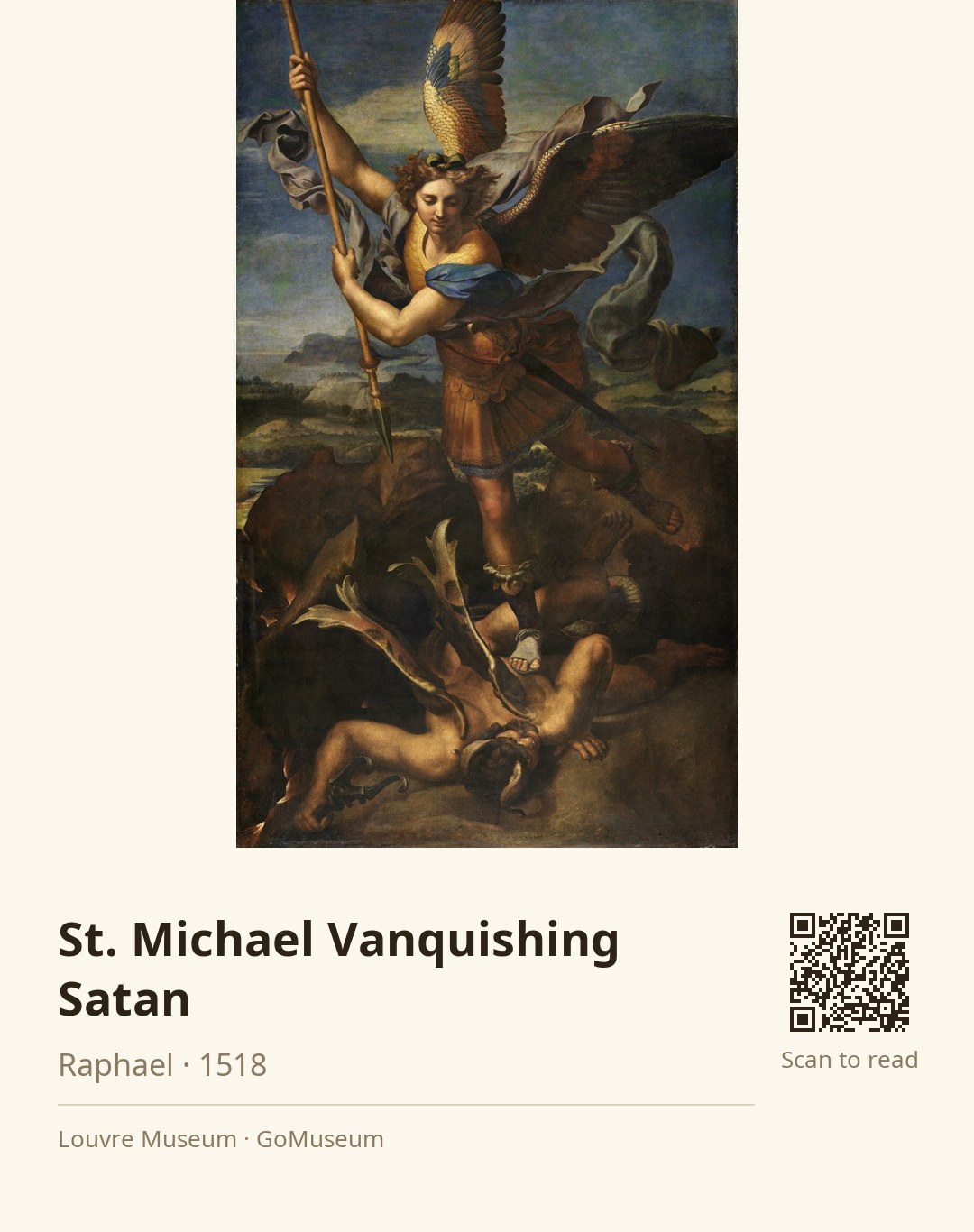
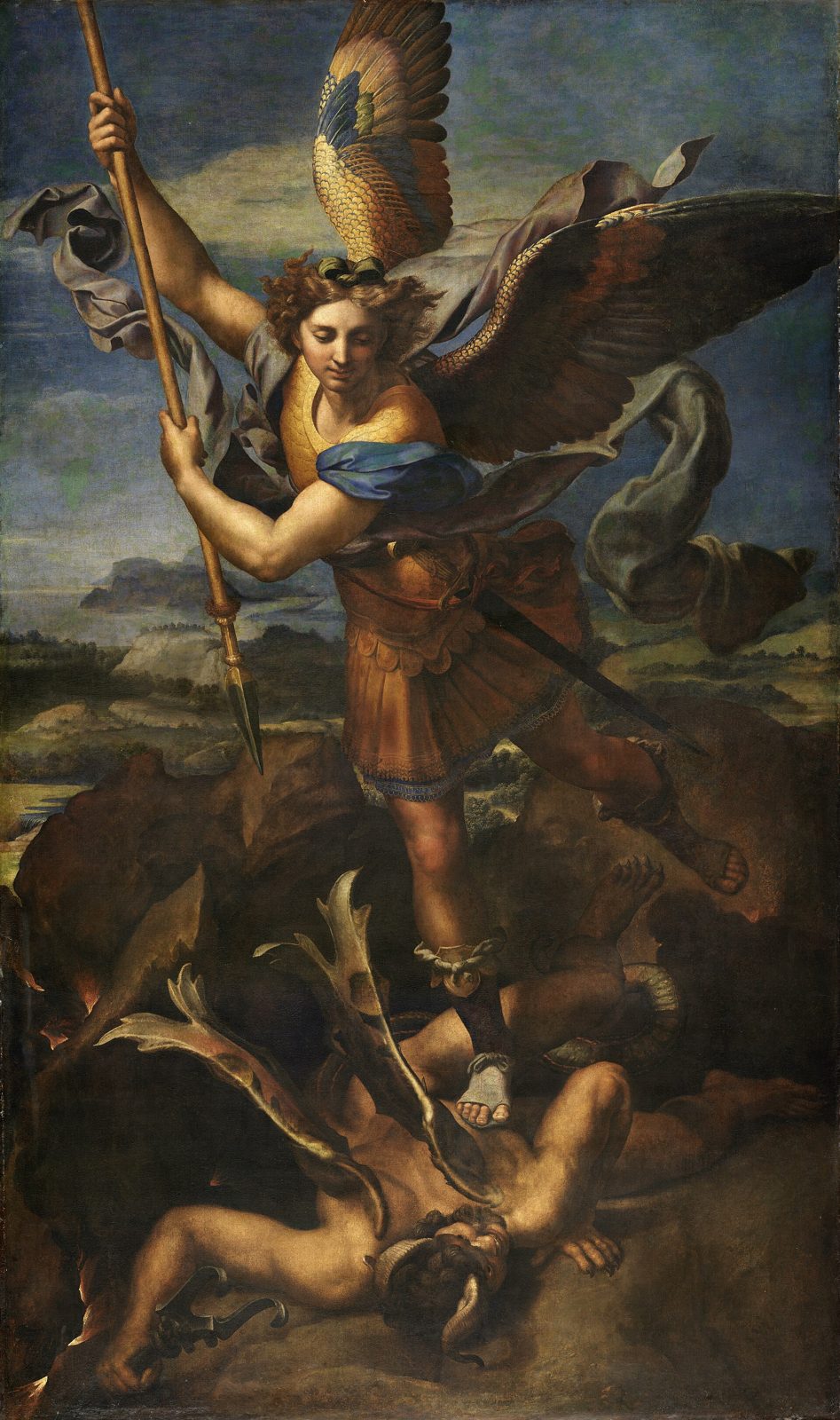
🎧 This work has audio narration — listen in the appTake a moment to really look at Raphael’s “St. Michael Vanquishing Satan.” Notice how the archangel Michael stands triumphantly, one foot planted firmly on the back of the defeated Satan. His spear is raised, poised to strike, while his wings spread wide, creating a powerful contrast against the dark, twisted form of the devil beneath him.
These details matter because they encapsulate the eternal struggle between good and evil, a central theme in Christian art. Michael’s calm demeanor amidst the chaos signifies divine authority, while Satan’s closed wings suggest defeat. This isn’t just a battle; it’s a visual representation of hope and victory over darkness.
Commissioned by Pope Leo X in 1518, this painting was intended as a gift to Francis I of France, symbolizing the alliance between the church and the French crown.
As you stand here, think about the power this image held in its day. How does it resonate with you now? What battles do you face in your own life that echo this timeless struggle?
Raffaello Sanzio da Urbino, known as Raphael, was an Italian painter and architect of the High Renaissance, born in Urbino in 1483. Orphaned by age eleven, he managed his family's workshop and trained under Pietro Perugino, establishing himself as a master by 1500. His move to Rome in 1508 marked the beginning of a prolific period, where he received significant commissions, including the renowned frescoes in the Vatican's Raphael Rooms. His art is celebrated for its clarity, harmonious composition, and embodiment of Neoplatonic ideals. Raphael's influence was profound, shaping the trajectory of Western art and serving as a model for academies until the 19th century. His legacy, characterized by serenity and grace, was later revived in the 18th and 19th centuries, contrasting with the dramatic styles of his rival Michelangelo. Despite his early death at 37, Raphael's extensive body of work and innovative techniques left an indelible mark on the art world, influencing generations of artists and extending into contemporary culture.
In 1518, Raphael was commissioned by Pope Leo X to create 'St. Michael Vanquishing Satan,' a powerful depiction of the archangel Michael triumphing over evil. This painting was intended as a gift for King Francis I of France, marking a significant moment in the relationship between the French crown and the papacy. It was completed during a vibrant period of Raphael's career, showcasing his mastery of composition and color. After its completion, the painting found its home in the Louvre in Paris by 1667, following a journey through various royal collections. Over the years, questions arose regarding the painting's authenticity, with some attributing it to Raphael's apprentice, Giulio Romano. Despite this, the work's striking imagery and thematic depth have solidified its place in art history, symbolizing divine authority over chaos.
As you gaze at this painting, notice how Raphael's brushwork creates a sense of tension and dynamism. The archangel Michael is depicted with a strong, muscular form, capturing the viewer's attention with his poised stance and raised spear. The use of color is particularly striking; Raphael combines metallic oranges, yellows, and golds to give Michael an almost ethereal glow, contrasting sharply against the dark, twisted figure of Satan beneath him. This innovative color palette was atypical for Raphael, who usually favored softer tones. The composition is masterfully structured, with Michael's body forming a diagonal line that draws the eye upward, suggesting both movement and the triumph of good over evil. The rocky landscape beneath them adds to the drama, grounding the celestial battle in a tangible reality. The juxtaposition of Michael's calm expression against the chaos of the scene amplifies the painting's impact, embodying divine authority in the face of darkness.
Michael Vanquishing Satan' is not just a stunning visual; it's a pivotal moment in art history that helped shape the future of religious painting. Commissioned by Pope Leo X, this work embodies the triumph of good over evil, a theme that resonated deeply in the turbulent times of the Renaissance. Raphael's innovative use of color and composition influenced generations of artists, particularly in France, where Charles Le Brun used it as a teaching tool at the Academie royale de peinture et de sculpture. This painting laid the groundwork for French classicism, emphasizing the balance of grace and power, and it became a symbol of royal authority, echoing through the halls of art for centuries. Remember, this isn't just a depiction of an archangel; it's a declaration of divine order that would inspire countless works and artists long after Raphael's time.
Michael Vanquishing Satan" involves the initial criticism it faced from contemporaries. Sebastiano di Venezia, a fellow artist, wrote to Michelangelo in 1518 expressing his discontent with the painting's color contrasts, suggesting that Raphael's use of bold colors was too exaggerated. This critique highlights the high standards and expectations that Raphael faced, even from his peers, and reflects the competitive nature of the art world during the Renaissance.
Sebastiano di Venezia, a fellow artist, criticized Raphael's use of bold colors as exaggerated, reflecting the high standards and competitive nature of the Renaissance art scene.
Raphael had previously painted a smaller version of St. Michael in 1504 or 1505, which established his familiarity with the subject and likely informed his approach to the more grandiose depiction in 'St. Michael Vanquishing Satan'.
In this work, Raphael used a striking combination of metallic oranges, yellows, and golds, along with black ink to create a smoky effect, which deviated from his usual softer color palette.